Monday, November 30, 2020

Thomas Perry

Thomas Perry is the bestselling author of over twenty-seven novels, including the critically acclaimed Jane Whitefield series, Forty Thieves, and The Butcher’s Boy, which won the Edgar Award. He lives in Southern California.

Perry's new novel is Eddie's Boy.

My Q&A with the author:

How much work does your title do to take readers into the story?

The title Eddie's Boy operates differently for two kinds of readers. This is the fourth volume of the Butcher's Boy series, which I wrote over nearly forty years. Many readers will be familiar with the book and will know Eddie, the neighborhood butcher who raised the boy, and know that the Butcher's Boy isn't as threatening a name as some characters think. Or is it? For anyone, the title should hint at the fact that this is going to be a story about a man in the present, but that many things that are parts of it happened in the distant past, when this elderly man was a boy. Maybe a reader will come to the thought that even when a man has white hair, he's still that kid who was just starting to figure things out, and still hasn't finished.

What's in a name?

Part of the fun of The Butcher's Boy has always been that he doesn't really have a name. He has only had aliases, mostly ones that Eddie helped him find on tombstones when he was very young. He picked up a few later, a couple of them with the help of the Justice Department, but that's another story. If you're really up to something bad, you pick a name like Michael Schaeffer, which doesn't attract notice.

How surprised would your teenage reader self be by your novel?

The young Tom Perry would be intrigued by the literary aspects of the book--character, dialogue, points of view and time, etc. He would not be surprised by the activities of the underworld figures, because he was growing up in a gangster-ridden region, where kids he knew had, by that time, found bodies in empty fields where he and his friends had played.

Do you find it harder to write beginnings or endings? Which do you change more?

I start a book by thinking about a character until he feels real, and then he stands up and begins to do his job of making trouble. If he surprises me, even better. It's an easy way to start. Endings are more duty than pleasure for me. In reality, a story doesn't end until the observer's heart stops and he closes his eyes and stops listening. In a book we have to choose the spot where we snip the thread. And it matters whether you stop at the beautiful wedding or the case of Alzheimer's.

The part that usually gets the most revision is the beginning, because every time I read a portion I start with that and see things that are wrong with it.

Do you see much of yourself in your characters? Do they have any connection to your personality, or are they a world apart?

I think that one of the things we're doing when we write a novel is the same as what children do when they play make-believe games. We act out different roles, and invent characters to be. So the characters are all the author to some extent.

What non-literary inspirations have influenced your writing?

I've always tried to see and hear everything that I could, because every bit of it is part of the whole story. Even though we can never tell the whole story, we should know as much of it as we can. I'm afraid that leads to being shallow in one's interests, seeing the world as a tourist instead of a painter or musician. But our dogs always get me up early and I'm always busy until I go to sleep at night. My efforts may not be enough, but that's all there is.
Learn more about the book and author at Thomas Perry's website and Facebook page.

The Page 69 Test: Silence.

The Page 99 Test: Nightlife.

The Page 69/99 Test: Fidelity.

The Page 69/99 Test: Runner.

The Page 69 Test: Strip.

The Page 69 Test: The Informant.

The Page 69 Test: The Boyfriend.

The Page 69 Test: A String of Beads.

The Page 69 Test: Forty Thieves.

The Page 69 Test: The Old Man.

The Page 69 Test: The Bomb Maker.

The Page 69 Test: The Burglar.

The Page 69 Test: A Small Town.

Writers Read: Thomas Perry (December 2019).

--Marshal Zeringue

Saturday, November 28, 2020

Andrea Portes

Andrea Portes is a bestselling novelist. Her novels include: Hick, Bury This, Anatomy of a Misfit, The Fall of Butterflies, Liberty, Henry & Eva and the Castle on the Cliff, Henry & Eva and the Famous People Ghosts.

Portes's new novel is This is Not a Ghost Story.

My Q&A with the author:
How much work does your title do to take readers into the story?

You always want a title to have a kind of question to it. So, for instance, This is Not a Ghost Story really should be more like, “Why is this not a ghost story? What do ghosts have to do with any of this?” And, of course, it is a ghost story. But it is so much more than that. Without giving anything away, I’d say there are two kinds of hauntings occurring simultaneously in this book. The reader is then challenged to figure out what exactly those hauntings are, to figure out the mystery.

What's in a name?

A name is hook.

“The Queen’s Gambit” is much more interesting than “The Woman Champion Chess Player.”

Because, right off the bat, you wonder… “Well, what exactly is the queen’s gambit?”

How surprised would your teenage reader self be by your new novel?

My teenage self would be surprised to hear I was even alive at this point. I had a sure-fire plan to be done with this existence by twenty-five. It wasn’t a plan to commit suicide or anything. It was just a plan to kind of accidentally fall off a cliff in a blaze of glory.

Do you find it harder to write beginnings or endings?

I adore beginnings and endings. They are what inspire me. They come to me first.

It’s the middle part that’s the problem. Act two. Act two is when I begin procrastinating wildly.

Which do you change more?

I don’t usually fuss over them too much. Instinct is an important thing. Inspiration a gift. But, I have learned to go back and make sure, structurally, they are doing what they are supposed to do.

Do you see much of yourself in your characters? Do they have any connection to your personality, or are they a world apart?

Absolutely. I see myself in all of my characters. Their words come out of me, their conversations, their desires, their insecurities. If I’m in the right place, creatively, they do things that surprise me. But even the most vile characters are seated happily somewhere in my self-conscious, in the ether, in the universal “us.”

What non-literary inspirations have influenced your writing?

Basquiat and Debuffet. Their paintings have a kind of madness, a restlessness, familiar to me… To say something different, shaking, strange. Films, of course. The films of Lina Wertmuller and Charlie Chaplin are the ones I’ve found most inspiring. Chaplin had an understanding of the human condition like no other artist I know, other than Shakespeare. Wertmuller’s Seven Beauties is a beautiful, strange, dark, lusty masterpiece. And theatre… I once saw a version of Naomi Izuka’s Skin directed by Robert Woodruff, which had me in tears. I went to see it every night, sat in the back row, and bawled my face off. And, finally, history. During the pandemic I re-learned both my ancient and modern history, from Mesopotamia to Barack Obama. It was the most inspiring journey I could ever take, and I took it in my pajamas.
Visit Andrea Portes's website.

My Book, The Movie: This Is Not a Ghost Story.

The Page 69 Test: This Is Not a Ghost Story.

--Marshal Zeringue

Thursday, November 26, 2020

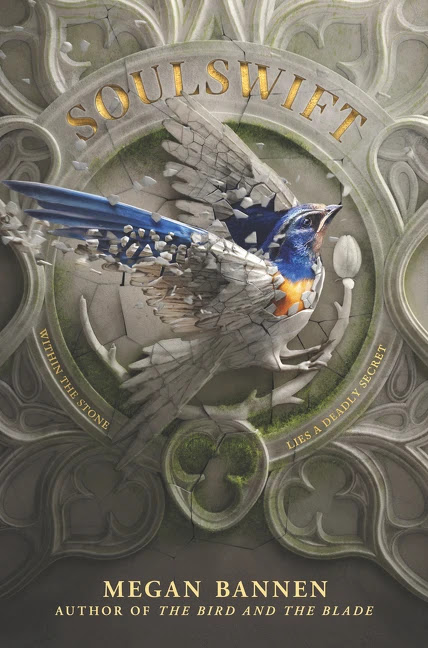
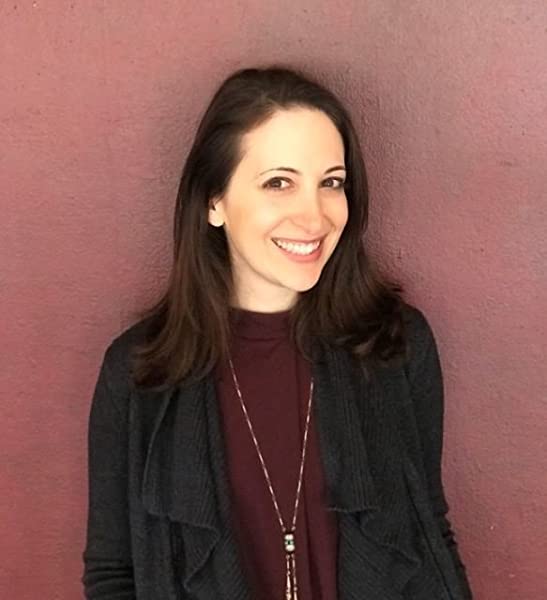
Megan Bannen

Megan Bannen is the author of Soulswift and The Bird and the Blade, a Kirkus Best Young Adult Book of 2018 and an Indies Introduce selection. An avid coffee drinker and mediocre ukulele player, Bannen lives in the Kansas City area with her husband and their two children. She's a full-time writer, but her librarian heart will always belong to the reference desk.

My Q&A with the author:
How surprised would your teenage reader self be by your new novel?

I specifically wrote Soulswift for my seventeen-year-old self--a girl who was beginning to doubt what everyone around her held as absolute and unquestionable truth--so I don't think my teenage reader self would be so much surprised as relieved. I hope this book finds its way into the hands of young adults who are a lot like I was. I hope they feel a little less alone in the world as they see their own struggle with faith reflected back to them through Gelya's thoughts and experiences.

Do you find it harder to write beginnings or endings? Which do you change more?

I almost always know exactly how the book is going to end before I ever begin writing it. The ending of a novel is like your closing argument. It's the moment that illustrates the entire reason you spent years of your life toiling over these words. The beginning is a lot trickier, especially in fantasy. Not only must you introduce the characters and their internal struggles, you also have to build a new world in the reader's imagination. There's a struggle to figure out how to dole out important information, how to figure out what readers need to know and when. For that reason, almost all of my major revisions throughout the editorial process of Soulswift focused on the first third of the book.

Do you see much of yourself in your characters? Do they have any connection to your personality, or are they a world apart?

I think all characters are fragments of the author, or, at least, that's true in my case. As I mentioned earlier, I wrote Soulswift for my teenage self who struggled with faith, so Gelya, the main character, feels very much as I felt at age seventeen. Tavik, the other major character in the book, might seem like her polar opposite, but in many ways, he's more me than even Gelya is. His tendency to cut tension and cloak insecurity with a robust sense of humor is 100% Megan. Even the Goodson, the novel's antagonist, has a certain amount wisdom and experience that comes from a writer who is, herself, middle-aged. I don't know that I could have written him as convincingly ten years ago, but now he's a character who makes a lot of sense to me, even if I very much disagree with his worldview.

What non-literary inspirations have influenced your writing?

Soulswift was heavily inspired by music. I began with the premise that I wanted to write a book that had the same emotional tone as Ralph Vaughn Williams's "The Lark Ascending," full of bittersweet longing. I listened to it over and over until, one day, I got the idea for the ending of the book. It's a strange moment, though, and I asked myself, "What would make that happen?" The whole book was basically me answering that question. There is also a dance scene in the book that was inspired by "My Heart, My Life" by Nusrat Fateh Ali Khan and Michael Brook, and a major fight scene that was choreographed to Aloe Blacc's "The Man" (which I consider Tavik's theme song). But the music that set the overall tone of the book was a collection of Scandinavian folk songs sung in medieval polyphony by Trio Mediaeval.
Visit Megan Bannen's website.

Coffee with a Canine: Megan Bannen & Brontë.

The Page 69 Test: The Bird and the Blade.

--Marshal Zeringue

Wednesday, November 25, 2020

Mark de Jager

Mark de Jager isn’t sure if his love of writing led to his love of gaming or vice versa, but his earliest memories involve both. He now spends his time trying to find a balance between these and working a full time job in banking, a process made slightly easier by his coffee addiction. An ex-MP in the South African army, de Jager now lives in Kent with his wife Liz (herself a published author) and their lazy dog in a house that is equal parts library and home.

His novel Infernal has just made its US debut.

My Q&A with the author:

How much work does your title do to take readers into the story?

Settling on the title took a bit of work!

My original working title was Beast, but that doesn’t carry as much weight, whereas Infernal alludes to the main character’s belief that he is demonic in origin, which drives his perceptions for much of the story.

The tagline ‘The Chronicles of Stratus’ underlines that this is his story, and ties in with it being written in a first person perspective.

What's in a name?

Stratus, my main character’s name, was the first thing that came to me and didn’t change from that very first draft. It’s a strong name, but it’ll make more sense when you get to book two (which is out in May 2021).

I was conscious that the names for the people he interacts with and places he goes would add a lot of flavour to the setting and themes, in the same way that names change as you travel across borders, or sometimes even within the same state.

For example, names in the kingdom of Krandin have softer consonants than those in the opposing empire of Penullin, which tend to be shorter and ‘choppier’ and help to colour them as more aggressive.

How surprised would your teenage reader self be by your new novel?

My teenage self was equally geeky so probably not so much! I put of lot of the stuff I love into Infernal so I’d like to think he’d be cheering as he turned the pages.

Do you find it harder to write beginnings or endings? Which do you change more?

Beginnings, on both counts.

I knew the ending when I started, but the beginning changed several times. I know I’m guilty of scanning the first page of a book when I go browsing, and always have it in mind that first impressions count. It’s hard to strike the balance between too much and too little.

Do you see much of yourself in your characters? Do they have any connection to your personality, or are they a world apart?

That’s a dangerous question given what Stratus gets up to! There is however something about his loyalty and thirst for revenge that sits very well with me, the constant homicidal rage notwithstanding.

What non-literary inspirations have influenced your writing?

I’m an avid gamer, and played home-brew D&D with almost religious zeal throughout high school (to my mother’s enduring horror) and still play today, although on a much reduced basis. I enjoyed writing the background for our games, which is where all this started.

Movies helped too, and I remember that the original Wrath of the Titans and Highlander each blew my mind in different way. They made it feel like it was okay to like fantasy and that thinking about things like that wasn’t a waste of time.
Follow Mark de Jager on Facebook and Twitter.

The Page 69 Test: Infernal.

--Marshal Zeringue

Tuesday, November 24, 2020

Soledad Maura

Soledad Fox Maura is a Professor of Spanish and Comparative Literature at Williams College. She has a B.A. from Sarah Lawrence College, and an MPhil and PhD in Comparative Literature from the City University of New York.

Maura is a former Fulbright Senior Research Scholar, and has published three books (two biographies) and many articles on Spanish and French literature, culture and history.

Her research interests include memoir, biography, the Spanish Civil War, exile, and Spanish-American relations.

Maura's debut novel is Madrid Again.

My Q&A with the author:
How much work does your title do to take readers into the story?

Madrid Again gives some (but not all) of the geographical context, and implies repetition. The main characters spend time in Madrid, but they are always on the move, back and forth between Spain and the United States. Some of the secondary and background characters also live through displacements.

What's in a name?

The names in the novel are homages to people both real and fictional. The main character Lola has one of my favorite names of all time. Cinematic, literary, and the name of a close friend. Also, it is universally easy to remember and pronounce. Unlike my own.

Do you find it harder to write beginnings or endings? Which do you change more?

This novel is not chronological, nor is it plot driven. The narration weaves back and forth between the memories and lives of three generations of one family, so where to begin and where to end were constantly moving points. I was trying to show how Lola’s life, and her family history, exist in her mind. It’s a novel that emphasizes point of view more than beginnings and endings. It could have gone so many different ways. It does not have a hard beginning or a hard ending. Madrid Again starts and ends in medias res.

Do you see much of yourself in your characters? Do they have any connection to your personality, or are they a world apart?

I see bits of myself in many of them, and bits of people I know or have read about or simply imagined. At the same time, I gave myself license to invent, embroider, and transform all the initial ingredients, and that is the best part about writing a novel.
Visit Soledad Maura's website.

My Book, The Movie: Madrid Again.

--Marshal Zeringue

Monday, November 23, 2020

Wayne Santos

Over the years, Wayne Santos has written copy for advertising agencies, scripts for television, and articles for magazines. He’s lived in Canada, Thailand and Singapore, traveling to many countries around South East Asia. His first love has always been science fiction and fantasy, and while he regularly engaged with it in novels, comics, anime and video games, it wasn’t until 1996, with his first short story in the Canadian speculative fiction magazine On Spec that he aimed towards becoming a novelist.

He now lives in Canada, in Hamilton, ON with his wife. When he’s not writing, he is likely to be found reading, playing video games, watching anime, or trying to calm his cat down.

Santos's new novel is The Chimera Code.

My Q&A with the author:
How much work does your title do to take readers into the story?

The Chimera Code was the title that my publishers finally settled on. I’ll be frank and admit that titles aren’t my strong suit. I’m definitely one of those people who, if could say something succinctly, I probably would have been a poet or a song writer, but no, it takes me tens of thousands of words to get the point across.

The original title of the book was just “Chimera,” and that was in reference to the fact that a combined arms combat squad utilizing conventional weapons, magic and digital attacks are referred to in the military jargon of the world as “Chimera units.” That, of course is a reference to the many headed mythical beast. That was just my way of indicating that the book itself, a mix of cyberpunk and magic, was similarly something with multiple body parts from other animals all retrofitted together.

What's in a name?

My naming conventions for characters tend to be a mix of names that just pop in there intuitively, and consulting phone books or baby name generators randomly. For The Chimera Code, Cloke’s name is not her actual street legal name, but one she gave herself. I actually got that name from an actor in Space: Above and Beyond named Kristen Cloke. I just really liked the sound of it, and when I tried it on for size on that character, it stuck.

Zee is a lab-engineered hacker that was designed without a gender, so they eventually decided on the name “Zee” since they’re neither XX, or XY, but something else entirely. So that was just a way to claim an identity that was still pretty declarative of who that person is.

How surprised would your teenage reader self be by your novel?

I think my teenage self would have mixed feelings of surprise. There would be the positive surprise of finding out that older me had written a book that younger me could enjoy, with explosions, cyberpunk settings, magic, and some meandering world building that never stops and lectures you.

But my teenage self would also be surprised in a negative way. At that time in my life, I had some expectation that I would let go of the childish things in my fiction writing, and eventually write something of literary significance. The kind of thing that critics would praise as having depth and profundity. Instead I wrote something fun, that I personally enjoyed, and teenage me would have expected more than that.

Do you find it harder to write beginnings or endings? Which do you change more?

Between the two, I think endings are probably a bit harder. I tend to “discovery write,” meaning that I start the book with only a few fixed plot points in mind, and let the characters figure out the rest for themselves. The end is not always one of those fixed points, but the beginning usually is. I haven’t written any books with major changes to the beginning although the endings have sometimes gotten tweaked along the way.

Do you see much of yourself in your characters? Do they have any connection to your personality, or are they a world apart?

The one thing I tend to share with most of my characters is snark. To people I’m close to, they all know I can get pretty sarcastic, and enjoy snappy repartee, and that’s something that will usually surface in at least one character. Often multiple, in different flavors of snark. Otherwise, they’re usually their own people.

What non-literary inspirations have influenced your writing?

Plenty of non-literary influences! The biggest ones are video games, anime and movies. I freely crib from a lot of other forms of entertainment in the hopes that people unfamiliar with one type will think I’m brilliantly original and not just stealing from a type of entertainment they have no interest in.
Visit Wayne Santos's website.

The Page 69 Test: The Chimera Code.

My Book, The Movie: The Chimera Code.

--Marshal Zeringue

Saturday, November 21, 2020

Kristin Fields

Kristin Fields grew up in Queens, which she likes to think of as a small town next to a big city. She studied writing at Hofstra University, where she was awarded the Eugene Schneider Award for Short Fiction. After college, Fields found herself working on a historic farm, as a high school English teacher, designing museum education programs, and is currently leading an initiative to bring gardens to public schools in New York City, where she lives with her husband.

Fields's new novel is A Frenzy of Sparks.

My Q&A with the author:
How much work does your title do to take readers into the story?

I always know the title of my novels before I start writing. In many ways, the title becomes the question I work backwards to answer. There are many ways that A Frenzy of Sparks connects to the themes of the novel: coming of age, addiction, the civil, political, and societal demands for change (not unlike those of today). In both of my novels, A Lily in the Light and A Frenzy of Sparks, the title has also been a line in the story.

What's in a name?

My family is Italian American. Writing this novel was really a way to connect back to many aspects of my upbringing and the names of my characters were no exception to this. Gia, Leo, Agnes, Eddie, Lorraine, Ray, Tommy, all the Joes and Lous. These were all common names I heard growing up. I loved the name Gia because it was so simple – just three strong letters – much like her personality.

How surprised would your teenage reader self be by your new novel?

One of the earliest facts I knew about myself was that I wanted to be a writer. Someday. I wish I could go back in time and tell my teenage self that someday she will write novels. More than one. I think it would have made my teenage self a little bolder and less shy knowing that there were promising things in her future.

Do you find it harder to write beginnings or endings? Which do you change more?

Definitely beginnings. The first three chapters of a novel are so important because they set the scene for the rest of the story. In many ways, every character trait, any relationship dynamics, etc that will be important to the story later need to be introduced in the beginning so that the story builds in a way that makes sense to the reader. I often don’t write the beginning of the story until the bulk of the middle/end is done so that I can set the beginning up properly.

Do you see much of yourself in your characters? Do they have any connection to your personality, or are they a world apart?

Gia is the closest character I’ve written to myself. I was a lot like Gia when I was her age. I loved nature. It explained the world around me and I felt like I had a better understanding of nature than I had of people. I was quiet and observant and wanted to do good in a world that didn’t quit feel entirely open to me as a girl as it did to boys. Gia doesn’t understand why the rules are different for her than they are for her slightly older brother and she challenges them in a way I didn’t know how to when I was her age. Gia is also a lot braver than I was.

What non-literary inspirations have influenced your writing?

Shortly after I decided to write A Frenzy of Sparks, I was cleaning on a Saturday morning with music streaming, and the universe sent me Brandi Carlile's "The Eye." It’s about watching someone you love return to old habits that aren’t good for them. My favorite line from the song is, “You can dance in a hurricane, but only if you’re standing in the eye.”

It struck a nerve. For weeks, I listened to it over and over again; at home, on the subway, walking, trying to figure out what it was that gripped me and how it was connected to A Frenzy of Sparks. Eventually, I realized that Gia, the main character, was Brandi's "sturdy soul" in the eye of a hurricane watching her world spin out around her. It was an image I kept returning to as I wrote A Frenzy of Sparks.
Visit Kristin Fields's website.

The Page 69 Test: A Lily in the Light.

My Book, The Movie: A Frenzy of Sparks.

The Page 69 Test: A Frenzy of Sparks.

--Marshal Zeringue

Thursday, November 19, 2020

Susan Lewis

Susan Lewis is the bestselling author of My Lies, Your Lies and over forty more books across the genres of family drama, thriller, suspense and crime. She is also the author of Just One More Day and One Day at a Time, the moving memoirs of her childhood in Bristol during the 1960s. Following periods of living in Los Angeles and the South of France, she currently lives in Gloucestershire with her husband James, stepsons Michael and Luke, and mischievous dogs Coco and Lulu.

My Q&A with the author:
How much work does your title do to take readers into the story?

I sometimes feel that getting the right title can be almost as difficult as deciding what the book is going to be about. I think titles can matter a lot, especially for less well-known authors as their names won’t be strong enough on their own to pull readers in. In the case of My Lies, Your Lies I knew I had to come up with something fast, as my publisher was keen to go with a title I simply didn’t feel was right. Their suggestion was Forgive Me which didn’t cover it at all. (It is now the title for my next book.) Luckily, everyone went for My Lies, Your Lies as it does go some way towards telling you what the book is about.

What's in a name?

Names are always important to me. It helps me to see the character, to understand something of their personality and to portray the right image of them to a reader. In My Lies, Your Lies I chose the name Joely for the lead protagonist because of its gentleness, elegance and relevance to age (early forties). There is also, I feel, a determination and intelligence to it. As for Freda, the other main character, I chose that because, in my view, it’s strong, not very feminine and has an older and even slightly feisty resonance to it. She’s a difficult woman with all sorts of issues, and for some reason that name just suited her.

How surprised would your teenage reader self be by your new novel?

Shocked beyond words! This is my forty-eighth bestseller (in the UK) so my teenage self would be utterly shocked by that too. My Lies, Your Lies is something of a departure novel for me with so many mind games and the highly controversial storyline that’s set in the Sixties. So even at my age today, I’m a little shocked by it.

Do you find it harder to write beginnings or endings? Which do you change more?

I think endings are more difficult. I actually love writing beginnings; this is when I start to make new friends, settling into the company of strangers who will become as close and troublesome as family in the following months. In My Lies, Your Lies I didn’t know for quite a while how I’d end it, but when I finally hit on the right way it was one of those YES moments. The sudden twist of it has invited much contact and comment from readers, although I won’t say in what sense as I don’t want to spoil it. I’ve no idea which I end up changing more, the beginning or the end. Probably the nuance of the ending rather than the actual ending itself.

Do you see much of yourself in your characters? Do they have any connection to your personality, or are they a world apart?

Having written so many books I could never say I see myself in all the characters – I’d be pretty weird if I could! However, they will often – not always – have similar views, aspirations and even politics to mine. I would find it very difficult to write a lead character with opposing opinions or life-values to my own, at least in a sympathetic sense. I save that for the antagonists – always a great way to get myself worked up into a frenzy of outrage. I find it almost impossible to write someone who is wholly bad, they keep presenting me with redeeming features and I just have to go with them.

What non-literary inspirations have influenced your writing?

Most of my inspirations are non-literary. I am regularly deeply moved and/or fascinated by other people’s lives and the experiences they endure and battle to overcome. This can range from the agonising and terrifying wait for a new heart; to the horrendous threat of homelessness; to the tragedy of dementia, to date-rape, to murder, to cancer; to falling victim to a crazy stranger’s vendetta (as in My Lies, Your Lies.) This makes the subjects seem very downbeat, but I promise they don’t read that way. There is humour in everything, even if it’s black, and all kinds of romance. I see it as my job to engage a reader in a way that will uplift, inform and most of all make them care.
Visit Susan Lewis's website.

My Book, The Movie: My Lies, Your Lies.

--Marshal Zeringue

Wednesday, November 18, 2020

Ruth Gilligan

Ruth Gilligan is a writer and academic from Dublin now based in the UK. She has published five books to date and was the youngest person ever to top the Irish Bestsellers’ List.

Her most recent novel, The Butchers [US title: The Butchers' Blessing], is set in the Irish borderlands during the 1996 BSE crisis, and was published to widespread acclaim in March 2020.

Gilligan holds degrees from Cambridge, Yale, UEA and Exeter. She contributes literary reviews to the Irish Independent, Guardian, TLS and LA Review of Books. She works as a Senior Lecturer in Creative Writing at the University of Birmingham and is an ambassador for the global storytelling charity Narrative 4.

My Q&A with the author:
How much work does your title do to take readers into the story?

I would have said that the title of my novel was key – the thing that came almost before the story itself; the one aspect of my work-in-progress that I was happy to talk about.

‘What are you writing at the moment?’ people would ask.

‘A novel called The Butchers.’

‘Ooh – great title!’

And this was still the case when the book came out in the UK and Ireland – a book about the clash of tradition and modernity in late 90s Ireland; a book about a group of eight men, known as the Butchers, who travel the country slaughtering cattle according to a set of ancient folkloric customs; a book about the women they leave behind.

But then the book was bought by an American publisher and the first thing they said was: ‘We love the novel, but we need to change the name.’

They said it was too violent; too savage; that although the Butchers were a key feature of the plot, there was so much else going on too – there were stories of family and loss; of folklore and feminism; stories of individuals – and the country around them – finally coming of age. The Butchers, as a title, was too specific; too harsh.

In the end, we compromised on The Butchers’ Blessing. It meant there was a continuity between the UK and US editions, but it was also a little softer; a little less gory; a little more suggestive of the focus on faith and tradition and superstition. I will never know for certain how the different titles effect readers’ experience of being taken into the story on either side of the Atlantic, but I definitely have some thoughts…

What's in a name?

Because, as I mentioned, The Butchers’ Blessing is all about the tension between ancient and modern Ireland, it felt important that the Butchers – and their families – all had Irish (ie. Gaelic) names. So we have Úna and her father Cúch, which is short for Cúchulain, the ancient Irish hero. We also have Cúch’s wife Grá, which is, incidentally, the Irish word for love – something she struggles with as the novel goes on. All my British friends would message me asking me to send a Whatsapp voice note explaining how to pronounce these unfamiliar words, but I resisted, because that was the whole point – I wanted them to feel unfamiliar, a bit strange, part of a language that has all but died out; to give readers that sense of the Butchers and their families hailing from another time, another world.

How surprised would your teenage reader self be by your new novel?

Unbelievably my teenage self wasn’t just a reader she was also a writer – I published my first book at eighteen! But it was a very different thing – a semi-autobiographical commercial novel set in suburban Dublin, all about young people finishing high school and coming of age and making stupid mistakes. People liked the ‘authenticity’ of the voice given I was drawing directly on the world I knew; with The Butchers' Blessing, the opposite is the case. Farm life, the Irish border counties, the folklore and superstition of that wild landscape – all of that was completely new to me and required years of research. So yes, teenage Ruth would be pretty surprised!

Do you find it harder to write beginnings or endings? Which do you change more?

In terms of plot, I tend to have a fairly clear sense of where I want the novel to start and end – the latter in particular feels like the punchline I am always trying, eventually, to work towards. In terms of writing style, however, I find openings really difficult – they can feel so laboured, so much like the author (ie me) is trying to find their groove; like they are trying a bit too hard to lure you in. So yes, in terms of editing, I definitely find myself revising the beginning over and over again.

Do you see much of yourself in your characters? Do they have any connection to your personality, or are they a world apart?

I definitely see myself in Úna who is arguably the main character in The Butchers’ Blessing. She is an odd, devout, curious child who is devoted to her father, and who is totally bewildered by the fact that certain aspects of her life might be dictated by her gender. She is a rebel, but also a sensitive soul – I can definitely relate! There are other characters like Fionn the farmer who seems a world away from me and my experience, but I do relish the challenge to trying to put myself in someone else’s unfamiliar shoes – that is the whole point of fiction, for me, to develop empathy and to experience new perspectives.

What non-literary inspirations have influenced your writing?

I listened to a lot of great Irish music while writing this novel – The Gloaming and Colm Mac Con Iomaire were particularly influences, creating the perfect, haunting backdrop to this windswept, eerie landscape. Great Irish playwrights like Brian Friel and even Enda Walsh were great for dialogue, the musicality of their characters’ speech. This novel, for all its preoccupation with folklore, is also steeped in fact – I read every Irish newspaper from 1996 to make sure the headlines and pop culture references were accurate throughout. Who knew I would ever write a novel that featured cattle and the Spice Girls?!
Visit Ruth Gilligan's website.

--Marshal Zeringue

Tuesday, November 17, 2020

Glen Erik Hamilton

A native of Seattle, Glen Erik Hamilton was raised aboard a sailboat and grew up around the marinas and commercial docks and islands of the Pacific Northwest. His novels have won the Anthony, Macavity, and Strand Magazine Critics awards, and been nominated for the Edgar®, Barry, and Nero awards. He now lives in California with his family, and frequently returns to his hometown to soak up the rain.

Hamilton's latest novel is A Dangerous Breed.

My Q&A with the author:
How much work does your title do to take readers into the story?

Titles are key. They need to immediately draw a prospective reader's interest. For genre fiction they have to say "thriller" without sounding generic. And ideally a title will give a hint as to the theme of the novel. It's rare that I have a title before I've written the first or even the second draft of a new book.

A Dangerous Breed was an exception. Since I knew the story would be about Van Shaw investigating his parentage, and his worries that violence and crime were inherited traits, I had similar titles floating in my head from the start. Consequently, the motif of dogs--fearsome and otherwise--and the question of nature vs. nurture worked their way into the writing without much conscious effort.

Other titles in the series have varied histories. Sometimes my first suggestion is a slam dunk. Other times choosing the right title has involved a protracted discussion with the publisher. They have the experience; I'm at least smart enough to listen. If a title I like doesn't make the cut, I save it with a mind towards a future book or short story.

What's in a name?

I love choosing names, even though it's one of the hardest and most time-consuming steps in writing. I will frequently give a character a placeholder name until the right name occurs to me--or more likely, I ferret it out through online searches.

Think of a name as shorthand for the reader, conveying character traits through syllables. My protagonist's name is Van Shaw. The name is Irish, and direct. Almost blunt. The name Shaw creating a sound like a sword being drawn. His full given name is Donovan, the same as the grandfather who raised him to be a thief. Inherited name, inherited outlook.

In A Dangerous Breed, I introduce a few new characters, including the ruthless and paranoid international arms dealer Anatoly Liashko. The last name close to lash​, with the crack of the whip at the end. Van has a new love interest in Raina Marchand, known as Wren. Wren's French Moroccan heritage is implied in her name--she's certainly more well-traveled than Van--but it's her nickname that's most telling. Wren is a flight risk, and Van might be risking his heart to trust that she'll stick around.

How surprised would your teenage reader self be by your novel?

Teenaged G.E.H. would say "well, duh​". Of course I write about nefarious plots and loathsome villains and intricate heists. It's what I grew up reading. Short of writing Conan the Barbarian adventures--which I just might someday--my influences are, pardon the pun, easily read. The road from John D. MacDonald and Robert B. Parker and Patricia Highsmith to the Van Shaw series is straight and wide.

Do you find it harder to write beginnings or endings? Which do you change more?

Both beginnings and endings take a back seat to the middle acts, which are always toughest. All of the plates are spinning, and the escalation and the reveals have to be timed just so, to lead to a satisfactory conclusion. But I'll try to answer the question asked, not the one I jumped into.

Of the two, I give the most time and thought to the opening chapters. Partly that's because the action of the novel's end is, if I've done my job right, a natural conclusion to the events in motion. Even a surprise twist is usually hinted at many chapters in advance. So the climax and denouement evolve naturally and are a little restricted because of that.

Beginnings, however, can have much more variety. Do I start with a seemingly unrelated incident? Starting with action is always good, but it might not fit the tale being told. In A Dangerous Breed, I started with a prologue for the first time, a flash-forward to Van in peril. This wasn't to start with an exciting hook--well, not just that--but to reveal something to the reader that Van can't learn until midway through the story: that he's going to meet his father for the first time. That foreknowledge lets the reader be a step ahead, knowing a piece of Van's fate that lends emotional weight to his fraught search for the truth.

Do you see much of yourself in your characters? Do they have any connection to your personality, or are they a world apart?

I spend a lot of time in Van's head, or he in mine. It's natural that our points of view would share some similarities. Obviously he's smarter and tougher and is quicker with a comeback--typical wish-fulfillment there--but he's also younger and makes the kind of mistakes in his personal life that I've made. Every writer forages through their own history for specifics.

Aside from the protagonist, every character has some aspect of my own personality. Sometimes that's my darkest thoughts given shape, or my views on a topic filtered (sometimes warped) through a different outlook. I'll take traits from people I've met and give them a spin. But even those traits are how I see them, so the observer inevitably changes the observed.

What non-literary inspirations have influenced your writing?

I'm on record as a huge fan of the Columbo TV series, and part of that was how the writers played with classic mystery tropes and structure. Plot ideas frequently arise out of the news -- in A Dangerous Breed, diverse stories like recall elections, the Russian annexation of Crimea, and Seattle's massive waterfront renovation project all became ingredients. I'm often impressed by the level of dialogue in old movies. When they didn't have explosions to fall back on, the level of banter created the fireworks. Since I'm writing about a thief, I might as well steal from the best.
Visit Glen Erik Hamilton's website.

The Page 69 Test: A Dangerous Breed.

--Marshal Zeringue