Saturday, February 25, 2023

Sarah Lyu

Sarah Lyu grew up outside of Atlanta, Georgia, and graduated from the University of Pennsylvania. She loves a good hike and can often be found with a paintbrush in one hand and a cup of milky tea in the other. Lyu is the author of The Best Lies and I Will Find You Again.

My Q&A with the author:

How much work does your title do to take readers into the story?

I have this habit where I come up with a title, pitch it to my editor, and then almost immediately hate it. We spent a few months going back and forth before landing on I Will Find You Again. It’s a bit long, but I love it—there’s a sense of loss and grief but also determination and hope. It encapsulates what the story is ultimately about: an intense love story and the aftermath of a deep, cutting loss.

What's in a name?

Chase Ohara, the main character and narrator of I Will Find You Again, has a name that’s a little on the nose. She’s always in pursuit, always hunting achievements like she’s starving. For her, it’s never enough. Reach a summit and she’s already plotting her next ascent. It’s also part of the novel that her father named both her and her sister traditionally male names (her sister is named Aidan, but chooses to go by Dani) as a not-so-subtle and misguided way of “encouraging” them to do anything, be anything, as if male names could shield them from any sexism or misogyny in their future. Her last name is Japanese and a nod toward No-No Boy by John Okada. There’s a memorable scene in that book where a character with the same last name is turned away from a hotel in the era after WWII because he’s Japanese, despite having called and made a reservation. They’d mistaken “Ohara” for the Irish “O’Hara” on the phone. So close, yet so far away. It’s a great metaphor for Chase’s experience. She was born in the US, like both of her parents, but there’s still this barrier, however slight, that separates her from her White classmates.

How surprised would your teenage reader self be by your new novel?

Shocked, probably. I wrote this novel in part for my teenage self, and it’s the book I needed back then. Like Chase, I was obsessed with achievements and the veneer of success—too deep in to see how it was destroying my sanity, poisoning my soul. When I was younger, I was a more impatient writer, always in a rush to gather enough material for a story, but now that I’m older, I realize that some things just take time. I wouldn’t have been able to write this book until now, until I had enough time to grow and enough distance to both understand and empathize with my teenage self.

Do you find it harder to write beginnings or endings? Which do you change more?

Endings are hard. Usually, I know what happens before I start a story, but once I get to that point, it can be a little excruciating to write it out. There’re a lot of emotions: it’s often the most intense part of the novel, and it’s the end of the draft, when I’m exhausted and excited, nervous and hopeful. For I Will Find You Again, I didn’t change the beginning or ending much. With each draft, I added more and tried to layer in complexity while keeping the plot and emotional arc largely intact. But the very last scene did change pretty late into the process and came from a casual comment from my editor. Chase is a runner, and the story opens with her running in the dark, alone. She’s anxious, depressed, suicidal. When we leave her, she on another solo run, but this time, she’s not running from anything, not running toward anything. There’s a sense of space and freedom and hope. It was a perfect moment of symmetry—I love endings that echo back to the beginning.

Do you see much of yourself in your characters? Do they have any connection to your personality, or are they a world apart?

The way I create characters is to take a part of me and give it to them. It’s my “in” with them. They might like totally different things, might have goals that are foreign to me, but if I understand a particular piece of what makes them tick, then I can build everything else around it. I need to have that strong sense of empathy for a character, even if I vehemently disagree with them, in order to create someone believable. In many ways it was easy to write Chase and Lia because the pieces I gave them are part of a push-and-pull within myself: the perennial debate of pursuing the idea of success vs. giving up the rat race to find joy in the moment. But for Chase’s father, who can be seen as a kind of villain in the story, I had to dig deeper. Why does he push her so hard? Why does he push himself so hard? It was important to me that he didn’t seem like a caricature of a mean, demanding parent. For him, my “in” was his all- encompassing fear of genuine starvation. His scarcity mindset came from a hungry childhood, and even though he knows logically he’s made enough money to attain financial security, he’s still that scared little boy at his core. It’s hard to empathize with a terrible parent, but it’s easy to empathize with a scared and hungry child.

What non-literary inspirations have influenced your writing?

Eternal Sunshine of the Spotless Mind was a big influence. Chase and Lia live in Long Island, and they venture out to Montauk as often as they can. “Meet me in Montauk,” a refrain from the movie, is something they text each other as a Bat-signal to escape their daily, high-achiever grind. I was also inspired by Justin Lin’s Better Luck Tomorrow, a crime film about Asian- American teens who start a cheating ring that takes a dark turn. Aside from movies, I’m really inspired by the everyday politics of being Asian-American. The model minority myth, the perpetual foreigner, Asian adoption by White parents—these are subjects I explore in the book. It was also important to me to tell stories that aren’t just centered on the immigrant experience; those stories are crucial but can in some ways re-enforce the idea that Asian- Americans are perpetual foreigners. My goal was to widen the types of stories Asian-Americans are seen in. I wanted to write characters who aren’t necessarily clashing culturally with their parents but whose experience are still completely informed by their Asian-American identity.
Visit Sarah Lyu's website.

--Marshal Zeringue

Sunday, February 19, 2023

Amy Poeppel

Amy Poeppel is the award-winning author of the novels The Sweet Spot, Musical Chairs, Limelight, and Small Admissions. Her writing has appeared in The New York Times, The Rumpus, Literary Hub, and Working Mother. She and her husband have three sons and split their time between New York City, Germany, and Connecticut.

My Q&A with the author:

How much work does your title do to take readers into the story?

I thought of the title for The Sweet Spot early in the process of writing this book. I wanted a title that worked on multiple levels, and most importantly, one that set the right tone for the novel. Greenwich Village, the setting of my story, is in many ways the sweet spot of New York City; it’s beautiful, a little gritty, and very lively at any time of day or night. In the novel, there’s a dive bar in the basement of the family brownstone called The Sweet Spot, and it’s a place where all manner of fun and happenstance can occur. The many characters in the novel are trying to find their own sweet spots, the exact place where “duty and delight” converge, as Thomas Mann said.

What's in a name?

I love coming up with character names – and I often change quite a few once I realize the names don’t quite fit the characters as well as I originally thought. I spend a lot of time naming my characters, even the pets. (In The Sweet Spot there’s a hamster named Pixel, a dog named Bumper, and a deceased guinea pig named Milkdud.) Two children in the book, Waverly and Horatio, are named after streets in Greenwich Village as both a tribute to the neighborhood and as a kind of wink to highly original names. How surprised would your teenage reader self be by your new novel? I think my teenage self would be quite surprised! My book is irreverent in ways that my rebellious younger self would definitely appreciate.

Do you find it harder to write beginnings or endings? Which do you change more?

I find endings much harder to write than beginnings. I rewrite my endings over and over again to make sure I have the exact mood and closure I want for that last chapter, last paragraph, last sentence. In The Sweet Spot, Felicity is our (3rd-person) narrator for both the prologue and the epilogue, the only two chapters I wrote from her perspective. I had to balance my desire to give all the characters satisfying outcomes, while having Felicity, a woman who is wonderfully ambitious but also quite egotistical, stay true to herself. The question was could a hint of her potential warmth come through in the very last moment?

Do you see much of yourself in your characters? Do they have any connection to your personality, or are they a world apart?

Some of my characters are a lot like me. I write about women of all ages and want to show them as they find humor and strength in difficult situations. I’m the kind of person who needs to laugh, even when I’m upset about something. I always try to keep my sense of humor in the face of absurdity, hardship, and even pain. Like my characters, I’ve had to reinvent myself many times in my life.

What non-literary inspirations have influenced your writing?

I was inspired during my formative twenties by female-centered movies of the late eighties, stories in which strong women are in situations that force them to start over, rethink their choices, and rebuild their lives. I remember watching Baby Boom, Working Girl, Moonstruck, and Broadcast News and thinking that I wanted to write stories featuring women on the brink of change. I am also inspired by my family. From my kids to my pets, my grandparents to my in-laws, my family provides me with are an endless supply of ideas.
Visit Amy Poeppel's website.

The Page 69 Test: Musical Chairs.

--Marshal Zeringue

Wednesday, February 15, 2023

Peggy Rothschild

After losing their home during a California wildfire, Peggy Rothschild and her husband moved to the beach community of Los Osos along the central coast. When not at her desk or out walking, you can usually find her in the garden. Rothschild is a member of Sisters in Crime National and Sisters in Crime Los Angeles.

Her new novel is Playing Dead.

My Q&A with the author:

How much work does your title do to take readers into the story?

From the very start, this book was titled Playing Dead. It was one of those magical moments where the title popped into my head and matched the story—since dogs, dog-training, and murder all figure into the plot. The title evokes both a trick you can teach your dog as well as a survival technique a character might use—pretending defeat in order to strike or escape.

What's in a name?

I spent a lot of time thinking about Molly’s name. I liked the idea of alliteration and since she had originally lived in Brockton, Massachusetts, I wanted a last name that sounded East Coast-ish with a bit of history to it. Molly Madison fit the bill! I didn’t realize until after book one was already published, that I hadn’t just picked the name Molly out of the ether. When I first met my husband, Molly was the name of his golden retriever. Doh! Molly’s new hometown, Pier Point, came more easily—inspired in both name, location, and architectural style, by the Pierpont area of Ventura, California.

Do you find it harder to write beginnings or endings? Which do you change more?

Finding the starting point for the story is the bigger challenge for me. I don’t want to start the story too soon and bore readers with details of the character’s life pre-mystery, and I don’t want to start the story too late, leaving readers wondering “What’s going on?” That’s not to say endings don’t have their own challenges, but—hopefully—by the time I get to the story’s climax, there’s a logic and inevitability to it. But who knows? This may change over time. For now, I find myself tweaking, cutting, and rewriting the beginnings more.

Do you see much of yourself in your characters? Do they have any connection to your personality, or are they a world apart?

Molly is much braver than I am. She’s also more coordinated and athletic! But we do share some characteristics. Her sense of humor is very much like mine—as is her total lack of—or interest in learning any—culinary skills. (She and I both rely heavily on the microwave.) I also share her love of animals and her need to keep them safe.

What non-literary inspirations have influenced your writing?

My husband was the first person to say to me, “You should write a mystery.” I loved reading them and watching them. When we would watch one together, I’d apparently make a noise or move in such a way that he’d know I’d already figured out the ending. Though I loved writing, it had never occurred to me I could write an actual book. His encouragement sparked me to take a mystery-writing class and begin my journey. On a more “about this book” note, my friend Nancy was a huge inspiration for the Molly Madison series. She invited me to meet her at an agility trial and, as I watched, I got the idea to write about a handler and her agility dog getting entangled in a murder mystery. So, without that day, I don’t know what I’d be writing about right now!
Visit Peggy Rothschild's website.

--Marshal Zeringue

Thursday, February 9, 2023

Jenna Miller

Jenna Miller (she/her) writes Young Adult books about fat, queer, nerdy girls who deserve to be seen and have their voices heard. When she’s not obsessing over words, she can be found making charcuterie boards, befriending people online, cross stitching, or adventuring in the Minneapolis area. Miller’s debut novel is Out of Character.

My Q&A with the author:

How much work does your title do to take readers into the story?

In the roleplay world, speaking "out of character" is when you have a conversation with another roleplay as yourselves rather than your characters. It hints at the bonds between online friendships and how close people can become when letting the group become a friendship rather than just a gaming/writing group. The title is also a reference to how the main character, Cass, is keeping secrets from family/friends in her physical/"real" world to hide her online roleplaying addiction, which for her is considered incredibly out of character as she is not typically someone who lies or hides parts of herself.

What's in a name?

Most of my characters are names that sounded right for their personalities with little meaning behind them. The one that stands out to me for Out of Character is Greg Jensen. I wanted a name that had a token Midwestern football bro vibe to it. For some reason, he's also the only character who I refer to with his full name.

How surprised would your teenage reader self be by your new novel?

Teenage Jenna would be both surprised and proud. Like Cass, I am fat and a lesbian. Unlie Cass, I wasn't comfortable with my body in high school, and I didn't realize I was a lesbian until I was 30. I simply didn't think about it or realize it, so I think it would surprise me, but I'd also be proud because I've always been supportive of the LGBTQIA+ community. I'd also feel relieved to know I got to a place in my life where I love myself for who I am, and that fat, queer teens deserve to see themselves in these types of stories.

Do you find it harder to write beginnings or endings? Which do you change more?

I usually have a pretty good sense of how to start and finish a story, but I almost always need to tweak the beginning somehow. Setting the stage in the right moment with the right characters can be a challenge, and I sometimes need to shift things around to get it right.

Do you see much of yourself in your characters? Do they have any connection to your personality, or are they a world apart?

Cass has many pieces of me, but she's also very different, which I've already touched on some above. We share similarities like having anxiety, being familiar with online roleplay addiction, and overthinking... a lot. As for the rest of the characters, there may be a trait or quirk that relates to me, but mostly they are completely different.

What non-literary inspirations have influenced your writing?

I'm inspired by my own interests and the people around me. I pulled some things from my own experiences and relationships, and I love adding in memories from my youth and fictionalizing them. I'm also inspired by other media such as movies and music, but I try not to get too close to anything in particular.
Visit Jenna Miller's website.

--Marshal Zeringue

Sunday, February 5, 2023

Leslie Vedder

Leslie Vedder (she/her) is a queer ace author who loves fairytale retellings with girl adventurers and heroes! She grew up on fantasy books, anime, fanfiction and the Lord of the Rings movies, and met her true love in high school choir. She graduated from San Francisco State University with a B.A. in creative writing and currently lives in Colorado with her wife and two spoiled house cats.

When she's not reading or writing, you can find her watching anime and sci-fi shows, walking in the woods and pretending they're enchanted forests, or playing old video games. She always collects all the Skulltulas in Zelda and all the Dalmation puppies in Kingdom Hearts.

Her debut YA novel The Bone Spindle was an indie bestseller. The sequel The Severed Thread comes out this week.

My Q&A with the author:

How much work does your title do to take readers into the story?

I think the title, The Severed Thread, slips into the mind like a dangling thread, and the more you pull it, the more it unspools. The tagline for this book is: which threads of fate will hold and which will break? The villainess of the book uses golden thread to spin her dark curses. And a single ever-so-breakable thread of destiny connects the now-awakened prince and the girl who saved him. The word severed just says it all. (Though I can’t take credit for that title—it’s all thanks to my wonderful team at Penguin!)

How surprised would your teenage reader self be by your new novel?

My teenage self would be over the moon for this book, and especially for Shane! When I was growing up, in addition to reading a ton of fantasy, I was a big fan of Xena, and I would have been all about a book that didn’t just have a girl warrior, but also an unapologetically queer one. (Something there wasn’t a lot of when I was a teen!) Writing her was a dream come true.

Do you find it harder to write beginnings or endings? Which do you change more?

I find beginnings way harder than endings. When I’m just starting out, I’m still finding the characters’ voices and seeding clues and worldbuilding for the whole story. By the end, I feel like I have all this momentum behind me. For The Severed Thread, I must have written at least five different versions of the opening chapters, but the end—which involves a high-stakes gambit, a battle, and an epic showdown—came together just as I imagined.

Do you see much of yourself in your characters? Do they have any connection to your personality, or are they a world apart?

I’d like to think there’s a little bit of me in both my heroines—but really just a little bit. Fi is a bookish, no-nonsense historian, and while I share her love of books, I definitely do not have her cleverness. Shane is a queer ax-wielding huntswoman with a hot temper, who can pick a fight with anyone and is fiercely loyal to those she loves. She’s everything my teenage self dreamed of in a heroine!

What non-literary inspirations have influenced your writing?

The Severed Thread has lots of treasure hunting in old ruins, solving riddles and books codes, and big knock-down drag-out fights! It’s very much my love letter to action movies like Indiana Jones and The Mummy that are one long chase scene from start to finish, with the characters getting into trouble everywhere they go!
Visit Leslie Vedder's website.

--Marshal Zeringue

Thursday, February 2, 2023

Cailean Steed

Cailean Steed is a writer, teacher and aspiring dog owner. Steed lives near Glasgow with their husband and son. They have also resided in Aberdeen and Dublin, and hope one day to live somewhere with less rain.

Steed’s work has been published by New Writing Scotland, Boudicca Press, and Barren Magazine. Their mother would like them to write something more cheerful.

Steed's new novel is Home.

My Q&A with the author:

How much work does your title do to take readers into the story?

That's a really interesting question, because the title changed so many times! Home was a suggestion by my publishers, and I loved the simplicity of it, and the way that 'home' can mean many different things to different people. It does a lot to set up the story as a place that will happen at 'home', but in the book that refers both to the place that the main character Zoe has built a life for herself, and the isolated compound of the cult she ran away from, which is not very homey at all! Zoe returns to one home, while desperately seeking the entire time to get back to the other one.

What's in a name?

Naming is really important in Home, principally because the female characters in the cult have names bestowed upon them and taken away without their control. I wanted to give a sense of how powerless the women were kept, and how they are treated as possessions in a way. Many characters don't have names at all, only titles, such as Father (the leader of the cult) and the Hand of God, Father's right-hand-man and enforcer, who takes an unusual interest in Zoe (or Catherine, as she is known as a child in the cult). Taking control of your name becomes a way for characters to show they are taking control of themselves.

How surprised would your teenage reader self be by your novel?

I started writing what eventually became Home when I was 13. My teenage self would probably be surprised by how much it has changed - initially it was about a secret British government training facility for child assassins, which seemed very plausible to me at the time. That idea got ditched as I worked on the story into my twenties, but I kept the central character, and kept the idea of children being raised in a very strict and isolated environment. So I think my teenage self would be pleasantly surprised!

Do you find it harder to write beginnings or endings? Which do you change more?

Endings are harder because they take so long to get to. I generally have a fair idea of what the ending will be, but I'm not a detailed planner so the vagueness of the idea is like a general target to reach for. Beginnings I love writing, but I do tend to start a story a bit early, so a lot of it gets chopped off in the edit. That's ultimately for the better, though it can be painful to see it go!

Do you see much of yourself in your characters? Do they have any connection to your personality, or are they a world apart?

This is a hard one to say. I don't think I'm very like my characters, though I do use bits and pieces from my own experiences to build them. Zoe is quite socially awkward, and observes people closely in an attempt to understand social interactions, and that definitely has parallels with my own experience! I think it's quite a useful position for a writer to be in, though - somewhat on the outside looking in.

What non-literary inspirations have influenced your writing?

I enjoy watching movies and tv, and I think some of the best writing out there is in tv at the moment! I've really enjoyed the series The Bear recently, set in a restaurant. The characterisation is so natural and subtle, and the humour and tension builds out of real-life situations really elegantly. I'd definitely recommend it!

With regards to writing Home, I did think about politics as I was writing - mainly while in the editing stage, where I could step back and think about what I want people to take from my story. There is a huge and concerning backlash against LGBTQ+ people right now, and I wanted my characters to be representative of LGBTQ+ people living their lives and being happy.
Visit Cailean Steed's website.

--Marshal Zeringue

Saturday, January 28, 2023

Stephen Policoff

Stephen Policoff is the author of Beautiful Somewhere Else, which won the James Jones Award, and was published by Carroll & Graf. His second novel, Come Away, won the Dzanc Award, and was published by Dzanc Books in 2014. He was writer-in-residence at Medicine Show Theater Ensemble, with whom he wrote Shipping Out, The Mummer’s Play, Ubu Rides Again, and Bound to Rise, which received an Obie. He was also a freelance writer for Cosmopolitan, Ladies Home Journal, New Age Journal, and many other publications. He helped create Center for Creative Youth, based at Wesleyan University, and has taught writing at CUNY, Wesleyan, and Yale. He is currently Clinical Professor of Writing in Global Liberal Studies at NYU, where he has taught since 1987.

Policoff's newest novel is Dangerous Blues.

My Q&A with the author:

How much work does your title do to take readers into the story?

Dangerous Blues was the title of this novel from the moment I first imagined writing it. (Full disclosure: it was originally The Dangerous Blues, because that is the title of the song which helped inspire the novel, but Bill Burleson, my editor at Flexible Press exhorted me to drop The, which he said was clunky and possibly pompous. I profoundly disagreed with him at the time, but now think he was right). Clearly, the title is imagistic rather than direct but I do think it conjures up a fitting picture of what Paul, the main character is going through, and what his eerie world seems to offer. My editor also added kind of a ghost story as a subtitle, which I love, and which I think helps cue a reader into the mysterious atmosphere of the novel. The song, “The Dangerous Blues” is a primal howl of the blues attributed to Mattie May Thomas, who wrote it while incarcerated some time in the 1930s. When the novel was a mere wisp of a thought, I heard that song in a Greenwich Village bar, and it immediately clicked with me, as if I had known it all my life.

How surprised would your teenage reader self be by your new novel?

Since I never imagined writing a novel when I was a kid, my kid self would probably be mildly but not completely surprised. I was in love with the theater as a boy, and dreamed of writing plays—my college honors thesis was a rock musical called Two Dwarves in a Closet, which amazed and amused audiences with its psychedelic nonsense. But I was also a voracious reader of novels, and a budding writer from the age of 7, when I wrote animal fables and long rhyming poems. So, I guess writing anything (and/or everything) would not have surprised me all that much. For whatever reasons, writing was what I saw myself doing even when no one else shared that confidence.

Do you find it harder to write beginnings or endings? Which do you change more?

I often come up quickly with the opening line or two of whatever I am working on, and fairly frequently, that ends up as either the actual beginning or as the second paragraph. Dangerous Blues had a few openings but the first words I wrote are the beginning of the 2nd chapter. Endings are much harder for me. I almost never know exactly how I want my novel to end—I may have a final image in mind or a situation or even a line of dialogue but exactly how I get there and what the ultimate scene is, I rarely know. I rewrote the ending to Dangerous Blues at least 4 times. I knew that I wanted the 5 main characters to be in the same place, and that music (which plays a huge role in the novel) needed to be part of it. But what they were actually doing, who said what to whom, what kind of forgiveness and forbearance Paul has toward the enigmatic Tara, those things were what I struggled with. Somebody once said that when he removed commas and then put them back again he knew he was finished with his book. I removed a conversation, put it back again, took it out, then shortened it, made it slightly more humorous, and put it back… and that’s when I knew I was done.

Do you see much of yourself in your characters? Do they have any connection to your personality, or are they a world apart?

Paul Brickner, the narrator of Dangerous Blues is emphatically a more unstrung version of myself. I allowed him to have my voice (a number of people have told me he sounds like me) and a few of my eccentricities but gave him a much different background, different family relations, and a propensity for the supernatural which I do not have. I liked the idea of allowing him to behave in ways I would never behave and to be open to things I would never consider.

Although Dangerous Blues is in some ways the most autobiographical novel I have written—my beloved wife did in fact die young, we did have a house in upstate New York—none of the events of the novel actually happened to me. Paul’s daughter Spring is a blend of my 2 daughters—Anna, who tragically passed away from a horrifying genetic illness in 2015, and Jane, who recently graduated from college. Jane likes to say she doesn’t need to read the novel because she is in it, which is semi-true, though Spring is almost-12 while Jane is now 22, so fortunately there are many differences. The other characters are either amalgams of people I have known or, like Paul’s father-in-law Dr. Maire, a specialist in occult lore, they are the product of my feverish imagination.

What non-literary inspirations have influenced your writing?

Music has been undoubtedly the greatest nonliterary influence on my writing. Dangerous Blues is filled with music, especially the blues which I loved as a college student, then kind of forgot about until shortly after my wife died when those plaintive songs seemed to conjure up a world of sorrow mingled with the absurdity of life, which was exactly how I was feeling in that blue moment. I invented the spectral musician Ghostie Boy Wilson to allow for some of that music and some of the legends of those amazing performers to be part of the novel. I would also have to say that a lifelong interest in the inexplicable ways people behave toward one another, and a fondness for eerie phenomena like hauntings and nightmares have also been huge factors in what I find myself thinking about, what I find myself writing.
Visit Stephen Policoff's website.

The Page 69 Test: Come Away.

My Book, The Movie: Come Away.

Writers Read: Stephen Policoff.

--Marshal Zeringue

Thursday, January 26, 2023

Allison Brennan

New York Times and USA Today bestselling author Allison Brennan believes life is too short to be bored, so she had five children and writes three books a year. Reviewers have called her “a master of suspense” and RT Book Reviews said her books are “mesmerizing” and “complex.” She’s been nominated for multiple awards, including the Thriller, RWA’s Best Romantic Suspense (five times), and twice won the Daphne du Maurier award. She lives in Arizona with her family and assorted pets.

Brennan's new novel is Don't Open the Door.

My Q&A with the author:

How much work does your title do to take readers into the story?

While Don’t Open the Door could be taken literally, and likely most suspense readers would see this as a teaser of the suspense (don’t open the door! There’s a bad guy outside!), the title is actually more figurative in the story itself. We all lie to ourselves at different times -- sometimes because we don’t want to see the truth about a friend or situation, sometimes because we don’t want to see what’s really in our heart or mind. Sometimes, we shut the proverbial door to our past in order to be able to survive, especially when we’re dealing with pain, grief, betrayal.

Regan Merritt could leave this door closed — the murder of her son a year ago, the betrayal of her husband when he blamed her, her grief and buried anger. She walked away from her career, moved cross- country, was rebuilding her life. Yet … can she really walk away, shut the door on her past? Because once you open the door, you never know what you may find.

What's in a name?

Some characters walk on the page and tell me exactly who they are, some characters take time to reveal their secrets as I write. I rarely name my characters — sometimes I go through multiple names until I hit upon the right one. Before I wrote a word of The Sorority Murder (Regan’s first book), I thought I knew who Regan Merritt was — her name came to me, I could picture her fully, I knew how she would react to every situation, every conversation. Yet … the more I wrote her, the more I realized she had depth I needed to unearth. Regan is a strong name, quiet, confident, smart — which matches her character.

How surprised would your teenage reader self be by your new novel?

Somewhat surprised. I read mostly horror and mysteries when I was a teen, so my 15-year-old self would be thinking, okay, you have suspense and mystery here, but where’s the jump-out-of-my-skin scare? Where’s the blood and gore?

Do you find it harder to write beginnings or endings? Which do you change more?

Beginnings. Hands down, beginnings are hard. It takes me three times longer to write the first 100 pages of my books than it takes me to write the last 300 pages. And almost always, I have more editor revisions/notes in the first 100 pages than in the rest of the book.

Do you see much of yourself in your characters? Do they have any connection to your personality, or are they a world apart?

I think some of my characters are more like me than others, but none are me. I think my main characters most align with my worldview — which is why I write crime fiction and solve what is sometimes unsolvable. I try to put myself in the shoes of every character I write, to think how they think and do what they would do. But I am definitely not as exciting or brave as my characters.

What non-literary inspirations have influenced your writing?

True crime — mostly true crime books. I was a true crime addict when I was younger, starting with In Cold Blood by Truman Capote, which I read when I was 13. I follow the news — mostly crime news. But I think my biggest inspiration is people watching. I’m always observing others, especially strangers, and making up stories about them. I listen to their tone, watch body language, look at how they dress, how they talk to others, assess their emotional state. My imagination then runs away with me…
Visit Allison Brennan's website.

My Book, The Movie: Don't Open the Door.

The Page 69 Test: Don't Open the Door.

--Marshal Zeringue

Sunday, January 22, 2023

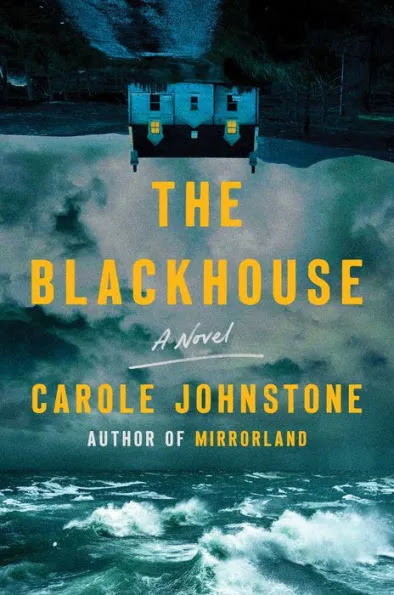
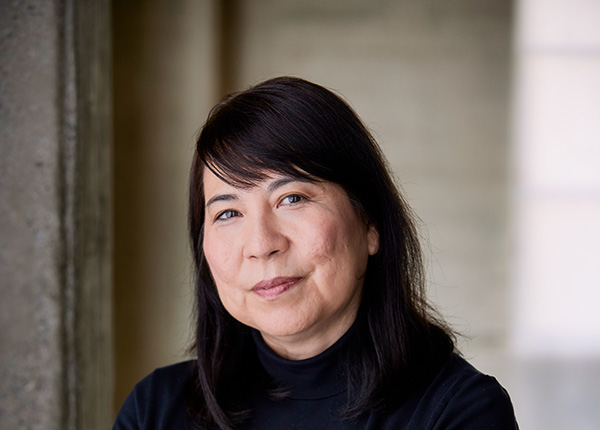
Carole Johnstone

Carole Johnstone is an award-winning writer from Scotland, whose short stories have been published all over the world. Her debut novel, Mirrorland, is a psychological suspense with a gothic twist, set in Edinburgh. Her second novel, The Blackhouse, is a very unusual murder-mystery set on a fictional island off the west coast of the Isle of Lewis.

Having grown up in Lanarkshire, she now lives in Glencoe in the Highlands of Scotland, although her heart belongs to the wild islands of the Outer Hebrides.

My Q&A with the author:

How much work does your title do to take readers into the story?

Setting is hugely important in all my books. I always try to write a story that could only be set where it’s set and nowhere else. The setting therefore becomes almost another character, so it’s pretty inevitable that my novels end up being named after that place.

Originally, The Blackhouse was actually titled A Thin Place, but this had to be changed because of another book out around the same time with a very similar name. A thin place is a place where the walls between our world and other worlds are said to be at their thinnest; they are often considered to be very spiritual and important landscapes, such as Stonehenge. The Outer Hebrides were considered in Celtic mythology to be thin places, and the Norse that settled there in the 9th century believed something similar. The Blackhouse is set on a fictional island off the Atlantic coast of the Isle of Lewis and Harris. The Outer Hebrides are wild, isolated, and brimful of legends and cautionary tales. They are islands that are sometimes as frightening as they are beautiful; as dangerous as they are peaceful, and I really wanted the title to reflect that contradiction and otherworldliness.

Equally though, the blackhouse itself is very central to the story. Blackhouses are the traditional domestic dwellings of Hebrideans going back centuries. The titular blackhouse is the place that both main characters, Maggie and Robert live, albeit 25 years apart. As Maggie tries to find out who murdered Robert and begins to uncover the truth about his terrible fate, Robert’s own story is told from his own perspective, so he very much inhabits the same space, almost like a ghost. The blackhouse also has a hidden earth cellar that is pretty pivotal to the plot, so the title made sense. And, of course, blackhouse as a word has a very gothic and creepy vibe to it, which is exactly how I wanted the novel to be perceived!

What's in a name?

The name of the fictional island in The Blackhouse is Kilmeray. So many place names in the Hebrides are derived from Scots Gaelic and/or Old Norse, and so I went to great lengths to make sure that all the place names on this fictional island were as authentic as possible. Kilmeray translates in Scots Gaelic as the ‘Church of (St) Maraigh’ (an entirely fictional saint!), and I had great fun making many of the landmarks of Kilmeray as spooky as possible, in keeping with so many of the real islands themselves:

Gleann nam Bòcan: Valley of Ghosts
Sid a’ Choin Mhòir: Lair of the Big Dog
Glumag a’ Bròin: The Pool of Sorrow
An Droch Chadha: Wicked Pass

However, it was a lot of work, and I’m not sure I’d have the stamina to do that again – particularly in terms of researching Old Norse!

How surprised would your teenage reader self be by your novel?

Probably not very (although hopefully impressed; I’d always written from a very young age, but never truly believed I would ever be published, let alone a fulltime writer!) In my teens I discovered Stephen King, and for many years my writing, my voice, everything was as near to his as I could make it. It took a long time and many years of selling short stories before I discovered my own voice and style of writing.

I’ve always been drawn to the darker side of fiction, and I’ve always been so fascinated by people: what makes us tick; what makes us break; all the wonderful and terrible things we are capable of doing and why. I also love gothic fiction: books like Rebecca, Jane Eyre, The Turn of the Screw, Beloved, The Haunting of Hill House, Gone Girl, The Dry – basically anything with a memorable setting that’s full of atmosphere, passion, betrayal, and secrets – that’s always been what I love the most, so it’s always been what I assumed I would write.

Do you find it harder to write beginnings or endings? Which do you change more?

Beginnings always. I start with the end. That’s always the beginning of the idea, that and the setting. I always know the ending so well I can literally see it in my mind like the closing scene of a movie, and this rarely changes in the writing. The beginning is much harder. Knowing where to start in a story is such a crucial decision. Your opening has to grab the reader, has to be interesting and compelling, and it has to make the reader want to read on. You can’t start with long passages of description or backstory. But you have to be equally careful that you don’t start too far into the story either, or the reader will struggle to keep up or to understand what’s happening. You also risk losing any element of suspense. I spend a lot of time plotting before I start writing, and often working out what my starting point is going to be takes the longest time of all.

Do you see much of yourself in your characters? Do they have any connection to your personality, or are they a world apart?

I almost always write in present tense, first person. In The Blackhouse there are two stories: Maggie’s story in the present day as she returns to the island with very strange motives for wanting to find out what happened to Robert and needing to prove that he was in fact murdered. And Robert’s story, following the last few months of his life, up until his untimely and disturbing death. I wrote both of these stories in first person without expressly intending to, it just felt most natural.

One of the most brilliant things about writing in first person is that you can create a whole almost 4-D experience for the reader. They are in that character’s shoes. They are seeing and feeling what she is. They don’t know what she doesn’t know. Everything is written through that person’s eyes, and it helps the reader not only understand or empathise with a character, but to feel like they are there in that place and in that situation far better than anything else.

I think when you write in first person it’s inevitable that something of yourself will creep in as it’s such a personal and intimate way to write. There’s generally a lot of inner monologue; you have to know everything about that character as you’re effectively playing their part. That said, I don’t think that personality-wise there are many similarities between me and any of the characters I play, although I do pull from personal experiences, thoughts, values etc. when I’m writing in general. I think that’s probably true of all writers, but it’s always so important that you remain completely invisible and let the characters tell the story.

What non-literary inspirations have influenced your writing?

Anything and everything. I try to read widely, in all genres. I keep up with the news (even when, as in the last few years, I don’t really want to). I read articles that interest me, particularly if I can mine them for story ideas! I watch movies all the time, again in all genres. All stories interest me, and definitely influence my writing in one way or another. But although I come across stories or ideas I wish I’d had first all the time, I’m always so careful not to poach them. As a teenager, I remember watching Aliens for the first time and then immediately writing a story that was so exactly the same I realised that there had been no point and no satisfaction in writing it at all. Writing should always be an amalgam of all the things that you see, hear, feel, and experience, but told through your own unique lens.

I’m also very guilty of always listening in to strangers’ conversations on trains or in pubs – a goldmine of ideas!
Visit Carole Johnstone's website.

--Marshal Zeringue

Wednesday, January 18, 2023

Iris Yamashita

Born in Missouri, raised in Hawaii and having lived in Guam, California, and Japan, Iris Yamashita was able to experience a diversity of culture while growing up. She studied engineering at U.C. San Diego and U.C. Berkeley and also spent a year at the University of Tokyo studying virtual reality. Her first love, however, has always been fiction writing, which she pursued as a hobby on the side.

Yamashita submitted her first screenplay to a competition where she was discovered by an agent at the Creative Artists Agency (CAA) who offered to represent her. Her big break came when she was recruited to write the script Letters From Iwo Jima for Clint Eastwood. Letters was named “Best Picture” by both the National Board of Review and the Los Angeles Film Critics Association. It received a Golden Globe award for “Best Foreign Language Film” of 2006 and was nominated for 4 Oscars including “Best Picture” and “Best Original Screenplay.”

City Under One Roof is her debut mystery novel set in a tiny Alaskan town where everyone lives in a single high-rise building.

My Q&A with Yamashita:

How much work does your title do to take readers into the story?

Titles are always difficult, whether they are for film or books. City Under One Roof references the most unique feature about the setting, which is that all the residents live in a single high-rise building. The setting is inspired by a real city in Alaska that was originally constructed as a secret military base and it was given the nickname “the city under one roof” back then. The publishers had thought City of Ice and Lies would be a good title because it references cold and hints of intrigue, but there are actually a number of books titled City of Ice out there and I thought my book would get lost in the mix, so we ultimately went with City Under One Roof.

What's in a name?

I don’t think I gave too much thought to the characters’ names other than that they reflected their heritage. There is, however, a reference to Lewis Carrol’s real name if you look for it. The book is chock full of Alice in Wonderland references.

How surprised would your teenage reader self be by your new novel?

I think my teenaged self was optimistic about one day getting a book published, but the mystery genre would have definitely been a surprise. I haven’t been an avid mystery book fan, but now I find mysteries are a fun genre to write in.

Do you find it harder to write beginnings or endings? Which do you change more?

Both are tough but I would say endings are harder and change more because they have to be satisfying on many levels whereas you can have an intriguing beginning without having everything figured out yet.

Do you see much of yourself in your characters? Do they have any connection to your personality, or are they a world apart?

I’m a pretty boring, sedentary, old Asian woman, so I would say I am worlds apart from my characters. Absolutely no one would want to read me as a character. However, for each character, I try to put myself in their shoes, understand their motivations and make them identifiable.

What non-literary inspirations have influenced your writing?

I was a big fan of Twin Peaks when I was younger and I think there are definite Lynchian influences. Top of the Lake was another series that I really enjoyed and made me think the mystery genre could be for me.
Visit Iris Yamashita's website.

--Marshal Zeringue