Saturday, December 3, 2011

Miranda July

Miranda July is a filmmaker, artist, and writer. Her videos, performances, and web-based projects have been presented at sites such as the Museum of Modern Art, the Guggenheim Museum and in two Whitney Biennials. July wrote, directed and starred in her first feature-length film, Me and You and Everyone We Know(2005), which won a special jury prize at the Sundance Film Festival and four prizes at the Cannes Film Festival, including the Camera d’Or. Miranda July’s most recent film is The Future (2011), which she wrote and directed and stars in.

Her fiction has appeared in The Paris Review, Harper’s, and The New Yorker; her collection of stories, No One Belongs Here More Than You (Scribner, 2007), won the Frank O’Connor International Short Story Award and has been published in twenty countries. Her latest book is It Chooses You (McSweeney’s, 2011).

From her Q & A with Carolyn Sun at The Daily Beast:

In your latest book, It Chooses You, you go out and interview people you’d met through the Penny Saver as a way to distract yourself while finishing your script to The Future. At what point did you realize you had a book or material for a project?

A lot of projects I start feel very open-ended at the beginning, so I’m used to it. But usually I don’t write about it like I did in this book. Every project feels unreal at the beginning. So I didn’t worry about it too much. But definitely it was very unclear where I was going with this. My photographer and assistant [whom I brought on the interviews], we would have these long conversations on these long drives—what are we doing? What is this?

Some of these people’s stories were quite touching. I’m wondering if there are stories that are hard to shake?

Andrew, the tadpole guy, he got to me. Something about the fact that he was so young. And I remember talking to him on the phone and trying to convince him it was a good idea to have me come over. I was trying to be cool at first, because I thought because he was a 17- year-old boy he would be cool, and that would be what mattered to him. But the second I met him and saw his tadpole garden, I was like, “Oh, this kid is not any cooler than me.” And also, out of a slight paranoia because of the book being out, I keep thinking about...[read on]
--Marshal Zeringue

Friday, December 2, 2011

D. E. Meredith

D.E. Meredith read English at Cambridge, then ran the press office and the land mines campaign for the Red Cross, travelling extensively to Bosnia, Afghanistan and Rwanda during the conflicts. She worked as a consultant on media relations for Greenpeace and other worthy causes before embarking on "The Hatton and Roumande Mysteries" series for St Martin's Press (Devoured, October 2010, The Devil's Ribbon, October 2011).

From a Q & A about the Hatton and Roumande mysteries:

Tell us about your book.

“Devoured” is a classic murder mystery combining an eclectic mix of early forensic science and the nineteenth-century craze for specimen collecting, set against a backdrop of a river adventure into the heart of Borneo’s steaming jungle and an evil heart of darkness.

What inspired you to write this book?

Quite simply reading the wonderful “The Malay Archipelago” by Alfred Russel Wallace. It’s an amazing window into the mind of one of the world’s greatest naturalists, who has been overshadowed by his more famous contemporary, Charles Darwin. This famous travelogue describes Russel Wallace’s work, ambitions and thinking as he travelled into the remotest corners of the earth looking for birds, butterflies and beasts.

Is Professor Hatton based on anyone real?

No, but I did get his name from a Victorian graveyard near where I live. He is completely imagined. There were no famous forensic scientists working with Scotland Yard in the mid Victorian period, as far as I know. However, I did base him loosely on the character Ed Norton plays in the film version of, “The Painted Veil.” Like Somerset Maugham’s character, Walter Vane, Professor Hatton is thin, milk pale, repressed and uptight, in the way only an Englishman can be. He is intent only on his work - work which was deemed to be Godless, highly controversial and to many ordinary people at the time, next to devil worshipping. Hatton feels...[read on]
Learn more about the book and author at Denise Meredith's website.

The Page 69 Test: The Devil's Ribbon.

My Book, The Movie: The Devil's Ribbon.

Writers Read: D.E. Meredith.

--Marshal Zeringue

Thursday, December 1, 2011

George R.R. Martin

George R.R. Martin's best-selling fantasy series "A Song of Ice and Fire" is the basis for the HBO series Game of Thrones.

From his Q & A with Adam Pasick at New York magazine:

What's your biggest worry about the TV show as it gets deeper into the story?

There are certainly challenges that lie ahead, and as the show goes on, the challenges will get greater. I wanted to write a book as big as my imagination. Now David [Benioff] and Dan [Weiss] are faced with the very real challenge of how do you translate this complex thing with a cast of thousands and giant castles and dragons and walls of ice — serious production challenges that get bigger with every book. I think one of biggest challenges is budgets and shooting time. We had ten hours for the first season, and the same for the second. Boardwalk Empire has twelve, Treme has twelve — if we'd had two more hours we could have told a lot more of the story. Storm of Swords [the third book] is enormous and it will have to be broken up into two seasons, I think. But David and Dan are great people and they've assembled a great team, so if anyone can do it, they will.

The other thing that concerns me is what I call the butterfly effect. If you're familiar with the Ray Bradbury short story, you'll know what I mean. On TV, we saw the death of Mago, but we will see him in the books — he's still alive. It will have to be different in the book than in the show, because they killed him on TV. These are the kind of ripple effects that can happen.

How do you keep all of these details straight? Is there a huge encyclopedia or computer file that you use when you write?

It's mostly...[read on]
See George R.R. Martin's list of 5 novels that should have won the Hugo Award.

--Marshal Zeringue

Wednesday, November 30, 2011

Alice Fahs

From a Q & A with Alice Fahs about her new book, Out on Assignment: Newspaper Women and the Making of Modern Public Space:

Q: You state that we know more about a few mid-nineteenth century women journalists than we do about the hundreds of female journalists writing at the turn of the century, despite the amount of published writing they left behind. Why is this the case?

A: Many of the newspaper women I write about were well known in their day--some were even syndicated nationally--so I imagine they would have been pretty surprised that they have been so thoroughly forgotten. But there is a perfect storm of reasons why they have been neglected. Not only do we tend to undervalue the types of newspapers they often worked for (so-called "yellow" or sensational newspapers), but we undervalue the kinds of work newspaper women did--especially if their stories appeared on the much-maligned woman's page. So we simply haven't looked for these women's writings.

By the way, even newspaper women themselves often undervalued their work (one of the reasons there are so few collections of their papers or letters in archives). Women journalists who aspired to political reporting or police reporting were understandably resentful that they were often forced to work for the woman's page instead. They talked scornfully of being stuck in the "hen coop." But a big surprise for me was how lively their writings were for the woman's page--how much fun they were to read.

Q: Out on Assignment mentions many "stunts" or "adventures" performed by female journalists. What are some examples, and what caused these stunts to be simultaneously popular and controversial?

A: Lots of people remember that Nellie Bly made a newspaper sensation by going...[read on]
--Marshal Zeringue

Tuesday, November 29, 2011

John Ashbery

Pulitzer Prize–winning poet John Ashbery was awarded the National Book Foundation's Lifetime Achievement Award in 2011.

From his Q & A with Belinda Luscombe in Time magazine:

You were banned from Poetry magazine for a while. Why?

My school roommate was a frustrated poet, and he took some of my poems and some of his own, which were terrible, and sent them to Poetry, and then I sent my poems some time after that. And they sent back a one-word note--"Sorry." It wasn't until six months later, when I saw my poems in Poetry, I realized what had happened. I was now down in their books as a plagiarist. That was really depressing.

You grew up in an era when it was considered shameful to be gay. How would your work change if you grew up now?

There is a school of criticism that says that my poetry is so torturous and obscure because I've been trying to cover up the fact of my sexuality all these years, and I think that's an interesting possibility. But I'm not sure whether that's the generating force in my poetry. I think I would have been attracted to the surrealists anyway.
Read the complete Q & A.

--Marshal Zeringue

Monday, November 28, 2011

Roger Smith

Roger Smith was born in Johannesburg and now lives in Cape Town. His debut thriller, Mixed Blood (2009), was published in six countries and won the Deutscher Krimi Preis (German Crime Prize). His second book, Wake Up Dead (2010), was a 10 best pick of the Philadelphia Enquirer, Times (South Africa) and Krimiwelt (Germany) and was nominated for the German Krimi-Blitz Reader’s Award. Mixed Blood and Wake Up Dead were nominated for Spinetingler Magazine New Voice Awards in the U.S. and both books are in development as feature films.

His third novel is Dust Devils.

From Smith's Q &A with Kim Saulse at The Big Issue:

[TBI] Your debut Mixed Blood and Wake Up Dead are being adapted for the screen, with Samuel L Jackson starring in the film version of Mixed Blood. How do you feel about that?

[RS] It all happened in a couple of weeks. It was so disorientating for me, there’s no way of describing it. From me reading the book, to the person closest to me reading it and then Samuel L Jackson reading it — it was way crazy! It looks quite possible that they’ll be shooting in Cape Town. I’ve read the script of the second book and it is a very interesting interpretation.

[TBI] Do you have any anxiety about handing your work over to screenwriters?

[RS] As a screenwriter I’ve adapted other people’s books and I know that the demands of a book and script are different. Clearly the density of a book can never completely be transposed to a script for film. I think you are an idiot if...[read on]
Learn more about the book and author at Roger Smith's website.

Read about Roger Smith's top 10 crime novels.

The Page 69 Test: Mixed Blood.

The Page 69 Test: Wake Up Dead.

Writers Read: Roger Smith.

My Book, The Movie: Dust Devils.

--Marshal Zeringue

Sunday, November 27, 2011

Anne Rice

Anne Rice's novels include Interview With the Vampire, The Vampire Lestat, The Queen of the Damned, and the forthcoming werewolf novel The Wolf Gift.

From her Q & A with Marlow Stern at The Daily Beast:

How did you develop your set of vampire “rules,” so to speak?

I went along with what I inherited from Hollywood—that vampires burn up in the sun. I didn’t know that wasn’t part of the original Dracula. And the rest I sort of made up. I thought if they responded hysterically to garlic or crucifixes, that was not as interesting as their being nihilistic and atheistic, and not having a “magical” response to something but having definite limitations and rules.

So what’s your take on the Twilight series? It really does seem to go against the grain in its depiction of vampires.

I think the concept is so rich in itself. It’s like the concept of the cowboy or the detective. Vampires have become almost like a genre, like the Western. What I see happening, with writers like Charlaine Harris and Stephenie Meyer, is the domestication of the vampire. I was more interested in a powerful, Old World figure that had a lot of knowledge, experience, and was surrounded by a lot of glamour and mystery. I wanted to keep the romance. I loved the idea of these people gaining wisdom as they aged, and how that might cause them to be ever more tormented by the fact that they don’t really belong in the world and they prey on human beings, who they’ve really come to appreciate. Charlaine Harris is doing something different by imagining what it’s like if vampires are legal and you have them living in your Southern town, and I think she gets a tremendous amount of energy out of that. She’s very witty—there’s a lot of satire there—and on the HBO show True Blood, there’s even a romance with Vampire Bill.

True Blood is set in your native Louisiana, and it really uses vampirism as a metaphor for outsiders, including the gay community. What are your thoughts on using vampirism as a metaphor for the disenfranchised?

It’s...[read on]
--Marshal Zeringue

Saturday, November 26, 2011

Anthony Horowitz

Anthony Horowitz’s new Sherlock Holmes novel is The House of Silk.

From his Q & A with Anna Metcalfe at the Financial Times:

What music helps you to write?

Music by Philip Glass.

Which literary character most resembles you?

Gordon Comstock in George Orwell’s Keep the Aspidistra Flying. It’s his constant striving for contentment. I drink less though.

Who are your literary influences?

Charles Dickens, George Gissing, Ian Fleming, Hergé.

Who would you like to be stuck in a lift with?

Tony Blair. I would love to know how he lives with himself.
Read the complete Q &A.

--Marshal Zeringue

Friday, November 25, 2011

David Baldacci

David Baldacci's latest novel is New Day.

From his Q & A with Janice Kaplan at The Daily Beast:

Janice Kaplan: I once heard Joyce Carol Oates say that she’s not prolific—everybody else is just lazy. Given how many books you’ve written, I assume the same holds?

David Baldacci: Very funny, but I might get in trouble with that. Some people take 10 years to write a book and some can do one in under a year. About four years ago, I did two books in a year, and that became what the publishers expected—one in the spring and one in the fall. But if I worried too much about publishers’ expectations, I’d probably paralyze myself and not be able to write anything.

Thriller and mystery writers often get famous for a single character. Given that you have several popular characters—and series—already, why start a new series now?

It keeps me fresh. I like John Puller because I’ve never really written about the military before. A lot of Virginians will recognize his last name from Chesty Puller, who was the most decorated Marine in U.S. history. He had some bumps along the way, and he was in some ways the model for my character’s father, John Puller Sr. I was also intrigued by the idea of a loner character being sent...[read on]
--Marshal Zeringue

Thursday, November 24, 2011

Daniel Kahneman

Daniel Kahneman is a Senior Scholar at the Woodrow Wilson School of Public and International Affairs. He is also Professor of Psychology and Public Affairs Emeritus at the Woodrow Wilson School, the Eugene Higgins Professor of Psychology Emeritus at Princeton University, and a fellow of the Center for Rationality at the Hebrew University in Jerusalem.

He won the 2002 Nobel Prize in economics.

From his Q & A with Belinda Luscombe at Time magazine:

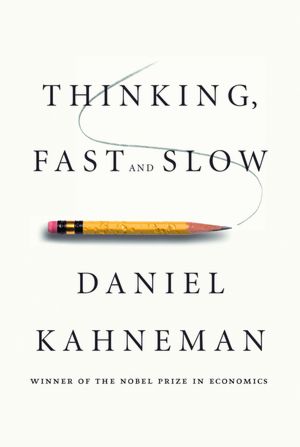
In your book Thinking, Fast and Slow, you frame the way we think as two different systems. What are they?

Slow thinking has the feeling of something you do. It's deliberate. It gives you a sense of agency. That's not at all the way it happens when fast thinking operates, like when you brake a car suddenly.

You say we often believe we're thinking slow when we're not. What are the biggest mistakes we make as a result?

We are normally blind about our own blindness. We're generally overconfident in our opinions and our impressions and judgments. We exaggerate how knowable the world is.

What's your favorite experiment that demonstrates our blindness to our own blindness?

It's one someone else did. During [the '90s] when there was terrorist activity in Thailand, people were asked how much they'd pay for a travel-insurance policy that pays $100,000 in case of death for any reason. Others were asked how much they'd pay for a policy that pays $100,000 for death in a terrorist act. And people will pay more for the second, even though it's less likely.
Read the complete Q & A.

--Marshal Zeringue