Tuesday, January 10, 2017

Thomas Perry

Thomas Perry's novels include the Jane Whitefield series (Vanishing Act, Dance for the Dead, Shadow Woman, The Face Changers, Blood Money, Runner, Poison Flower, and A String of Beads), Death Benefits, Pursuit, the first recipient of the Gumshoe Award for best novel, and The Butcher's Boy, which won the prestigious Edgar Award.

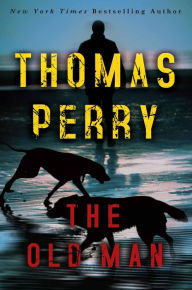
Perry's new novel is The Old Man.

From his Q&A with Robert Rotstein for The Big Thrill:

THE OLD MAN tells the story of Dan Chase, a retired 60-year-old widower who lives in Vermont and who enjoys walking his two large dogs. Yet, Dan isn’t exactly who he seems. What motivates Dan?

As a young military intelligence operator 35 years ago Chase made an ill-considered decision motivated by a misplaced but noble sense of duty. After delivering U.S. aid money to a middleman, he learned the middleman kept the money instead of delivering it to Libyan rebels. He retrieved most of the money and brought it home to the U.S., but his superiors tried to arrest him and blame him for the deaths of the rebels who went unsupplied. Enraged, he held onto the money and disappeared. Thirty-five years later, he has been married and widowed, raised a daughter who’s become a doctor, and lived a good life. But now, someone has come for him—not to arrest him, but to kill him. His motivation now is simply to...[read on]
Writers Read: Thomas Perry.

The Page 69 Test: The Old Man.

--Marshal Zeringue

Monday, January 9, 2017

Carin Berger

Author and illustrator Carin Berger's new children's picture book is Good Night! Good Night!. From her Q&A with Deborah Kalb:

Q: How did you come up with the idea for Good Night! Good Night!, and why did you pick bunnies as the characters?

A: Like many kids, my daughter was a sleepless wonder...always finding one more reason to delay bedtime. The delicate balancing act of nighttime rituals...the parental goal of ending the evening and the delicious cuddliness of that particular point in the day was the inspiration for Good Night! Good Night!.

As for bunnies...well...we have a beloved pet rabbit, Pearly, who is now 100 years old in bunny years, and he [or bunnies] appear in some form in many of my books.

Q: How do your illustrations and your writing come together for you when you're starting a book project like this? Does one happen before the other, or do you work on them simultaneously?

A: In most of my books, including this one, the writing...[read on]
--Marshal Zeringue

Sunday, January 8, 2017

Molly MacRae

Molly MacRae spent twenty years in the foothills of the Blue Ridge Mountains of Upper East Tennessee, where she managed The Book Place, an independent bookstore; may it rest in peace. Before the lure of books hooked her, she was curator of the history museum in Jonesborough, Tennessee’s oldest town.

MacRae lives with her family in Champaign, Illinois, where she connects children with books at the public library.

Her latest novel is Plaid and Plagiarism, book one in the Highland Bookshop Mystery series.

From MacRae's Q&A with Kings River Life Magazine:

KRL: What brought you to choose the setting and characters in your latest book/series? Please tell us a little about the setting and main character for your most recent book.

Molly: Why did I choose a bookshop in the Scottish Highlands as the setting for Plaid and Plagiarism? For the same reason my main characters buy the shop and uproot their lives to move there and run it. It’s Scotland! The Highlands! A bookshop! Janet Marsh and her three business partners see the move as a great retirement/change of career scheme.

Janet, an American, is a retired librarian who loves everything about books. She and her family spent many summers in the Inversgail, Scotland, the town where the bookshop is located. Janet is joined in the scheme by her daughter (a burned-out lawyer), her daughter’s old college friend (a newspaperwoman who needs to reinvent herself in an age when print newspapers are disappearing) and Janet’s longtime friend Christine, a Scot who lived in the States for thirty years and plans to move home to Inversgail for the business and to care for her aging parents.

The setup is a little farfetched, but I researched the UK laws on Americans buying businesses and moving over there; I once managed a bookstore; and I lived in Scotland. So yeah, I think it could be done. Well, okay, probably only...[read on]
Visit Molly MacRae's website.

My Book, The Movie: Plaid and Plagiarism.

The Page 69 Test: Plaid and Plagiarism.

Writers Read: Molly MacRae.

--Marshal Zeringue

Saturday, January 7, 2017

Ross Montgomery

Ross Montgomery's latest novel for kids is Perijee & Me.

From his Q&A with Deborah Kalb:

Q: How did you come up with the idea for Perijee & Me?

A: It originally started off as an idea I had for a short story - it would follow a similar plot, but take these great big leaps of time between passages.

(SPOILER ALERT!) It would start with Caitlin finding Perijee, then jump to it being much more grown five months later, then more grown after another few months... then it suddenly exploding in size, then jumping ahead again a few months to when he's taken over the world, and so on!

In the end I liked the idea so much I decided I wanted to flesh it out as a longer book and made quite a few changes.

The original spark of inspiration was a very strange one - I was walking through a park near where I teach, feeling worried because my publisher wanted me top come up with some new ideas, when I saw a man lying on the ground.

He was a typical London businessman, just like all the others in the park - pinstripe suit, black shoes, briefcase - but he was lying straight as a plank and flat on his face.

It looked like he'd been dropped from a great height and was trying to copy everything around him in this very strange way - which got me onto thinking about him as an alien. I immediately started thinking about a girl discovering a shape-shifting alien...[read on]
--Marshal Zeringue

Friday, January 6, 2017

Ruth Franklin

Ruth Franklin is a book critic and former editor at The New Republic. She has written for many publications, including The New Yorker, Harper’s, The New York Times Book Review, The New York Review of Books, and Salmagundi, to which she contributes a regular film column. She is the recipient of a Guggenheim Fellowship in biography, a Cullman Fellowship at the New York Public Library, a Leon Levy Fellowship in biography, and the Roger Shattuck Prize for Criticism. Her first book, A Thousand Darknesses: Lies and Truth in Holocaust Fiction (Oxford University Press, 2011), was a finalist for the Sami Rohr Prize for Jewish Literature.

Franklin's new book is Shirley Jackson: A Rather Haunted Life.

From the transcript of her interview with NPR's Linda Wertheimer:

WERTHEIMER: "The Lottery" is a kind of template for some of [Shirley Jackson's] other work, characters that seem ordinary, nice, normal, small-town folks but then who participate in a terrible tradition in their village. She said in one of the lectures that you quote something to the effect that simmering under the surface of ordinary life is extraordinary evil. What created this world view, do you think?

FRANKLIN: I think her tendency to see evil in the most mundane circumstances came from her childhood. She had a difficult childhood, a difficult relationship with her mother especially, who was a socialite who wanted to mold Jackson in her image. And it became clear quite early on, I think, that Shirley wasn't going to be the kind of daughter her mother had hoped her to be.

So I think there was this kind of fundamental conflict in which she felt unloved and unappreciated in the setting that should have been...[read on]
Visit Ruth Franklin's website.

The Page 99 Test: Shirley Jackson.

--Marshal Zeringue

Thursday, January 5, 2017

Ann Bausum

Ann Bausum's latest book for older kids is The March Against Fear: The Last Great Walk of the Civil Rights Movement and the Emergence of Black Power.

From her Q&A with Deborah Kalb:

Q: Why did you decide to focus on the March Against Fear?

A: This was history I had a glimpse of as a child—it was partly to complete a loop back to my childhood, and explore the history that seemed so perplexing when I witnessed it. It was a memory without context into my adult life. I didn’t realize it was this march I had seen.

It was partly to satisfy the childhood [memory] and partly to understand what happened to the civil rights movement, and use this endeavor as a way to look at what was going on with the civil rights movement mid-decade. Having written about it already, this felt like a missing piece.

Q: How did you research the book, and was there anything that especially surprised you?

A: The research was extensive, including a drive in 2012 which retraced the route of the March Against Fear, going South and then back North the way [James] Meredith walked the next year. I’d done that with other history. I find it...[read on]
--Marshal Zeringue

Wednesday, January 4, 2017

Teddy Wayne

Teddy Wayne is the author of the novels Loner, The Love Song of Jonny Valentine, and Kapitoil. From the transcript of his interview with NPR's Scott Simon:

SIMON: You must have finished this novel last year.

WAYNE: I did, yes.

SIMON: But it's hard to read it and not think of the recent case of Brock Turner, the former Stanford student who got out of jail just a few days ago after serving just three months for felony sexual assault. What would you tell readers who try and make comparisons?

WAYNE: Well, the Brock Turners of the world are a different type of character from [my character] David. They're the alpha males. David's a decided beta male. But both are products of what's called frequently toxic masculinity, which is the ways that the patriarchy can be damaging to men, not just women. And that it trains them to be dominant, to be aggressors, to be violent, to not betray any vulnerability or sensitivity.

So both are flip sides of the same coin of toxic masculinity. David is additionally angry that he does not have the rewards that Brock Turner has. He's pushed to the side, whereas Brock Turner is a hailed athlete.

SIMON: Mr. Wayne, does David stay with you? I mean, I've been having nightmares, and the character didn't begin in my mind.

WAYNE: Yeah. At this point, I'm - I don't mean to make - to sound glib. I'm more concerned - I got married this summer and I'm more concerned at this point with people in my wife's family reading it who I've tried to dissuade from reading it. As for...[read on]
Visit Teddy Wayne's website.

The Page 69 Test: Kapitoil.

Writers Read: Teddy Wayne (September 2016).

--Marshal Zeringue

Tuesday, January 3, 2017

Benjamin R. Barber

Benjamin R. Barber is the author of If Mayors Ruled the World: Dysfunctional Nations, Rising Cities. From the transcript of his December 2016 interview with Fareed Zakaria:

ZAKARIA: Ben, what I'm struck by is that, you know, the difference in perspective. [Los Angeles mayor] Eric Garcetti clearly, you know, feels that immigrants, for example, are a vibrant part of the DNA of the city. And yet, there is this reaction. I was looking at the numbers. You know, you look at all these charts; it does look like a sea of red that Donald Trump won, versus these little slivers of blue. And then you realize cities make up 3.5 percent of America's land space, but they house something like 55 percent of the population?

BARBER: And produce 80 percent of the wealth and 95 percent of the universities and 98 percent of the culture and 99 percent of the patents. That's true right across the world. That's not just true in the United States. Cities are the life blood; they are the fuel and the engine of the economy. They are what make this country run. Farmers are great. Suburbs are fine. We've got to all work together -- no question about that. But the division here is not Eric Garcetti making war on the suburbs or the countryside but voters out there feeling resentment at cities because there are peoples of color, because there are minorities, because there are immigrants and because there are Muslims.

I very much appreciate the mayor's pragmatism. And he's right to say the first job of a mayor is to work with the new president, whatever party. The new president has said we will not tolerate sanctuary cities, cities that say we will not deport immigrants who are workers here and are living lawfully, in terms of keeping the law and sending their kids to school and holding jobs and so on.

If that happens, mayors are going to have to be ready to say not just "We're going to work with you, Mr. President, but we are not going to let you do certain things."

Mayor de Blasio said just two weeks ago in a remarkable speech at Cooper Union, where Lincoln spoke a long time ago -- he said...[read on]
--Marshal Zeringue

Monday, January 2, 2017

David Savill

David Savill's debut novel is They Are Trying To Break Your Heart. From his Q&A with Deborah Kalb:

Q: You've spent time in both Bosnia and Thailand. Why did you decide to combine the Bosnian war and the 2004 tsunami in Thailand in this novel?

A: How do we put ourselves back together after the worst of disasters? This was what interested me. The idea that in the darkest of times, we also find the most beautiful light.

It’s an idea a lot of Americans might need just now. I had witnessed the aftermath of both war and natural disaster, and it was the fact of survival, and hope, that stayed with me.

In the story, three characters have been confronted with different kinds of disaster; the pain of having a loved-one go missing, the grief of having your childhood stolen by a war, and the injustice of being a victim to a terrible crime.

The story doesn’t flinch from its realities. The world is trying to break the heart of my characters. But in the end, we are seeing these people struggle towards...[read on]
--Marshal Zeringue

Sunday, January 1, 2017

Susan Scott Parrish

Susan Scott Parrish's new book is The Flood Year 1927: A Cultural History. From her Q&A with Debra Liese at the Princeton University Press blog:

There were other major disasters in the early 20th century U.S. What was unique about the flood you focus on?

SP: Unlike other devastating floods of the era—in Johnstown, Pennsylvania (1889), Galveston, Texas (1900), and the Lake Okeechobee area of Florida (1928)—which all occurred in a matter of hours, this Mississippi River flood moved so slowly and lasted so long that national audiences could be pulled in, through newly established media circuits, to the events as they unfolded. One of William Faulkner’s narrators called it “the flood year 1927” because the disaster truly lasted an entire year. Moreover, unlike the Johnstown and Okeechobee floods, both also man-made disasters, in which the powerful industrialists involved in the first case and the Florida boosters in the second sought to avoid publicity, in 1927 white southerners, as well as African American pundits and environmentalists throughout the nation, were determined to bring attention to the flood. I would argue, in fact, that not only was this the “worst” flood of the entire 20th century in terms of displaced persons and property damage, but it was also the most publicly engrossing U.S. environmental disaster. As such, it allows us a signal opportunity to ask the following questions: How do—and how should—humans communicate with themselves about politically charged eco-catastrophes? What are the stages through which mass-mediated societies encounter disaster? Do certain media entail better, or more productive, or more democratic epistemologies of crisis? What can we learn from 1927 about how to make transformative expression, and knowledge, out of disaster today and in the future?

Why was this flood so meaningful to people?

SP: Because the course of the flood moved from north to south, retracing the 1863 river-borne assault on the Confederate strongholds of Mississippi and Louisiana, this flood had the peculiar power to...[read on]
--Marshal Zeringue