Tuesday, December 10, 2019

Glenn Simpson and Peter Fritsch

Glenn Simpson and Peter Fritsch are the authors of Crime in Progress: Inside the Steele Dossier and the Fusion GPS Investigation of Donald Trump.

From the transcript of their Fresh Air interview with Terry Gross:

GROSS: So let's get back to your work with Christopher Steele, the former British intelligence officer who was a Russia expert. And - so he compiled a series of memos that came to be known as the Steele dossier. Tell us some of the things in those memos that you think have been most important in revealing information that was validated about Russia or Russia's connections to Donald Trump.

SIMPSON: Well, I think the single most important thing that comes out of the dossier - which is really in the first memo - was that the Kremlin was planning and running an operation to elect Donald Trump the president of United States. And that it was a big operation that involved a lot of different aspects and was very deliberately designed to elect Trump and not just to sow discord in U.S. political system - although that was a secondary purpose. That was really right on target. It was an incredibly prescient observation that the U.S. government did not reach until months later. And so much of the summer of 2016 we spent trying to stand that up and raise concerns, raise alarms with other people. It's been a lot of attacks against Chris' work for being unsubstantiated, but it doesn't really get said enough that, in this one central point, he was dead right.

FRITSCH: To use a metaphor, Terry, that our - a colleague of ours likes to use, he predicted an attack on Pearl Harbor. The Pearl Harbor attack happened. In retro - and then in hindsight, a lot of people said, well, you got the number of Zeros wrong, you got the direction they were coming in from wrong, therefore the document is somehow impugned. Now, the document was never meant to be read as a dossier; it was a series of contemporaneous intelligence reports - right? - which collectively tell that important story.

SIMPSON: There are other important aspects of these memos that have stood up quite well. They identify about a half-dozen people associated with the Trump campaign or the president in one way or another who later turned out to, in fact, be the key figures in the surreptitious relationship between Donald Trump and...[read on]
--Marshal Zeringue

Monday, December 9, 2019

Niall Williams

Niall Williams's new novel is This Is Happiness.

From his Q&A with Deborah Kalb:

Q: How did you come up with the idea for This Is Happiness, and for your character Noel Crowe?

A: I never know where an idea comes from. I generally only start with a sentence, and see where that leads.

But, having moved with my wife Christine to the west of Ireland in the mid-1980s—an account of which became the first of our four non-fiction books, O Come Ye Back, published in New York by Soho Press—I was struck by the fact that people could remember The Day the Electricity Came.

And this seemed to me a threshold time in Irish life, when, halfway into the 20th century, the west of Ireland was still living in the 19th.

Q: The novel features your protagonist as an older man looking back at himself at 17. Why did you decide to structure the book that way?

A: I didn’t want to write a “historical” or period novel as such, by just setting it in the ‘50s.

I think many of us also have a time in our youth, maybe a very brief time like a summer or a few weeks when we...[read on]
--Marshal Zeringue

Sunday, December 8, 2019

Michael Lewis

Michael Lewis's latest book is The Fifth Risk.

From his interview with Tim Adams for the Guardian:

Part of your story examines the consequences of the ideological cull of climate scientists from government. You have lived in close proximity to wildfires in California, there have been unprecedented hurricanes. Do you think there will come a point when people demand leaders who understand the importance of scientific knowledge?

You would think so. It hasn’t happened yet. For people to suddenly start to value what good government does, I think there will have to be something that threatens a lot of people at once. The problem with a wildfire in California, or a hurricane in Florida, is that for most people it is happening to someone else. I think a pandemic might do it, something that could affect millions of people indiscriminately and from which you could not insulate yourself even if you were rich. I think that might do it.

That is quite an apocalyptic thought. You have always seemed by nature an optimist, are you feeling more nihilistic about what you call the drift of things?

I’m a little more wary than I have been. What we are seeing is an attack on the idea of progress and the idea of science. In the Trump administration there seems to be a total lack of respect for expertise. It sounds like...[read on]
--Marshal Zeringue

Saturday, December 7, 2019

Samuel Fleischacker

Samuel Fleischacker is LAS Distinguished Professor of Philosophy at the University of Illinois at Chicago. His new book is Being Me Being You: Adam Smith and Empathy.

From Fleischacker's Q&A at the University of Chicago Press blog:

Your book uses the philosophy of Adam Smith to explore the nature and value of empathy. To start us off, can you give us a quick introduction to Smithian empathy?

Smithian empathy is the kind of shared feeling that arises when I imagine myself into your situation. David Hume had understood empathy (what he and Smith called “sympathy”—the word “empathy” wasn’t invented until after their time) as my feeling whatever you feel. Smith understands it as my feeling what I think I would feel if I were you, in your situation. Hume’s empathy is a kind of contagious feeling—I “catch” your feelings, whether of sadness or of joy, whether I want to do that or not. Smith’s empathy requires more action on our part and depends on imagination. I try to show that Smith’s kind of empathy is deeper and more important to morality.

What drew you to Adam Smith, and to the topic of empathy in particular?

Smith is extremely famous, but I think Smith is vastly different from the popular image of Smith—the supposed champion of selfishness, who defended a ruthless capitalism—and indeed is someone who can help us work against the selfishness that is rampant in our modern world. I also think he is a thoughtful, nuanced theorist of empathy who avoids...[read on]
The Page 99 Test: Divine Teaching and the Way of the World.

--Marshal Zeringue

Friday, December 6, 2019

Teru Clavel

Teru Clavel is the author of World Class: One Mother's Journey Halfway Around the Globe in Search of the Best Education for Her Children.

From the transcript of her interview with Fareed Zakaria:

ZAKARIA: You also talk about the respect the teachers had in these societies. Now, that's something the government, I suppose, can't really do. Teachers could be paid more, which I think is one of the tragedies in America. We think we pay teachers well. We don't. We pay them badly.

CLAVEL: Yes.

ZAKARIA: What could one do about that? Because there really is this difference, I think.

CLAVEL: So the reverence for teachers is really something that really smacks you kind of in the face when you're in Shanghai and in Japan. And on average, again, in Japan, for example, there are 200,000 applicants for 38,000 spots to become teachers. And it's as difficult to pass the bar, if not, more difficult in Japan to become a teacher. So the credentialing, the licensing is really, really difficult.

And what you also see is the teachers will do anything to help this next generation of students. So I tell many stories in the book where it will be 7:00 P.M. at night, and whenever the house phone rang, we knew it was a teacher who was teaching from -- who was actually, I would just say, calling from the teacher collaboration room that all the teachers went to, because so much of their time isn't spent necessarily in the classroom but it's working together collaborating through professional development and lesson planning.

And in the United States, teachers spend 27 hours a week on average in the classroom, whereas the average for OECD nations is...[read on]
--Marshal Zeringue

Thursday, December 5, 2019

J. Kasper Kramer

J. Kasper Kramer's new middle grade novel for kids is The Story That Cannot Be Told.

From her Q&A with Deborah Kalb:

Q: How did you come up with the idea for The Story That Cannot Be Told, and for your character Ileana?

A: For about five years, I lived in Japan, where I taught at an international school in Tsukuba, Ibaraki. Some of my coworkers and best friends were Romanian women.

One night, a friend came over to tell me some fairytales as research for another book I was writing, but then she started telling me stories about growing up under Ceausescu and Communist reign. Sitting there listening, taking notes as fast as I could, I realized I had a very different book to write.

Ileana was inspired by my friends, who were about the same age in Romania in the 1980s. She also has pieces of me and, of course, just a lot of her own personality, which...[read on]
--Marshal Zeringue

Wednesday, December 4, 2019

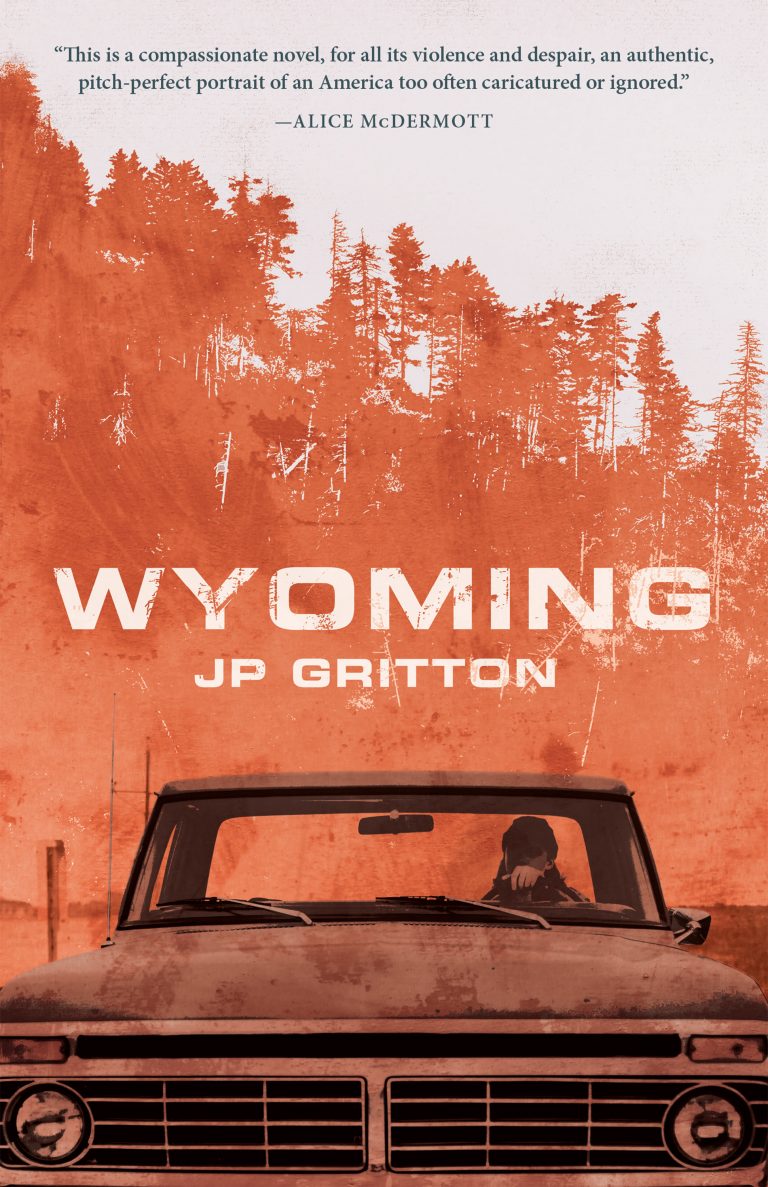
JP Gritton

JP Gritton’s awards include a Cynthia Woods Mitchell fellowship, a DisQuiet fellowship and the Donald Barthelme prize in fiction. His stories have appeared or are forthcoming in Black Warrior Review, Greensboro Review, New Ohio Review, Southwest Review, Tin House and elsewhere. His translations of the fiction of Brazilian writer Cidinha da Silva are forthcoming in InTranslation.

Gritton's new novel, his first, is Wyoming.

From his interview with Mesha Maren for the Chicago Review of Books:

Mesha Maren: Wyoming explores friendship between men in some depth, in particular the relationship between your narrator Shelley and his best friend Mike. Did you set out to write about male relationships, or did this kind of come about as you composed?

JP Gritton: I don’t know that I set out to write a book about male relationships, but in a way it’s exactly what Wyoming is about. One thing that has always fascinated me, both in what I read and in what I write, is the way in which “friendship” can be a sort of shorthand for something murkier and weirder. I think The Robber Bride by Margaret Atwood is a classic of this weird sub-genre.

Friendships fascinate me because they can be charged in so many ways — erotically, for instance, or there may be a hidden animus — that we don’t really talk about or own. I think this holds even for “strong” or “close” friendships. The fact is, there’s a certain kind of person who...[read on]
Visit JP Gritton's website.

My Book, The Movie: Wyoming.

The Page 69 Test: Wyoming.

--Marshal Zeringue

Tuesday, December 3, 2019

Julie Valerie

Julie Valerie's new novel is Holly Banks Full of Angst.

From her Q&A with Deborah Kalb:

Q: How did you come up with the idea for your novel, and for your character Holly?

A: Much of my inspiration comes from being a mom and experiencing all of the wild and wonderful zaniness that Mom Life brings. Holly is close to my heart because she tries so hard to succeed amid women she perceives to be more accomplished at motherhood than she is.

But what Holly Banks fails to realize is this: we're all trying our hardest in this high-stakes game called motherhood. Most of us, like Holly, are "less-than-perfect moms searching for mostly happy in a pretty good life."

Q: The novel is set in the Village of Primm. What inspired you to create Primm?

A: The Village of Primm juxtaposes the conventional with the absurd. Through humor with touches of satire, I've mapped a village to play "home" to the aspirations we carry within us.

I was inspired to create the Village of Primm, and, to a lesser extent, neighboring Southern Lakes, to explore...[read on]
Visit Julie Valerie's website.

--Marshal Zeringue

Monday, December 2, 2019

Andrew Roberts

Andrew Roberts is the bestselling author of Churchill: Walking with Destiny; The Storm of War: A New History of the Second World War; Masters and Commanders: How Four Titans Won the War in the West, 1941-1945; Waterloo: Napoleon's Last Gamble; and Napoleon: A Life, winner of the Los Angeles Times Book Prize for biography and a finalist for the Plutarch Award. His new book is Leadership in War: Essential Lessons from Those Who Made History.

From Roberts's interview with Andrew Anthony for the Guardian:

There is a tendency to see truly great leaders as men and women of destiny. Is there any value in that belief?

No, I think it’s a form of psychological disorder to think you are specially destined. Napoleon did. Hitler also did. He believed his survival from the assassination plotters on 20 July 1944 was providence. But to believe you’re specially chosen – apart from Jesus – it’s pretty much a prima facie case of psychological disorder. Having said that, we’re very lucky that Winston Churchill did have that extremely egotistical disorder, because it kept him fighting, even when all seemed lost.

What does leadership in war teach us about leadership in peace?

I think this is where the great leadership-studies industry, especially in America, pretty much breaks down. Because they are very different things. We see that again in Churchill’s career: he wasn’t a very good peacetime leader, frankly, but a great wartime one. Which is why when people say that Boris Johnson thinks he’s Winston Churchill, I think...[read on]
--Marshal Zeringue

Sunday, December 1, 2019

Robert Klitzman

Robert L. Klitzman's new book is Designing Babies: How Technology is Changing the Way We Create Children.

From his Q&A with Deborah Kalb:

Q: Why did you decide to focus on reproductive technology in your new book?

A: I wrote a previous book, Am I My Genes?, seven years ago. I interviewed people about why they were getting genetic testing—people who were at risk of different diseases, including Huntington’s disease. If you have the gene, you will die of it. There’s a 50 percent chance that each of your children will have it.

People said, Should I have kids? Should I abort the fetus? If I screen my genes, what will that mean about my own life—I would have been screened out as an embryo.

And also, a friend asked me to be a sperm donor, that I wouldn’t have to be involved in raising the kid. I thought, That’s interesting. There are friends undergoing IVF, gay couples having kids. Ten percent of all people in the world are infertile, and people are using IVF, and there are a lot of questions.

The U.S. is one of three countries where you can buy or sell human eggs. It’s the only country where you can rent a womb. It’s become a multi-billion-dollar industry, and with the technology, you can...[read on]
--Marshal Zeringue