Saturday, August 20, 2022

Mark Pryor

Mark Pryor is a former newspaper reporter and felony prosecutor, originally from England but now living in Austin, Texas. He is the author of the Hugo Marston mystery series, set in Paris, London, and Barcelona. Pryor is also the author of the psychological thrillers, Hollow Man, and its sequel, Dominic. As a prosecutor, he appeared on CBS News's 48 Hours and Discovery Channel's Discovery ID: Cold Blood.
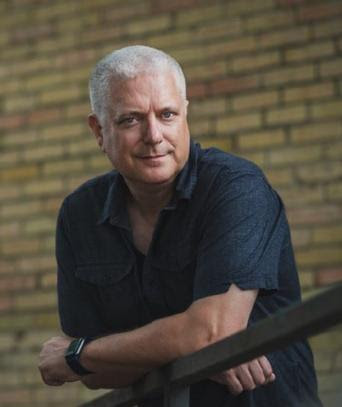
Pryor's new novel is Die Around Sundown.

My Q&A with the author:

How much work does your title do to take readers into the story?

The title comes from an album by my favorite band Kings of Leon, that album being Come Around Sundown. I wanted to evoke the idea of something dark and mysterious coming the reader's way, an inevitable and inescapable draw towards sundown and death. Of course, not the death of a specific person, not until you get into the book, but that idea that with darkness comes danger. And that is true for the main story line, the investigation Henri Lefort is pursuing, but also his tortured past, which unfurls more slowly throughout the course of the book.

What's in a name?

In this book, everything. Let me explain: just prior to writing it, I'd finished a YA novel set in Amsterdam during WW2. In that book, I named the main character for my eldest child. So when I started Die Around Sundown, and once I realized I had two main characters who were a male and a female, it made sense to name them after my other two kids. Ergo, Henri for Henry and Nicola for... well, Nicola. The amusing thing about it, for me, is that in real life they are very similar and butt heads like crazy, so making them get on well and even share an apartment as adults was delicious.

How surprised would your teenage reader self be by your new novel?

What a great question! In this case, not even a little bit. As a teenager I read nothing but mystery novels, and was obsessed with WW2. So for frizzy-haired teenage Mark to pick this book up and read it, it's a given. I think he'd be thrilled and impressed that he/I had the focus to write an entire novel, too!

Do you find it harder to write beginnings or endings? Which do you change more?

To start a novel, words and scenes rattle around together in my brain until exactly the right moment in the action reveals itself. It's like watching a movie but paying half attention, until something happens that makes you go, "Whoa, what?" It's only then that I put words onto paper, only once I know that I cannot possibly start the book a second later. I suppose it's the same with the end, but that's a slower reveal in that it comes to me as I'm writing.

As for which I change more, it's hard to say. I think I approach writing a little differently, in that I don't abide by the "write a terrible first draft and fix it later" maxim. What I put down on paper the first time is usually very close to what ends up there. I think that's a function of having been a journalist (I write quickly) and a lawyer (I write with precision). It's also a function of being lazy and hating editing, but that's our little secret...

Do you see much of yourself in your characters? Do they have any connection to your personality, or are they a world apart?

I think in this book more than any other, they are a world apart. Perhaps it's because the book is set in 1940, and I cannot imagine myself in that world. I do see some similarities, for example Henri's smart-aleck personality is (I have heard) a trait I occasionally exhibit.
Visit Mark Pryor's website.

My Book, The Movie: Die Around Sundown.

--Marshal Zeringue

Tuesday, August 16, 2022

Ed Lin

Ed Lin is a journalist by training and an all-around stand-up kinda guy. He’s the author of the Taipei Night Market series: Ghost Month, Incensed, and 99 Ways to Die; his literary debut, Waylaid; and the Robert Chow crime series set in 1970s Manhattan Chinatown: This Is a Bust, Snakes Can’t Run, and One Red Bastard. Lin, who is of Taiwanese and Chinese descent, is the first author to win three Asian American Literary Awards. He lives in New York with his wife, actress Cindy Cheung, and son.

Lin's new Taipei Night Market novel is Death Doesn't Forget.

My Q&A with the author:

How much work does your title do to take readers into the story?

Not too much, I hope! I tried to make it somewhat seamless, that readers are introduced to a flawed character they can relate to despite his shortcomings. I think once you can understand characters, you can empathize with them. Anything else that happens after, readers are invested in, and follow along.

What's in a name?

Not a super-lot, but a name sorta has to sound like a character, either fittingly or ironically. One guy in Death Doesn't Forget is named "Boxer," which is odd since he doesn't seem to be able to fight back against anything in his life.

How surprised would your teenage reader self be by your new novel?

I think the only thing my younger self would be surprised by is that a reputable publisher put it out! He wouldn't be surprised that I wrote a crime book, nor that it was set in Taiwan. I've wanted to write ever since I learned how to write, so no surprise that I stuck with it. Even if it come down to printing out pages, and getting them bound at Kinko's.

Do you find it harder to write beginnings or endings? Which do you change more?

I don't have challenges with either...it's just the middle part that a little tricky. Y'know, the beginnings and endings rarely change for me. The paths between the two are often rearranged, mowed over, zoning changes, etc.

Do you see much of yourself in your characters? Do they have any connection to your personality, or are they a world apart?

There's a little bit of me in every character. I relate to each of them. Despite their flaws, they are all struggling for something better, some more effectively than others. I wouldn't even say they are a world apart. They're all with me, and I'm always thinking about them, at least passively.

What non-literary inspirations have influenced your writing?

Silent film, I love how expressive it is, the faces, the body language, the humor. Non-vocal music such as hard-bop jazz and surf music. It's great to listen to while writing because it's upbeat without being intrusive.
Visit Ed Lin's website.

The Page 69 Test: Snakes Can't Run.

The Page 69 Test: One Red Bastard.

My Book, The Movie: Ghost Month.

--Marshal Zeringue

Saturday, August 13, 2022

Kathleen M. Willett

Kathleen M. Willett grew up in New Jersey and London. She has a B.A. in English from Holy Cross and a M.A. in English Education from Columbia University. She taught English at the Beacon School in New York City for ten years. She lives on the Upper West Side of Manhattan with her husband, two young daughters, and a cat named Mr. Sparkles. She loves running, reading, and watching Office reruns.

Willett's new novel is Mother of All Secrets.

My Q&A with the author:

How much work does your title do to take readers into the story?

The title is a little bit playful and, while there are some dark and heavy topics in the book, it's also a fun, rompy ride, so I think the title speaks to that. It also promises secrets, of which there are several! Originally, the title was Like a Mother, which I think alluded more to the revenge element of the book. My editors and I decided to change the title because there were a few other similarly titled books coming out around the same time.

What's in a name?

I tried to make the names distinct to help readers remember which woman was which, since it's a group of five women, which can be a bit much to keep straight especially in the beginning. Having Jenn have two N's in her name actually ends up being important in a conversation with police regarding Isabel's disappearance. For the baby names, I used my favorite names that were on my long lists of baby names that I didn't end up using. My fictional babies got them instead!

How surprised would your teenage reader self be by your new novel?

My teenage self would be very surprised and proud that I wrote a book at all! But probably not surprised by the type of book I wrote, because female-driven thrillers and mysteries have been my favorite books to read since I was a kid.

Do you find it harder to write beginnings or endings? Which do you change more?

Definitely much harder to write endings (and middles, for that matter)! I love writing beginnings-- I've written a few manuscript drafts since writing Mother Of All Secrets, and each time, the beginning just pours out of me. I have a clear premise in my mind, and it's like digging a really fun big hole. But then at some point, I realize I have no idea how I'm going to get out of the hole, and that's when it becomes much harder!

Do you see much of yourself in your characters? Do they have any connection to your personality, or are they a world apart?

This book was definitely informed by my own experience being a young mom on the Upper West Side of Manhattan. Of course, the plot is (very) fictional, but I can definitely relate with much of what the women in the book go through, like going down ill-advised rabbit holes on parenting facebook groups, missing your old pre-kid life despite overwhelming love for your new baby, comparing yourself to other moms and feeling like everyone's doing it better than you, and so forth. I also feel that my life has been so enriched by being able to connect with other women who are going through similar experiences.

What non-literary inspirations have influenced your writing?

I listened to Folklore by Taylor Swift on repeat while writing this book. Her lyrics are so rich and have given me some interesting story ideas.
Visit Kathleen M. Willett's website.

--Marshal Zeringue

Tuesday, August 9, 2022

Samantha M. Bailey

Samantha M. Bailey is the USA TODAY and #1 nationally bestselling author of Woman on the Edge, which has sold in eleven countries to date. Her psychological thriller debut received a starred review from Publishers Weekly and was a PW Best Books Pick of the Week. It was also the December Fiction Book of the Month at Indigo Books and the Shopper’s Drug Mart January Book Lover’s Pick. She is also a journalist and freelance editor; her work has appeared in NOW Magazine, The Village Post, The Thrill Begins, and The Crime Hub, among other publications. Watch Out for Her is her second novel. Bailey lives in Toronto, where she can usually be found tapping away at her computer or curled up on her couch with a book.

My Q&A with the author:

How surprised would your teenage reader self be by your novel?

My teenage self wouldn’t be surprised by what I write, but she would be shocked that after twenty years of rejections, on novel after novel, her dreams finally came true. I grew up surrounded by books, and I was always drawn to the tantalizing and twisted, in both my reading and writing. I was hooked on stories by Stephen King, Patricia Highsmith, Daphne Du Maurier, and so many others. I’ve always been fascinated by the psychology behind people’s darkest wants and needs.

(2) Do you find it harder to write beginnings or endings? Which do you change more?

I find it harder to write endings because there are so many ways a writer can wrap up a story and the world she’s created for her readers. And readers, myself included, want very different kinds of closure. For me, I want a satisfying ending, that might be both sad and happy for the different characters. I want to see justice served and some redemption, while also showing that people have shades of good and bad inside them. No one is perfect. To come to the end of the journey is challenging and beautiful at the same time. In Watch Out for Her, I wanted the ending that the characters themselves led me to, where they go from here. When my readers close the book, I want them to think and feel and to have enjoyed an escape. Choosing exactly what the ending will be is a very detailed thought process for me, and each draft goes through evolutions that might lead to a different place than I expected.

(3) Do you see much of yourself in your characters? Do they have any connection to your personality, or are they a world apart?

I both see parts of myself in my characters, and they are absolutely fictional and not me at all. Their past traumas and the current events spinning their lives out of control belong to them, and they drive the stories I’m telling. In Watch Out for Her, there are my own experiences with motherhood and all the worry and fear inherent in being a parent, but at the same time, unlike Sarah, I’ve never used nanny cams; I don’t watch my neighbors so intently. But I think all writers consciously or subconsciously weave certain parts of ourselves into our books. It’s inevitable when we crack our souls open to create our best work.

(4) What non-literary inspirations have influenced your writing?

So many non-literary inspirations influence my writing. I love people watching, so anyone who crosses my path inspires me. Television and movies, as well, fuel inspiration. I watch a lot of true crime, and though I don’t directly use what I see on the screen, it takes my thoughts in the directions I might need as I draft and revise. And music is probably one of my greatest inspirations. I always listen to music every day before I begin writing, usually raw songs with hard drum-beats or pain-soaked ballads to help me access my characters’ mindsets.
Follow Samantha M. Bailey on Twitter and visit her website.

--Marshal Zeringue

Sunday, August 7, 2022

Amina Akhtar

Amina Akhtar is a former fashion writer and editor. Her satirical first novel, #FashionVictim, drew rave reviews and acclaim and was covered in the Wall Street Journal, Forbes, Martha Stewart Living, Entertainment Weekly, Fashionista, Book Riot, CrimeReads, and more. Akhtar’s new book Kismet takes on the world of wellness and all the crystals that go with it. This #OwnVoices novel is set in Sedona, Arizona, where nature is just as much a character as anyone else.

My Q&A with the author:

How much work does your title do to take readers into the story?

I think right away the title leads the reader to know this might be about a spiritual or personal quest, a moment of fate, which is essentially what Kismet means. And with Sedona as the backdrop, hopefully it lures them in.

What's in a name?

For me, the names of characters have to echo in my head. I need to hear them, they have to sound almost musical. Ronnie/Rania was in my head forever! So I’m pleased I found a place for her.

How surprised would your teenage reader self be by your novel?

My teenage self would be very into me I think! Murder, talking ravens, a desi woman trying to find herself. I think she’d understand that a lot. Also, she’d be thrilled I wrote a novel!

Do you find it harder to write beginnings or endings? Which do you change more?

The middle! I usually have a vague idea of what I want the ending to be in my books. But it’s the middle part where I have to lead up to the ending that can be tricky. Sometimes I want all these insane things to happen but if they aren’t leading up to the ending, they have to go.

Do you see much of yourself in your characters? Do they have any connection to your personality, or are they a world apart?

Ronnie is very much me when I was 18 and moved to New York in the 90s. I was a fish out of water, trying to find myself and my people. I wanted her to have that same naivety.

What non-literary inspirations have influenced your writing?

Family and life for sure. I think a lot of immigrants can understand that feeling of not belonging that Ronnie has. She’s stuck between two worlds and hasn’t found her place in either. I related to that because it’s also part of my own journey.

Movie wise, the late 70s and early 80s horror movies I grew up on are a huge part of my process. There’s always a tinge of horror in what I write, and maybe it’ll become a large part of my work.

And Hitchcock, of course. The Birds! Though I love so many of his films, especially Rope and Vertigo.
Visit Amina Akhtar's website.

--Marshal Zeringue

Friday, August 5, 2022

Tyrell Johnson

Tyrell Johnson is a father, writer, and editor. His postapocalyptic novel The Wolves of Winter was an Indie Next pick and garnered praise from Entertainment Weekly, PopSugar, Vogue, and many others.

Johnson's new novel is The Lost Kings.

My Q&A with the author:

How much work does your title do to take readers into the story?

The book actually started as simply the name of the main character, Jeanie King, and had a few different iterations before we settled on The Lost Kings. I think the title, like a lot of good titles, works well because A.) it just sorta sounds cool, and B.) it raises immediate questions, which hopefully sends the reader to the text for answers.

What's in a name?

Names are really important. I tend to come up with character names pretty quickly, but that doesn’t mean I don’t put a lot of thought into the decision. A name has to convey a certain feel to it that works well for the character. To me, Jeanie King has a powerful quality to it that I liked, but also leaves room for some vulnerability.

How surprised would your teenage reader self be by your new novel?

These are good questions! My teenage self would think my new novels are pretty cool. He would, however, be wondering where all the dragons are.

Do you find it harder to write beginnings or endings? Which do you change more?

Both! I think it might be exactly equal. I tinker with both obsessively. The beginning has a lot of pressure to not only entice the reader, but it has to set up the character and tone of the entire novel. A sloppy beginning can do so much damage to a story. On the flip side, the ending carries so much weight because it has the entirety of the novel on its shoulders—it’s the final note you leave ringing in your readers’ ears. So I’m gonna be lame and not pick either one to prioritize.

Do you see much of yourself in your characters? Do they have any connection to your personality, or are they a world apart?

I see myself in all my characters. And they’ve told me they see themselves in me too.

What non-literary inspirations have influenced your writing?

Definitely movies/television. I love stories on any format. I’d just watched Fleabag before writing The Lost Kings, so I think a little bit of Phoebe Waller Bridge’s character seeped into Jeanie King in her dark humor and independence. Jeanie might be a bit darker though.
Visit Tyrell Johnson's website.

The Page 69 Test: The Lost Kings.

--Marshal Zeringue

Wednesday, August 3, 2022

Leslie Karst

The daughter of a law professor and a potter, Leslie Karst waited tables and sang in a new wave rock and roll band, before deciding she was ready for ‘real’ job and ending up at Stanford Law. It was during her career as a research and appellate attorney in Santa Cruz County that she discovered a passion for food and cooking, and she once more returned to school – this time to earn a degree in culinary arts. Now retired from the law, she spends her time cooking, singing alto in her local community chorus, gardening, cycling, and of course writing. Karst and her wife and their Jack Russell mix split their time between Santa Cruz and Hilo, Hawaii.

Karst's new novel is The Fragrance of Death.

My Q&A with the author:

How much work does your title do to take readers into the story?

As I was plotting the first book in my Sally Solari culinary mystery series, it occurred to me that the experience of eating involves not simply the sense of taste, but all five of the human senses. The artful presentation of a dish and its shapes and colors; the heavenly aroma of a slow-roasted chicken; the crackle in your mouth as you bite into a freshly-baked baguette; and the sound of that crunch as you chew. These all combine to create the joyful experience of eating. So why not, I decided, incorporate each of the human senses into the books I was writing about food and cooking?

As a result, when I came up with the title for the first of my mysteries—Dying for a Taste—I unwittingly set myself quite the difficult task. For the rest of the series, the titles would all have to impart three very different ideas: a murder, a food theme, and one of the human senses. Oy.

This newest book in the series (which actually concerns the lack of a sense, as Sally wakes up on page one unable to smell a thing) was a persnickety title, because truly, who wants to think about “smell” and “death” at the same time? So I was pleased when I came up with The Fragrance of Death, as the word “fragrance” both conveys smell in a pleasant way, as well as invoking the idea of food and cooking.

What's in a name?

Back in the early 1980s, I sang and played guitar in a new wave rock n’ roll band called Enigma, and one of the songs I wrote for the band was called “Jet Black,” about a gal named Sally (inspired by Little Richard’s “Long Tall Sally”) and her shiny black guitar. Many years later, when casting about for what to call the fourth-generation Italian amateur sleuth in my murder mystery, I decided it would be fun to use the same name—partly because it meant I could have her named after her grandfather, Salvatore.

But then I needed to come up with a last name for the restaurant-owning family, whose fishermen ancestors arrived from Liguria in the late nineteenth century. Researching surnames from that area of northern coastal Italy, I spotted “Solari” amongst the list. I loved how it evoked the word “solo,” as in someone working on her own against the odds. (There’s a reason other fictional characters have been called Napoleon Solo and Han Solo.) And I was also pleased that the name would be a nod to a local treasure, Mary Solari, who’s been a generous patron of the arts in Santa Cruz over many years.

Do you see much of yourself in your characters? Do they have any connection to your personality, or are they a world apart?

There’s actually quite a bit of me in Sally. Most obviously, we both have a passion for food and cooking. In addition, we’re both recreational cyclists and share the love of dogs, opera and Elvis Costello, the Giants baseball team, and single-barrel bourbons. And like my protagonist, I too can be a bit snarky at times.

But Sally is far braver than I—perhaps even too risky. I’d never have the nerve to investigate an actual murder. (Then again, I’d make for a pretty uninteresting sleuth, as well.) And I’d never dream of running a real-life restaurant; the work is far too stressful and exhausting, and takes up too much of your life. But make-believe running one in my books is loads of fun!

One of the best perks of being a writer, however, is that you’re provided the opportunity to give your characters all sorts of traits and possessions you don’t have, but might wish you did: hence, Sally’s tall, lanky build, her Italian heritage, and her cool, creamy-yellow ’57 T-Bird convertible.

What non-literary inspirations have influenced your writing?

Focusing on a different human sense in each of the books has been good fun, as it’s allowed me to introduce into the series various of my passions in addition to food and cooking, including music (in book two, Sally joins a local chorus performing the glorious Mozart Requiem); and art (inspired by reading about the namesake of the restaurant she inherits, Gauguin, Sally takes up painting in book three).

In The Fragrance of Death, one of my primary inspirations was Santa Cruz, the beautiful coastal California town where the series is set, and the importance of agriculture to the community—in particular, the iconic artichoke. The action begins with the death of one of the contestants in the annual artichoke cook-off at the historic fisherman’s wharf, and continues as Sally investigates the owners of an artichoke farm up the coast from Santa Cruz. Artichokes have long been a favorite food of mine, so getting to make the noble thistle one of the focal points of this new book was a wonderful thing.
Visit Leslie Karst’s website.

Coffee with a Canine: Leslie Karst & Ziggy.

My Book, The Movie: The Fragrance of Death.

--Marshal Zeringue

Saturday, July 30, 2022

Ruthanna Emrys

Ruthanna Emrys lives in a mysterious manor house on the outskirts of Washington, DC with her wife and their large, strange family. Her stories have appeared in a number of venues, including Strange Horizons, Analog, and Tor.com. She is the author of the Innsmouth Legacy series, which began with Winter Tide.

Emrys's new novel is A Half-Built Garden.

My Q&A with the author:

How much work does your title do to take readers into the story?

I wrote this entire novel under the working title of The Fifth Power – a reference to how the people of 2083 think about themselves. They see the dandelion networks – which integrate human opinion with AI advocates for rivers and prairies and trees – as improving on four earlier forms of power (nature dominating humans, religion, nation-states, corporations).

My editor hated that title, though, so I ended up with a whole page of ideas riffing on images and ideas that were important to the story. These ranged from Bring Us To This Season (emphasizing the Jewish characters with a prayer about survival through hard times), to The Reach and the Grasp (referring to the alien Ringers’ obsession with symbiosis), to about two minutes of consideration for Symbiosis and Synthesis. I do think first contact is a kind of novel-of-manners, but this isn’t actually an Austen riff and I’m the only one who’d get the joke.

I finally chose A Half-Built Garden as a metaphor that works for all the conflicting groups in the book. They’re all in the middle of some great effort, whether it’s keeping Earth habitable or building a Dyson Sphere, and for all of them success depends on the outcome of first contact.

What's in a name?

A Half-Built Garden starts with two species of aliens visiting Earth together. They’re from the same solar system, and have been building a syncretic culture ever since the more technologically-advanced planet reached out to the stone-age one and started sharing technology. They expect to build this same sort of beneficial, somewhat patronizing, relationship with humanity.

Early in that original contact, the Ringers started using names that could be translated via molecular diagram. A thousand-ish years later, those names carry meaning related to the substances in question. Cytosine, the ship’s “first mother,” is named for a key component of DNA (and her species’ equivalent of DNA), which carries connotations of centrality and fertility. Rhamnetin, whose job involves asking difficult, annoying questions, is named for what readers might recognize as a compound that makes cloves smell so nice – for Ringers it might also carry a mix of ideas around comfort and sharpness and healing.

Other names might not translate as well: when Cytosine is telling a story about a trickster figure, she calls her “Caffeine” in English where the original name is a Ringer stimulant.

How surprised would your teenage reader self be by your new novel?

First contact stories have always been my favorite sub-genre, and in my teens I was always making up stories about humans learning to communicate with aliens. On the other hand, I didn’t actually like humans very much at the time. If a starship had shown up and invited me aboard, I’d have left Earth without a backwards look! So my teenage self would be most surprised by the degree to which the main characters are attached to their planet, and see learning to thrive there as a necessary precursor to surviving farther afield.

Do you find it harder to write beginnings or endings? Which do you change more?

Beginnings are easy! I have so many files that are just clever openings that never went anywhere. That doesn’t mean I never have to mess with the start of a book, although for A Half-Built Garden I mostly haven’t. The first scene with Judy going out to investigate a pollution readout on the Potomac, and finding an alien spaceship instead, hasn’t changed much from when I first shared it at a reading in 2018.

Endings, on the other hand, are a challenge that feeds back through the whole process of writing. They have to wrap up everything I’ve done with theme and plot and character, and everything that comes before has to feed into that conclusion. I’m often wrong about where the ending is, because by the time I’m getting close I feel anxious and eager to wrap everything up. So I tend to rush the first draft. In this case, my editor told me that I needed to add an epilogue, which is not something you often hear from editors!

Do you see much of yourself in your characters? Do they have any connection to your personality, or are they a world apart?

For any given book, I give myself constraints to make the writing process more interesting. One of my rules with this book was to be very personally speculative – what is the future of my neighborhood, my home ecosystem, my great-grandchildren? I thought deliberately about how the values and ideas that I’m passing on to my kids might play out in a couple of generations. So Judy and her family have a lot in common with me for that reason – and would also find my limited modern sensibilities exasperating!

Judy has a lot of me in her, from her progressive Jewish spirituality to her desire to balance a lot of different “jobs” rather than focus on one expertise. Her efforts to negotiate with her co-parents also draw from my own experiences raising kids in a group household. On the other hand, she’s not used to being much of an activist. She’s from a generation that takes a relatively just, cooperative society for granted, and would much rather stick to that society’s day-to-day maintenance work than get involved in world-changing events. Part of the story is how she learns to apply her strengths to that level of stakes.

What non-literary inspirations have influenced your writing?

I first came to DC on a policy fellowship at the Environmental Protection Agency. I got very involved with the EPA’s work on crowdsourcing and citizen science, and excited about the potential for democratizing how people interact with the world around them – not just collecting pollution data, but asking and answering their own questions, making decisions about ecosystem management based on a deeper awareness of those answers. The watershed networks build on these social and computational technologies to deal with climate change, and to change the whole relationship that humans have with the rest of nature.

When I first started writing, I sat down with a couple of my old EPA colleagues, and asked, “What are the coolest things going on in watershed management right now?” Their nerdy speculation didn’t all end up on the page, but a lot of it went into the behind-the-scenes worldbuilding. And their excitement itself, the way that DC policy wonks fall in love with the details of solving big problems, shaped the remnant U.S. government that shows up to talk with the Ringers. Who’s still working at NASA in 2083? People who are willing to spend decades fighting impossible battles, and to make Star Trek jokes while they do it.
Visit Ruthanna Emrys's website.

--Marshal Zeringue

Wednesday, July 27, 2022

Amanda Quain

photo credit: Rosalinda Dauval
Amanda Quain is a writer, indie bookseller, and general life enthusiast. When she’s not shouting about her favorite new books, she loves theatre, baking, rock climbing, marching band, and the overall pursuit of adventure. If forced to choose, Quain’s favorite Austen hero is Edward Ferrars, though she’ll always have a soft spot for Mr. Bingley. She lives in Pittsburgh, Pennsylvania with her husband and her cat. Accomplished is her first novel.

My Q&A with the author:
How much work does your title do to take readers into the story?

Accomplished is, as a title, going to offer different things for different readers! For the Austen fan, it’s a direct line to Georgiana Darcy (or, if not to her, at least to a very Regency requirement.) Almost every time Georgiana is discussed in the original text, she’s referenced as accomplished – it’s basically her main character trait.

The (very early on) original working title was Georgie Darcy’s Back on Top, which is definitely more obvious, but I absolutely adore Accomplished and wouldn’t change it – it’s an intriguing title for those new to Austen and a nice wink and nod to my fellow Austen fans.

What's in a name?

The beauty of writing adaptations is that most of the names are already there! I did choose to use nicknames for most of the characters to give the book a more modern feel – plus, in Georgie’s case, the use of her nickname is a sticking point in the strained relationship with her extra-posh mother. It gets shortened even more to ‘George’ by her one friend (and maybe eventually love interest???), Avery, which I just love as an instant way of showing intimacy between two characters. Developing their intimacy verbally – through banter, through inside jokes, through the shared rhythm of their speaking that only they share – was one of the greatest joys of this book.

My only other surprising name choice would be renaming Mr. Darcy as Fitz, short for Fitzwilliam, if only because most adaptations name him Will. I also changed the name of our main antagonist, George Wickham, to make Wickham his first name. Jane Austen may have been able to get away with giving all of her characters the same three names, but in contemporary books, that sort of thing is more frowned upon!

How surprised would your teenage reader self be by your new novel?

The first few books I wrote all had fantasy or speculative twists, so she might be surprised to see that I’d landed in contemporary – but in retrospect, I’d been preparing for this my whole reading life. While I do love reading big splashy fantasy or sci-fi novels, my comfort books, the books I return to over and over again, are all contemporary. There’s a direct line from the dozens of Meg Cabot books I inhaled as a child to Accomplished.

Do you find it harder to write beginnings or endings? Which do you change more?

Beginnings, for sure! It’s funny – of all of my projects, Accomplished is the only one where the opening is essentially unchanged from the initial draft. In fact, the opening line – “My big brother, Fitzwilliam Darcy, could suck it” – actually is the same first line from my very first draft.
Usually, though, it takes me three or four tries to get to the correct starting point. I love writing endings; it’s so satisfying to wrap up everything you’ve been working towards, to make the point you’ve been hinting at the entire story. Plus, endings usually have a lot more kissing than beginnings do.

Do you see much of yourself in your characters? Do they have any connection to your personality, or are they a world apart?

While no one character in this book has an exact real-world equivalent, I’ve hidden bits of myself and my loved ones all over the page. Georgie’s stubbornness and determination is all me, and so is her older brother Fitz’s fierce protectiveness. The way that Georgie and her best guy Avery talk to each other is the same rhythm that my husband and I always fall into. I think that it’s hard to write characters that aren’t connected to you in some way – even if they’re almost entirely different, I need some thread of connectivity to make them sound authentic and lived in.

What non-literary inspirations have influenced your writing?

This book would not exist without its non-literary inspirations! Most heavily, it’s influenced by Clueless and Legally Blonde which, in addition to both being near-perfect movies, do an amazing job of taking a protagonist who doesn’t realize the influence she’s having on the world around her and allowing her to grow without forcing her to change.

Clueless, in particular, was one of the first pieces of media that showed me the full breadth of what an adaptation could be. Jane Austen would recognize almost nothing from the world that Clueless inhabits, but she would still recognize the characters as her own (Clueless, for any who may not know, is based on Austen’s Emma) and I think that’s just absolutely spectacular. Accomplished has sometimes been pitched as ‘finally giving Georgiana Darcy the Clueless treatment she always deserved’, and I really tried to imbue the book with that same sense of fun. (Even if I’ll never write a put-down as utterly devastating as “you’re a virgin who can’t drive.” Way harsh, Tai.)
Visit Amanda Quain's website.

--Marshal Zeringue

Sunday, July 24, 2022

Liz Michalski

Liz Michalski is the author of Evenfall and a contributor to Writer Unboxed and Author in Progress. A former reporter and editor, Michalski lives with her family in Massachusetts, where she loves reading fairy tales and sometimes, writing them. Darling Girl is her second novel.

My Q&A with the author:

How much work does your title do to take readers into the story?

Depends upon the reader. For the Peter Pan fanatic, the word darling will hopefully bring up an echo of the original story and Wendy, Michael and John. But the book is about more than just Peter. "Darling Girl" is a term of endearment, and the story explores the relationship of the Darling women not just with Peter, but with each other. Also if you read it quickly, the title can be misread as Daring Girl, which I like, since my female characters are all quite brave in their own way. It was Darling Girl from the beginning for me.

What's in a name?

Because I wrote a reimagined tale, some of the names — such as Peter, Tinkerbell, Wendy, and Jane — were obvious. Traditionally, Jane’s daughter is named Margaret, but I felt she was far enough away from the canon that I could change it. I chose Holly because it’s a plant that is evergreen, which worked on several levels — it plays into the idea of Peter Pan not growing up, as well as Holly’s interest in the cosmetics field and beauty. But it also represents hope, which, despite everything I threw at her, Holly always does. And as a bonus, I’d read when researching the plant that indigenous people used it as a heart stimulant, and Holly’s heart is in need of a jolt.

How surprised would your teenage reader self be by your new novel?

Oh Lord, not at all. I was the kid sitting on the floor of the library devouring books about hobbits and magic cauldrons and Merlin and the dark rising. I spent a ridiculous amount of time figuring out a way to bring Frodo back from the Undying Lands. If I was going to write anything, it was going to be this.

Do you find it harder to write beginnings or endings? Which do you change more?

Beginnings are relatively easy — I tend not to write the first few pages until I have a very clear picture in my head, almost word for word, of what I’m going to say. Endings are much harder. I always know where my story is going to wind up, but the road to that final destination changes from draft to draft.

Do you see much of yourself in your characters? Do they have any connection to your personality, or are they a world apart?

There’s probably a little bit of Holly in me — I definitely have that fierce instinct to protect and shelter my kids no matter what, and finding the sweet spot between stepping back and stepping in can be a balancing act. And I have a private snarky Jane side, if you think of Jane as Dame Maggie Smith in Downton Abbey.

What non-literary inspirations have influenced your writing?

I am a big believer in feeding your subconscious a rich and varied diet and then getting out of the way and seeing what happens. I take inspiration anywhere I can get it. Lots of time in nature, primarily, but also movies, museums, and people watching.
Visit Liz Michalski's website.

--Marshal Zeringue