Tuesday, October 24, 2023

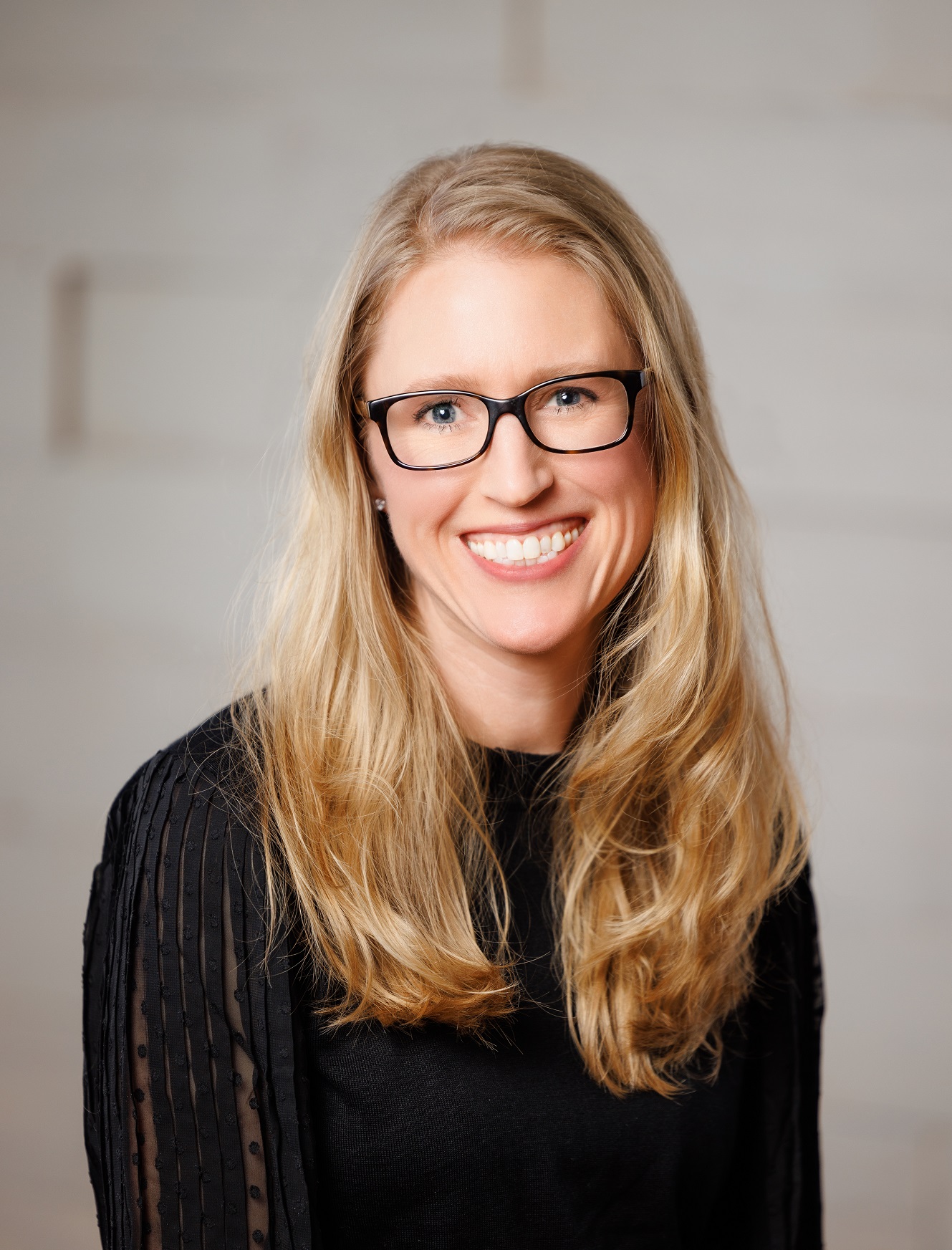
Jennifer duBois

Jennifer duBois is the author of The Last Language. Her first novel, A Partial History of Lost Causes, was a finalist for the PEN/Hemingway Award for Debut Novel and winner of the California Book Award for First Work of Fiction. Soon after its publication, duBois received a Whiting Award and a National Book Foundation 5 Under 35 Award. Her second novel, Cartwheel, was a finalist for the New York Public Library’s Young Lions Fiction Award and the winner of the Housatonic Book Award. And her third novel, The Spectators, was a recipient of a National Endowment for the Arts Creative Writing Fellowship and a Civitella Ranieri Fellowship. A graduate of the Iowa Writers’ Workshop and the Stanford University Stegner Fellowship, duBois teaches in the MFA program at Texas State University. She lives in Austin.

My Q&A with the author:

How much work does your title do to take readers into the story?

I tend to feel pretty helpless about titles: I never know where they’ll come from, when they’ll appear in the process (if ever), or how they’ll be received. The phrase “the last language” was in my head a lot while I was writing, and though I can’t say it’s a precise reference to any single concept in the book, it did seem to generate several meaningful interpretations: the idea that Angela’s epistolary account of her relationship with Sam might be the last piece of language between them, and that Sam’s conversations with Angela might be the last connection through language he ever experiences at all; the broader (more optimistic) thought that whatever communion that existed between Angela and Sam—be it partly spiritual, subconscious, or sub-verbal—reflects the deepest form of language, the kind that will outlive all the particular tongues we know. Throughout the book, Angela is scouring global languages, hoping that their insights might illuminate the fundamental question that haunts her: does language predate thought, or the other way around? Maybe The Last Language as a title contains the suggestion that if she just finds the final language—whatever that is—it will contain the definitive answer. And of course I thought a million times while writing it that this book would probably be my last novel; I think all my books have had titles that in some way describe not only the plot/thematic concern but also the literary project at hand, and so for a time, calling this book The Last Language seemed right in that regard.

How surprised would your teenage reader self be by your new novel?

My teenage reader self was, lucky for me, on a journey of pretty radical re-assessment of my literary values, so it would really depend on the year we caught up with me. I think my eighteen-year-old self would have been thrilled I’d written a novel at all, even more thrilled that I’d written a novel that seemed to engage with Lolita. I think if my teenage self could read The Last Language, I might be invited to reconsider Lolita—not to condemn it, but to reconsider where I thought its complexity derived. But I think even my fifteen-year-old self, who was much more innocent and much less settled on any particular literary opinion, would have been pleased that I’d written a book in which uncomfortable moral entanglements aren’t miraculously resolved through external coincidence, so that the characters don’t actually have to grapple with the consequences of making a decision. (Jane Eyre. I am talking about Jane Eyre.)

Do you find it harder to write beginnings or endings? Which do you change more?

For me, endings seem to sort of write themselves—by the time I get two-thirds of the way through a novel I have a pretty clear sense of the final third, and by the time I get to the very end I usually have a whole bunch of cherished images and sentences and downbeats I’ve been saving up to use. I find beginnings to be much harder. The beginning of The Last Language came pretty easily; those opening paragraphs were the first part of the book that I wrote, and they contained so much information about the novel I was writing—the voice, the direct address, the fact that the narrator is writing from jail—that I felt a lot of natural momentum going forward. But other times I’ve really struggled with the opening pages. For two of my books in particular, I went around and around with editing and polishing the beginnings, and something about them still feels a little off to me. Which is high-stakes, given that readers who aren’t taken with a beginning will probably just jump ship, understandably.

Do you see much of yourself in your characters? Do they have any connection to your personality, or are they a world apart?

I wouldn’t be curious enough about a character to write about them if they weren’t significantly different from me. My characters all experience situations and dilemmas that I haven’t; in almost every case, they make decisions that I would not (not necessarily better decisions, but certainly more dramatically interesting ones). Some of my characters have sharply different moral priorities than I do, and others have profound intellectual, political, or religious attachments I don’t share. And usually my characters differ from me demographically in significant ways, as well—The Last Language is actually the first time I’ve written from the perspective of white woman living in the United States in the 21st century. All that said, because all of my characters’ brains come from my own, there are similarities between them that I can’t get rid of, even when I’ve tried. For one thing, they are all very verbal—even though lots of people experience the world in ways that are more physical or visual or intuitive than my characters, I don’t really know how to write a person like that, because my own consciousness is just wall-to-wall words. And most of my point of view characters are, in my opinion, pretty funny. For some, this is a significant aspect of characterization; for others, it’s more incidental—but the reason that my characters so consistently make jokes is that I like to make jokes in my writing, and if I make a joke I think is halfway decent, I will always be too vain to take it out. So this probably puts some kinds of characters out of range for me—I’ll probably never be able to write somebody extremely solemn or humorless or reverential before all things.

What non-literary inspirations have influenced your writing?

An interest in geopolitics, which plays a large role in my first novel and a significant one in my second. News stories and gossip, since most of my fiction begins with at least a snippet of some real-life event I find compelling. Comedy, maybe especially sketch comedy, because I wish I was funny enough to be an SNL writer and this thwarted desire comes out everywhere, including in my writing. An interest in languages and linguistics. The woods around the house where I grew up in western Massachusetts. And my undergraduate degree in philosophy, certainly, since every book I write tends to grapple with some moral or philosophical question I find truly irreducible.
Visit the official Jennifer duBois website.

The Page 69 Test: A Partial History of Lost Causes.

My Book, The Movie: A Partial History of Lost Causes.

The Page 69 Test: Cartwheel.

--Marshal Zeringue

Sunday, October 15, 2023

Kellie M. Parker

Kellie M. Parker grew up traveling the United States and Europe as a US Navy brat. She attended high schools in three states and was too nerdy to ever sit at the cool kids’ table. With books as her most reliable companion, it was only a matter of time before she decided to write one herself. She has college degrees in biology and nautical archaeology but has always found her sense of adventure most satisfied by a great story.

Parker lives in west Michigan with her husband and four kids. She writes about brave, smart teens trying to figure out who they are and where they belong. When she’s not plotting her next fictional murder, she can be found baking, gardening, tackling DIY home projects, and reading to her kids.

Thin Air is her debut YA novel.

My Q&A with the author:

How much work does your title do to take readers into the story?

I admit that coming up with book titles is normally a challenge for me, but the title for Thin Air came to me pretty early on in the drafting process. This title stuck out to me for a few reasons. It’s short, which usually works well for thrillers. It implies a sense of danger or mystery since it’s hard to breathe when there’s not enough oxygen. Last of all, it relates to the book’s setting--almost the entire story takes place on an airplane at 42,000 feet. And as readers will find out, the characters find themselves in a dangerous situation almost right after takeoff. The air up there is very thin indeed!

What's in a name?

Like book titles, I often struggle with naming characters also. My go-to solution is to use baby name finders on my internet search engine, based on the year the character would’ve been born. Then I scroll through the list of popular names for that year, looking for something that feels like a good fit for the character’s personality. For Thin Air, I used Pinterest to find images for each of my characters. Once I had a mental picture, narrowing down the right names was easier.

How surprised would your teenage reader self be by your new novel?

As a teenager, I loved reading all kinds of novels, but I definitely included a number of mysteries in my reading “diet.” Thin Air follows a group of boarding school students who are competing for a scholarship—one someone is willing to kill to win. As a teen reader who also happened to be an overachiever, I think I would’ve related well to these characters and how important success is to them. I would’ve loved the twists and turns as I tried to figure out who the killer was. Would I have guessed correctly? Hmm, not sure about that one!

Do you find it harder to write beginnings or endings? Which do you change more?

I think I feel more pressure when I’m writing a beginning, because it sets the tone for the whole story. If I don’t “get it right,” then I worry the story will run off the rails right at the start. So in that sense, I think endings are easier. By the time I get to the end, I know the characters very well and my subconscious brain has pulled together all the loose threads of the story into a nice, tight ending. But because I’m often tired of drafting and ready to be done, I tend to rush my endings and need to go back later to flesh them out more. Beginnings are harder, but I change the ending more during revisions.

Do you see much of yourself in your characters? Do they have any connection to your personality, or are they a world apart?

To some extent, all my characters are infused with little bits of me, whether it’s a personality trait, an interest or skill, or something from their backstory. I think that’s a natural outflow of writing characters you care about. But I don’t want them to be clones of myself, so I make sure to round them out with plenty of things that are different, even if they’re small. Emily, the main character of Thin Air, is much more extroverted and “popular” than I was in high school. She also drinks a lot of Diet Coke, which I can’t stand. But she’s smart, loyal to those she loves, and has a quirky sense of humor like I do.

What non-literary inspirations have influenced your writing?

My writing tends to be shaped by two major non-literary inspirations: my love of learning and my love of travel. I’ve got a pretty good storehouse of random information in my brain after years of learning about things that interest me, and these facts often work their way into whatever I’m writing. And because of all the places I’ve been able to visit, setting is very important to me in my work. I want the setting to feel real to readers and to play such an important role in the story that it couldn’t happen the same way if it were set somewhere else. For Thin Air, I loved being able to research private luxury planes and thinking about how to use elements of the setting to propel the story forward.
Visit Kellie M. Parker's website.

--Marshal Zeringue

Wednesday, October 11, 2023

Kim DeRose

Kim DeRose writes dark, magical stories about strong, magical girls.

She grew up in Santa Barbara, California, where she spent childhood summers reading books and writing stories (which she was convinced her local bookstore would publish). She now lives in New York City, where she spends all seasons reading books and writing stories.

DeRose earned her MFA in film directing from UCLA, and currently works in digital media.

When she’s not reading or writing she can be found listening to podcasts on long walks, drinking endless cups of coffee, and spending time with her family.

For Girls Who Walk Through Fire is her debut novel.

My Q&A with the author:

How much work does your title do to take readers into the story?

I think my title, For Girls Who Walk Through Fire, does a very good job at taking readers to the core of the story. These girls have been through something, they have walked through fire. And it simultaneously does a good job of alluding to the witches and witchcraft featured in the story because, as we know, so many women were labeled witches and burned at the stake. And yet the teen witches in my novel aren’t about to adhere to that narrative, these witches are fighting back. What I also love about the title is that it’s as much about my characters as it is about the readers. In fact, the book is partially dedicated to anyone who has walked through fire.

How surprised would your teenage reader self be by your new novel?

Oh, I think she would be very surprised, but pleasantly so. Taking a step back, I think my teenage self would also be incredibly surprised that I’d written and published a novel to begin with. Becoming an author was my childhood dream, but by the time I was a teenager I had abandoned it, believing it to be unrealistic. It took me a very long time to circle back around and remember what I’d known as a kid: that I am a writer.

I think my teenage self would also be very surprised by the serious subject matter of the book. If she was able to read For Girls Who Walk Through Fire, I think it would open her eyes and make her think about her own experiences and the experiences of her friends quite differently. I think it would help her to stop minimizing things that happen to her, and all around her, and stop considering them “normal” or “just what girls have to put up with” or “the way guys are.” I think this book would help her see that all of these experiences really are that bad, and that they all flow out of the same misogynistic rape culture.

Do you find it harder to write beginnings or endings? Which do you change more?

With this novel I found both the beginning and the ending to be rather easy to write, which isn’t always the case. But I knew exactly where I wanted For Girls Who Walk Through Fire to begin - with Elliott sitting in her sexual assault support group - and I knew exactly where and how I wanted it to end (which you’ll have to read to find out!). Neither of those changed very much. In general, however, beginnings are harder for me to write and are often what I revise several times. There’s a lot to introduce and set up quickly, and to do so in a way that feels natural and engaging can be tricky.

Do you see much of yourself in your characters? Do they have any connection to your personality, or are they a world apart?

Yes, I definitely see aspects of myself in my characters. I wouldn’t say that any of them are auto biographical by any means, but there are parts of me in all of them. Elliott and Madeline are probably most like me in very different ways. Elliott is very much who I internally was as a teen and wished I could have been externally. And Madeline is a much more extreme and driven version of who I was socialized to be as a teen. But there are also parts of me in both Chloe and Bea, as well as in Mary, Elliott’s mom and dad, and in Otis.

I often think about what my documentary professor told us in graduate film school: that every documentary is a portrait of the artist. I think that’s true for books as well. It isn’t that a particular character or set of characters is you, the writer, it’s more that the entire book is filtered through your perspective and a reflection of you (which means it will also reflect your limitations). It’s your lens on the world in that particular moment.

What non-literary inspirations have influenced your writing?

I have a ton of non-literary influences.

Music is a huge part of my writing process, so I’m always listening to music when I write, and it varies quite a bit depending on the book or even the chapter or scene that I’m working on.

I’m also a huge film lover (and, as mentioned above, went to graduate film school) so I’m very inspired by a variety of filmmakers. I have too many to name here, but I will call out my deep ongoing love of all things David Lynch. I love his exploration of whiteness and the dark underbelly of suburban life.

I’m also a big podcast listener and there are a lot of intersectional feminist ideas, progressive conversations, and creative explorations within podcasts that have been very influential on my thinking and writing. Of note is We Can Do Hard Things with Glennon Doyle, Amanda Doyle and Abby Wambach, The Roxane Gay Agenda, The Laverne Cox Show, Call Your Girlfriend with Ann Friedman and Aminatou Sow, Still Processing with J Wortham and Wesley Morris, Unlocking Us with Brené Brown, Wiser Than Me with Julia Louis Dreyfus, and Forever35 with Doree Shafrir and Kate Spencer.
Visit Kim DeRose's website.

--Marshal Zeringue

Monday, October 2, 2023

Christina McDonald

Christina McDonald is the USA Today and Amazon Charts bestselling author of These Still Black Waters, Do No Harm, Behind Every Lie, and The Night Olivia Fell,  which has been optioned for television by a major Hollywood studio.

My Q&A with the author:

How much work does your title do to take readers into the story?

Book titles are always a work in progress. I rarely know what it will be right away because I need to explore my characters, my themes, my plot.

My agent suggested we change the original title I had for These Still Black Waters as she thought it gave too much away. We brainstormed a number of ideas together and both loved These Still Black Waters, as the town of Black Lake (where the story is set) and the theme of the black waters that so many secrets lie beneath is very central to the story.

And then that first plot point, when the reader learns that a body has been found floating in Black Lake on a still, hot summer day, it really encapsulates the feel, the aura, even the plot of the story.

What's in a name?

I’m not exactly sure what makes me give a character their name. It’s something very ephemeral for sure, something that is more feeling than reason.

Sometimes, in fact, I go through various names, and as I write the character, as I meet them and get to know them, I might feel the name is wrong and I’ll change it. And yet I know for absolute certain when I’ve landed on the perfect name, when it matches the character I’m creating.

Do you find it harder to write beginnings or endings? Which do you change more?

The short answer is, it entirely depends on the book. I rarely know the ending before I start, so I could never start at the ending and work my way backward, although, with These Still Black Waters, I had a general idea of the main twist.

That being said, I still always start at the beginning. With These Still Black Waters, the first scene where Neve has left her home because of a traumatic home invasion and returned with her daughter to her childhood summer home, that was the first scene I wrote.

It changed massively as I wrote the book, and I kept coming back to edit it as I found out more about Neve, more about where I wanted the plot to go, realized where I could add little clues and red herrings, but that scene, it was always first. And I think it’s key in showing how destabilized and traumatized Neve is after everything that’s happened to her.

Do you see much of yourself in your characters? Do they have any connection to your personality, or are they a world apart?

I think all of my characters show a little bit about me and reflect a bit of my personality, but as a whole, they are entirely different people. I create characters by looking into their past, their character ghost, how they were raised, their values, and how those things created the person they became in their present.

Obviously, each of these things are completely different to me and my life, so they are very different to me as a person. But there are always little snippets, like things I love or hate, or things I notice when observing other people, or maybe the way I talk or the inflection of a word or even a philosophical thought I have. So in a way they reflect me both wholly and not at all.

What non-literary inspirations have influenced your writing?

The news tends to influence my writing quite a lot. I see things that I find shocking, things that stay in my mind, that I can’t shake free, and they’ll show up in my stories in some form or another, if not in the story itself.

These Still Black Waters is probably the first story I’ve written that just unspooled entirely from my imagination rather than a news story that stuck with me, and yet, it’s the story I wrote during the pandemic, so there’s a strong influence of living during lockdown in there as well. That time of life was so alienating, so isolating, and I think that really came out in Neve’s character.
Visit Christina McDonald's website.

The Page 69 Test: These Still Black Waters.

--Marshal Zeringue

Wednesday, September 20, 2023

Meredith R. Lyons

Meredith R. Lyons grew up in New Orleans, collecting two degrees from Louisiana State University before running away to Chicago to be an actor. In between plays, she got her black belt and made martial arts and yoga her full-time day job. She fought in the Chicago Golden Gloves, ran the Chicago Marathon, and competed for team U.S.A. in the savate world championships in Paris. In spite of doing each of these things twice, she couldn’t stay warm and relocated to Nashville. She owns several swords, but lives a non-violent life, saving all swashbuckling for the page, knitting scarves, gardening, visiting coffee shops, and cuddling with her husband and two panther-sized cats. Ghost Tamer is her first novel.

My Q&A with the author:

How much work does your title do to take readers into the story?

While I was writing it, the working title was The Train because the train crash is the inciting incident that changes Raely's life. When the el flies off the rails, only Raely survives. She loses her best friend and acquires an ability to see ghosts. One says he's been with her all her life, and one in particular is trying to take her soul. A lot of the action takes place on Chicago's el train. But not only was that not a very interesting title, the deeper story is Raely learning about who she is—both by taking a look at her past and embracing her new present—and accepting that new person, rather than wishing to be what she was. She has to move through a lot of grief and pain to become herself, which no one ever wants to do, but she is stronger for it. And with grief the only way out is through. She is the Ghost Tamer. And it's a much cooler title.

What's in a name?

I am much better at naming characters now than I was when I started writing Ghost Tamer. Raely had no name for quite a while and then somehow I ended up using an amalgamation of my middle name and the first two letters of my last name as a placeholder. By the time I had finished the book, she was permanently Raely. I did change a few other character's names. I had a habit of just throwing generic names like Bob and John everywhere—again, I'm much better about this now—partially because I'm a pantser and these characters may or may not grow. The ones that became major players I went back and found some good names for them. Lovonia was one who had a good name from the beginning. She kind of sprang out of the ether fully-formed and started bossing me around.

How surprised would your teenage reader self be by your new novel?

She would be shocked and appalled that there are no horses in it. I actually wrote my first novel when I was thirteen. It was hand-written, in pencil or erasable ink—so 90's—on whatever paper I could find. It was a western with lots of horses and was 636 pages long. I still have it in a big three-ring binder.

Do you find it harder to write beginnings or endings? Which do you change more?

That's an interesting question. It depends on the book. For Ghost Tamer, the beginning was easy, I just wrote the nightmare. As I mentioned, I don't plot things out, so there's always a bit of thrilling panic when I've passed the midpoint and I'm still not sure how the thing is going to end. I always figure it out, though. And everything gets tweaked. For this one, I definitely changed more about the ending, but I can only think of two or three scenes in Ghost Tamer that have stayed exactly the same since they were put down.

Do you see much of yourself in your characters? Do they have any connection to your personality, or are they a world apart?

I drew a lot from my past to create Raely's life. From living in Chicago and trying to carve out a place for myself on stage to trudging through those bitter winters on public transportation. I mined my own experiences with grief to color hers, but, although she's similar to a younger version of me, Raely is herself. She's much cooler than I was at her age, quicker with her on-point snark—she's a comedian after all—and much more damaged. I wanted a flawed, raw character who made mistakes, had struggles and learned from them, but I needed her to be likeable so that the reader would stick with her, so of course she's funny.

What non-literary inspirations have influenced your writing?

I was an actor in Chicago for seventeen years which has had an influence on how I put a story on the page. I start from a place of character and find joy in dialogue. The plot is improved and issues tweaked later, and usually I have to punch up the "set dressing" afterward also. I was also a stage combatant, competitive boxer and kickboxer, and self defense and cardio kickboxing instructor, so I really dig into the fight scenes. Not only do I know how it feels to be hit, but I know how to tell a story with violence that's clear even to the uninitiated. I hope that doesn't sound too nuts. In spite of owning several swords, I promise I live a non-violent life now.
Visit Meredith R. Lyons's website.

12 Yoga Questions with Meredith R. Lyons.

--Marshal Zeringue

Friday, September 15, 2023

Brooke Robinson

Brooke Robinson is professional playwright who has had her work produced at London’s Vault Festival and the Old Vic, among others. She grew up in Sydney, Australia, and has worked as a bookseller, university administrator, and playwright there and in the UK. She started writing The Interpreter, her first novel, when the pandemic ground the theatre world to a halt, and is currently working on her second novel.

My Q&A with the author:

How much work does your title do to take readers into the story?

I'm a big fan of titles that clearly and succinctly tell you what the work is about, particularly when we're talking about high concept stories. In the case of my book, The Interpreter, it does exactly what it says on the tin: it's about an interpreter in the criminal justice system who starts to deliberately mistranslate witness statements in order to help convict those who she believes are guilty.

What's in a name?

I must confess that naming characters is not a job I enjoy doing. I have also worked as a playwright and I love that in theatre you can name a character in a play simply after a letter like A or B. My main character, Revelle, is named after a young woman from my home city of Sydney, Australia who went missing in the 1990s. She is assumed to have been murdered, but her body has never been found, and police have never managed to arrest someone for long enough to keep them in custody. This speaks to my novel's themes of justice and the temptation to take the law into your own hands.

Do you see much of yourself in your characters? Do they have any connection to your personality, or are they a world apart?

I know that I would not be able to be an interpreter in the criminal justice system myself, not only because I'm shamefully monolingual, but because I'd find it too hard to stay professionally detached and not take the cases home with me. Probably like a lot of people I do have vigilante fantasies but unlike my character Revelle, I'd never act on them as I am definitely a rule-follower who doesn't like to get in trouble!

What non-literary inspirations have influenced your writing?

Most of my stories begin with something I've read about in the news. I'm particularly a big fan of talk radio - BBC Radio 4 here in the UK, and ABC Radio National when I'm in Australia. If I lived in the USA I'd have NPR on all day.
Visit Brooke Robinson's website.

--Marshal Zeringue

Wednesday, September 13, 2023

Jamie Lee Sogn

Jamie Lee Sogn is a Filipina American author of adult thriller novels. She grew up in Olympia, Washington, studied Anthropology and Psychology at the University of Washington and received her Juris Doctor from the University of Oregon School of Law.

She is a "recovering attorney" who writes contracts by day and (much more exciting) fiction by night. While she has lived in Los Angeles, New York City, and even Eugene, Oregon, she now lives in Seattle with her husband, son, and Boston Terrier.

Sogn's debut novel is Salthouse Place.

My Q&A with the author:

How much work does your title do to take readers into the story?

My novel’s title Salthouse Place was finally chosen after many different iterations of titles before it. I have to say, it’s my favorite and I’m so glad that it ended up being the final title. The manuscript was originally called The Artemis Institute because that was the original name of the wellness company that inhabited the novel. Through many revisions, that changed as well, so of course the title needed to change with that.

Before I became an author, I had no idea how much went into choosing a title for a book! Salthouse Place was finally chosen because not only is it the name of the wellness community on the Oregon Coast that my main character arrives at, we felt it would be a unique name that would grab someone’s attention as they walked by in a bookstore, for example. I want someone to wonder “Salthouse Place? What does that mean?”

When my main character, Delia, arrives at Salthouse Place for the wellness retreat, she finds that the community is actually an abandoned subdivision that this wellness company has bought and taken over to convert to their retreat center. This idea of creating a façade to hide something decaying or unfinished underneath is found throughout the book and the name of the community is a reflection of that theme.

What's in a name?

For my main character, I wanted her name to reflect her heritage, so her last name is Albio, which is a Filipino last name, but not one you might hear often. Her first name is also unique, but has no special meaning behind it. Recently I learned my sister had a secret theory that Delia was named after her - her name is Danielle, but her Filipino nickname is “Danila,” so her theory was that I took out the ‘n’ and rearranged it to “Delia. This theory is false, but I liked her creativity!

The antagonist is named Sage. Since she is one of the leaders of a wellness community, I wanted her name to reflect nature and calm. In Latin, the name Sage actually means Wise One or Prophet, which we come to learn, is very appropriate as well for this character and her aspirations.

Delia’s hometown of Portsgrove is a fictional town in the Olympic Peninsula of Washington State, but the name is inspired by real towns in that region, like Port Townsend and Port Angeles.

Do you find it harder to write beginnings or endings? Which do you change more?

When I began this story, I knew the beginning and the ending - they were the first two things I wrote and ultimately did not change that much at all from draft to finished novel. The difficult part was writing everything in between to connect the two! However, generally, I find it more difficult to write beginnings. I think it’s such a delicate balance of where I can drop the reader into the story at the perfect point - to have something to catch their interest, but not be deep enough already that too much is happening too fast.

In Salthouse Place, we begin with Delia remembering that fateful day on Blythe Lake with her friends when she was a teenager. For me, this beginning was easy to write and made sense. I wanted to convey that feeling of excitement and carefree youth, but also the dread of something bad about to happen, which the reader already expects because from the first sentence, Delia tells the reader that one of them will be lost in the lake that day.

Do you see much of yourself in your characters? Do they have any connection to your personality, or are they a world apart?

For Delia, I saw a lot of myself in her, as much as I actively tried not to put myself into her. We are both biracial Filipina Millennials, we both went to law school (but I didn’t drop out!), and we both navigate the world as skeptical and perhaps shield ourselves too much. I wanted to write Delia because I rarely saw characters like me, women of color, in the stories I read growing up. Or if I did, they were stories specifically about race.

I wanted to write a character that experienced the world around her through this lens and through this history, but not have the story be about her being biracial. The story includes a lot of her upbringing, her immigrant mother’s experience through her eyes, and even some good old Filipino comfort food - but the story isn’t rooted in that per se. It’s a thriller and a mystery with a protagonist who looks and thinks like me.
Visit Jamie Lee Sogn's website.

--Marshal Zeringue

Saturday, September 9, 2023

Brian Carso

Brian Carso, a lawyer and historian, has studied the American Revolution and the life of Benedict Arnold for more than two decades. Gideon's Revolution is his first novel.

My Q&A with the author:

How much work does your title do to take readers into the story?

Early on, I needed a working title. One of the many sources I used for this historical novel was Benson Lossing’s monumental Pictorial Field-Book of the Revolution (1860), commonly referred to as “Lossing’s Revolution.” My narrator is named Gideon, so I began to simply refer to the work as “Gideon’s Revolution.”

Over time, the title grew on me. The story is Gideon’s account of his activity as a soldier in the American Revolution, but make no mistake: his revolution is as much internal as it is external. So I think the title hints at some process of change, of revelation.

The name “Gideon” has a biblical reference that I conjure up at the end of the story in the hope that it promotes a bit of an epiphany. The best title I know is Steinbeck’s The Grapes of Wrath. For nearly the entire story, the reader assumes it’s an allusion to the anger the Joad family feels about the many depression-era indignities they suffer. But when you hit the last few pages (an ending much different from the 1940 film), you can follow the breadcrumbs Steinbeck provides to connect the name of Rosasharn (for “Rose of Sharon”) and her extraordinary act of mercy with a biblical passage that turns the phrase “grapes of wrath” into an unforgettable gut punch.

In that spirit, I hope the meaning of the title Gideon’s Revolution evolves by the end of the novel.

What's in a name?

Because Gideon’s Revolution is a historical novel, most of the names refer to actual people who participated in the Revolution. I named the narrator Gideon Wheatley because I had a plan for the biblical resonance that the name Gideon brings.

How surprised would your teenage reader self be by your new novel?

I wrote a short story for an English assignment in high school. There’s not another person in the world who would ever read that long-lost story and this novel and see a common thread, but I bet there is one or two. If there’s something about the human experience that really grabs you when you’re seventeen, it’s probably still grabbing you decades later, one way or another.

Do you find it harder to write beginnings or endings? Which do you change more?

The beginning took a lot of work. Because it’s a historical novel—about a true but little-known secret plot to capture Benedict Arnold—I had to give the reader enough historical context to get the ball rolling. Amidst this, I also needed to establish the tensions that would power the plot for 257 pages. I workshopped the beginning at the Bread Loaf Writers Conference, shared it with some trusted friends, and rewrote it numerous times.

But the ending: On the day I began writing, I knew the basic outline of the entire plot, except for how it would end. I took it on faith that at some point, maybe on a long car ride, maybe in the shower, maybe in a dream, somehow the problem would resolve itself into a powerful ending. Eventually—I don’t remember when or where—it did.

Do you see much of yourself in your characters? Do they have any connection to your personality, or are they a world apart?

One way or another, my characters share some of my DNA. Think of it this way: I have cousins I don’t see very often (although I wish I did). Some live several states away, and others on the opposite coast. Recently I visited California and had dinner with a cousin who lives in San Jose. To my best recollection, I’ve only met him four or five times in my life. To be sure, we’re different people: I have blond hair, his is black; he’s a computer scientist, I’m a historian/writer. But as we sat there on his patio, I’m sure we were studying each other for things that were familiar—the way we walked, perhaps, or some barely noticeable similarity of appearance, or speech. Certainly, the stories we told about our respective parents were rooted in the same family history.

My characters are like my cousins. We come from the same place, and if I look hard enough, I’ll find things that are familiar, no matter how different we might seem.

What non-literary inspirations have influenced your writing?

I thought a lot about the film Citizen Kane, because, like Gideon’s Revolution, there’s a mystery at the heart of the film, which inspires a quest to understand the complex motivations of Charles Kane. Similarly, the complicated character of Benedict Arnold has invited inspection and conjecture for nearly 250 years. Why did America’s best battlefield general choose to betray his cause and comrades? Unlike the narrator of Citizen Kane, however, who says “I guess we’ll never know,” (right before the camera reveals a stunning revelation that he, and everyone else, has missed), I think Gideon Wheatley understands Arnold’s character, which makes his mission more difficult, even though we’re inclined think it would make the mission easier. As Gideon gains insights to Arnold, I think the reader, too, can better understand the troubled character of Benedict Arnold, and perhaps find an answer to the question, why did he do it?
Visit Brian Carso's website.

--Marshal Zeringue

Tuesday, September 5, 2023

James R. Benn

James R. Benn is the author of the Billy Boyle World War II series, historical mysteries set within the Allied High Command during the Second World War. The series began with Billy Boyle, which takes place in England and Norway in 1942. Proud Sorrows is the eighteenth installment of the series.

My Q&A with the author:

How much work does your title do to take readers into the story?

It's a signpost. This is a story full of sorrows. Some come from the after-effects of the First World War, others from brutal family conflicts, racial and religious hatred, and the physical and psychic wounds of warfare. I found this quote from Shakespeare, and it struck me as perfect for the story I wanted to tell:

"I will instruct my sorrows to be proud,
For grief is proud and makes his owner stoop."

There's a sense of resilience in those lines, as well as an admission of a heavy burden. Both are explored as we encounter the characters in this story.

What's in a name?

Oh, I had so much fun naming the characters in this book! While my protagonist, Billy Boyle, was named eighteen books ago, I enjoy coming up with new folks for him to meet. I decided to go old school and search out slightly more archaic names to populate the small village of Slewford where Billy finds himself. Graham Cheatwood, Charlotte Mothersole, Alfred Bunch, Dr. Bodkin, to name a few. Sir Richard Seaton's housekeeper is Mrs. Rutledge, a homage to one of my favorite mystery series, the Inspector Ian Rutledge novels by Charles Todd. I do give a lot of thought to names, but I work at not telegraphing anything about guilt or innocence. Back in my second novel, the killer was a Frenchman named Villard - who couldn't see that coming a mile away?

How surprised would your teenage reader self be by your new novel?

He'd find a delightful surprise. When I was nineteen and a college sophomore entranced by all I was discovering in my English classes, I visited Constitution Plaza in Hartford, Connecticut. It's a rooftop plaza sitting above parking garages, and it's filled with gardens and shops. It provides a view down into the lower floors of the surrounding office buildings. It was the holiday season, with festive lights everywhere. As I looked into the office windows across from me, I saw a solitary cleaning woman at work. The juxtaposition of her solitary labors and the crowds of shoppers struck me, and then and there I vowed one day to write a story about her. I christened her Agnes Day (Agnus Dei, lamb of God). Well, she's not a cleaning woman, but I finally fulfilled that vow in Proud Sorrows; Agnes Day is a nurse who has returned home to Slewford after working through the worst of the Blitz in London, bringing her own set of solitary sorrows with her.

Do you find it harder to write beginnings or endings? Which do you change more?

I tend to do incremental editing, so I can't say where most changes occur. As soon as I finish a chapter, I read it aloud to my wife and we work out what needs to be improved. But overall, I find beginnings easy. The middle is tough because I still worry that I won't have enough narrative to carry the story into a full-length novel. But around the two-thirds mark, I stress out about how I'm going to fit everything that needs to be said into that last third! It never changes.

Overall, I write with a theme and ending in mind. Often I don't know who the killer is when I begin. It's only when I've populated the story with distinct characters that the murderer becomes apparent to me. I try to focus on the why-dunnit rather than the who-dunnit, but that does cause me to go back to the beginning to rework things a bit once I've nailed the bad guy or gal.

Do you see much of yourself in your characters? Do they have any connection to your personality, or are they a world apart?

There's a part of me in Billy Boyle, for sure. His anti-authoritarianism comes pretty easily. He's often a sardonic observer, which isn't much of a stretch. But I'm not as quick-witted as he is. The bon mots that roll off this tongue (especially at the end of a chapter) take me a long time to think up. I wish I was as urbane and sophisticated as Baron Kazimierz and as strong as Big Mike, but that is only true in my mind.

What non-literary inspirations have influenced your writing?

Because these books call for action scenes, I pay attention to cinema and how fight scenes are choreographed.

Arkia Kurosawa's Ran is a touchstone for me. Midway through the movie, there's a huge battle scene in which Kurosawa drops out all dialog. The entire battle is filmed without diegetic sound (sound where the source is visible on screen). Only the tremendous musical score is heard, which allows the viewer to focus on the devastation at hand. To me, it has a way of slowing down the action, and reminds me that what I write has to work visually and clearly in the mind of the reader.

Sadly, the news has its own peculiar effect. My books are set eight decades ago during World War II, the global struggle against fascism. Whenever I see swastika banners in the streets of America, it brings an immediacy to my work. Racism and anti-Semitism, those keystones of fascism, are still with us, to a degree that would astonish Billy Boyle. An example of the news leaking into the narrative is this brief scene, in which Billy and Kaz discover an arms cache hidden by British fascists:
“This could have done a lot of damage,” Kaz said.

“It already has,” I said as I threw the Nazi flag to the floor. “It’s gotten people who live in a democracy to embrace and fight for fascism.”

“People who don’t know the value of what they have,” Kaz said.
Too true, Kaz, too true.
Learn more about the Billy Boyle WWII Mystery Series at James R. Benn's website.

The Page 99 Test: The First Wave.

The Page 69 Test: Evil for Evil.

The Page 69 Test: Rag and Bone.

My Book, The Movie: Death's Door.

The Page 69 Test: The White Ghost.

The Page 69 Test: Blue Madonna.

--Marshal Zeringue

Saturday, September 2, 2023

Kathleen Rooney

Kathleen Rooney is a founding editor of Rose Metal Press, a nonprofit publisher of literary work in hybrid genres, as well as a founding member of Poems While You Wait, a team of poets and their typewriters who compose commissioned poetry on demand. She teaches in the English Department at DePaul University, and her recent books include the national best-seller Lillian Boxfish Takes a Walk (2017) and the novel Cher Ami and Major Whittlesey (2020). Where Are the Snows, her latest poetry collection, was chosen by Kazim Ali for the X.J. Kennedy Prize and published by Texas Review Press in Fall 2022.

Rooney's new novel is From Dust to Stardust.

My Q&A with the author:
How much work does your title do to take readers into the story?

My title gives readers the arc of my 287-page novel in four words. The story follows Eileen Sullivan—soon to be stage-named Doreen O’Dare—from her humble beginnings as a dreamy kid in Tampa, Florida to her reign as one of Hollywood’s biggest box office draws in the 1920s. It asks the questions: what does it take to become a star? And Once you’ve become one, how long do you want to stay there and what might you do next, if you decide to leave?

What's in a name?

The novel is based on the real-life silent movie star and absolutely enchanting comedienne Colleen Moore, which is itself a stage name for “Kathleen Morrison.” I needed a name that would convey the Irish charm of the original, as well as the character’s ambition (to be more, to be daring), hence Doreen O’Dare.

How surprised would your teenage reader self be by your novel?

My teenage self would be like heck yeah. Ever since I was a kid—and into my teens and beyond—I’ve been a huge fan of the Fairy Castle that Colleen Moore built and then toured around the country during the Great Depression to raise funds for charities. I first saw it at the Museum of Science and Industry here in Chicago when I was eight years old and it’s never totally let go of my imagination, so I think all my past selves would find this novel the logical extension of this long-time love.

Do you find it harder to write beginnings or endings? Which do you change more?

Because this book is about Hollywood and about actual fairy—which is to say, folk—tales, I knew that I wanted to play around with the idea of a happy ending. I knew where I wanted Doreen to end up, but I knew it would be really hard—full of highs and lows and triumphs and setbacks—for her to get there. I also knew that since my story is in effect a Jazz Age / Depression Era fairy tale, it had to begin in a once-upon-a-time manner, hence my opening sentence, “Once upon a time, an unprepossessing child with mismatched eyes—one brown, one blue—arrived to poor parents at precisely the right moment.”

In general, as an outliner, I always know where I want to begin and where I want to end—I can’t start the actual writing process unless I know both, or think I do. And from there, I can change as I need to as I make my way toward the final draft.

Do you see much of yourself in your characters? Do they have any connection to your personality, or are they a world apart?

I always love my characters so much and have sympathy and affection for them even when they’re messing up. In this case, Doreen has, what I hope is my own sense of wonder at the world and a desire to convey that wonder to as many other people as humanly possible. We only get this one life, so let’s work hard and have fun.

What non-literary inspirations have influenced your writing?

Music and movies are huge inspirations. In the case of From Dust to Stardust, I watched as many silent movies as I could get my hands on, all while feeling a colossal sense of loss because the Library of Congress estimates that 75% of all silent films are lost forever. I hope my book gets people to take a look at the ones that are still around to be looked at.
Learn more about the book and author at Kathleen Rooney's website.

The Page 69 Test: From Dust to Stardust.

My Book, The Movie: From Dust to Stardust.

--Marshal Zeringue