Wednesday, June 30, 2010

John Connolly

John Connolly is the author of Every Dead Thing, Dark Hollow, The Killing Kind, The White Road, Bad Men, Nocturnes, The Black Angel, The Gates, and The Whisperers. He is a regular contributor to The Irish Times and lives in Dublin, Ireland.

From his Q& A with Boyd Tonkin in the Independent:

Choose a favourite writer and say why you like her/him?

Ross Macdonald. [His detective] Lew Archer was such an influence on me, especially in his capacity for empathy. I've been fascinated by the idea that evil is the absence of empathy.

* * *
Which fictional character most resembles you?

It would still be Ignatius J Reilly from [John Kennedy Toole's] 'A Confederacy of Dunces'. As I get older I tend to rail against the world more and more.

* * *
Who is your hero/heroine from outside literature?

I'm very wary of heroes: they always let you down in the end. It would probably be somebody in music such as Neil Young or Kate Bush; someone with a very tenacious vision of themselves and their work.
Read the complete interview.

--Marshal Zeringue

Tuesday, June 29, 2010

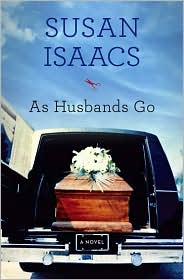
Susan Isaacs

Susan Isaacs' new novel is As Husbands Go.

From her 2004 Q & A at Barnes & Noble:

What was the book that most influenced your life or your career as a writer?

For a couple of months during college, I was wowed by H. L. Mencken's book of essays, Prejudices. Its influence was both positive and negative. I loved the author's iconoclastic instincts, his razzle-dazzle language, and his contemptuous take on the assorted idiocies of American politics and culture. My infatuation could not last longer than a couple of months because of Mencken's off-the-cuff racist and anti-Semitic asides: How could anyone that smart be that stupid?

In any case, while in Mencken mode, I wrote an essay for the college newspaper defending the fraternity/sorority system. (Fortunately, I can find no trace of this piece and thus can avoid confronting my younger, dopier, and more arrogant self.) The response was, to me, astounding. More pats on the back then I could count and, on the other hand, a stunning number of outraged letters to the editor protesting what I had written. A grand fuss, but it brought me little pleasure. True, I loved the attention, but it didn't take me long to realize both the applause and the fuming was not for me, but rather, for my competent imitation of H. L. Mencken.

A little more than a decade later, when I began writing my first novel, I started to realize that all I had as a writer was my own voice. Sure, I could imitate Mencken or, for that matter, Jane Austen or Oscar Wilde. But that was just a clever college-kid trick. Mencken and Austen and Wilde were far better Menckens and Austens and Wildes than I could ever be. Besides, why would any reader bother with an imitation when they could read the real thing? All I could be, for better or worse, was Susan Isaacs.
Read the complete Q & A.

--Marshal Zeringue

Monday, June 28, 2010

Mark Terry

Mark Terry is the author of three Derek Stillwater novels, The Devil's Pitchfork, The Serpent's Kiss, and The Fallen, as well as two standalone novels, Dirty Deeds and Dancing in the Dark.

From his Q & A with Travis Erwin:

I've read your blog long enough to know you are a tireless researcher, but given the fact your characters are knee deep in matters of national security, how do you go about gathering information on weapons and procedures and such without raising red flags in gov't institutions the world over? Or does the FBI and CIA hold a constant vigil outside your door? Yeah I'm mostly joking, but have you ever had any "interesting" inquiries as to why you are looking into such matters as chemical warfare and biological weapons?

I'm reasonably certain my Internet searches have caught the attention of the FBI etc. Here's an example: over the last several weeks I've been researching chemical weapons that come out of Russia and domestic terrorism in Russia. Then, two or three weeks of that, there's a Moscow subway bombing by domestic terrorists. If my name doesn't come up on some sort of list somewhere at the Federal level, then someone's really not doing their job. Particularly in that some of my searches are for things that are a little bit more esoteric than, say, VX gas or Sarin. I mean, how many people have even heard of Soman?

At my last house my next-door neighbor put up this huge satellite dish (this was before the small dishes) that looked like something you could contact Mars with, and then--weirdly--built an addition onto the house so the satellite pole came up out of the roof. For a while there we swore Juan must have been working for the NSA. And once I had a private investigator come to the house, flash his credentials and ask if he could use our driveway for surveillance purposes. Not to be paranoid, but you do...[read on]
The Page 69 Test: The Fallen.

My Book, the Movie: The Fallen.

--Marshal Zeringue

Sunday, June 27, 2010

Brady Udall

Brady Udall's new novel is The Lonely Polygamist.

From a Q & A about his earlier novel, The Miracle Life of Edgar Mint:

How did you come to write The Miracle Life of Edgar Mint? Was there a specific event that inspired you to write a book about a mailman running over the head of a young boy?

My wife's ex-boyfriend was actually run over by a mail truck, just like Edgar in the book. This guy was dating my wife at the same time I was dating her (unbeknownst to me) and when she finally fessed up about it, I demanded to know all about this bastard. Among other things, she told me that in his youth he'd been run over by a mailman and was so badly injured that he was presumed dead. It turned out that he survived and went on to become my rival for my future-wife's affections. Anyway, after my wife's confession, I went out to find this guy—not to beat him up, but to verify his story. I found him at his apartment and he very graciously told me everything. He told me there was one thing he wanted to do in this life: find the mailman and tell him that he was okay, that he had lived a healthy, normal life. I jotted it all down in a notebook while he talked, knowing I'd write a book about it some day.

Have you received any reaction from the Native American community in response to the way reservation life and the Willie Sherman school are represented in the book?

The only responses I've gotten from Native Americans have been good ones. It seems that only educated white folks object to the portrayal of the reservation and the school. Most Native Americans are quite aware of the extreme poverty and destitution that can be found in reservations all over this country.
Read the complete interview.

--Marshal Zeringue

Saturday, June 26, 2010

Scott Turow

Scott Turow's new book is Innocent, the sequel to the bestselling Presumed Innocent.

From his Q & A with Anna Metcalfe for the Financial Times:

What book changed your life?

A Portrait of the Artist as a Young Man by James Joyce, when I was 17. It thrilled me so profoundly.

* * *
What books are on your bedside table?

I’m away from home so on my iPad I have Wolf Hall by Hilary Mantel and Stieg Larsson’s The Girl with the Dragon Tattoo. I want to see what all the fuss is about.

When did you know you were going to be a writer?

Age 11, after reading The Count of Monte Cristo [by Alexandre Dumas]. But at university I decided writing would not support me.

* * *
Who are your literary influences?

Saul Bellow. He and my father were in high school together. He is the literary recreation of my father’s sensibility and he helped me to come to terms with the world I came from. Dickens has had more direct influence on my style, syntax and grammar than anyone else.
Read the complete Q & A.

See Scott Turow's five favorite pre-1980 novels about the law.

--Marshal Zeringue

Friday, June 25, 2010

Ian Rankin

A few questions Ian Rankin asked himself because literary journalists don't:

How many people have you done away with over the course of your career?

You mean the body count in my books? I've no idea. I think it's quite low – one or two corpses per tome, and each book represents a year in the life of Edinburgh.

Ever dispatched someone and then regretted it?

Often. The prospective member of the Scottish parliament in Set In Darkness – I liked him, but the narrative didn't. Then there was the old priest Rebus used to hang out with – he died of natural causes, but it came as a bit of a shock.

Have you ever been in trouble with the police?

Back when I was writing the first Rebus, they...[read on]
See: Ian Rankin's 6 best books.

Read J. Kingston Pierce's 2000 interview with Rankin at January Magazine.

--Marshal Zeringue

Thursday, June 24, 2010

Jess Walter

Jess Walter's latest novel is The Financial Lives of the Poets.

From his Q & A about the novel at Fringe Magazine:

Q. You dedicate this novel to a couple of “dismayed and displaced newspaper friends, whose talent and commitment deserve a better world.” Did you initially set out to write a novel about a journalist damaged by the decay of the newspaper industry, or did making Matt Prior a newspaperman just seem to fit the character you had already envisioned?

A. I rarely set out to do anything. The bud of “Financial Lives” was a piece of the first chapter that I wrote, a big, sloppy poem in which a guy goes into a 7/11, runs into some dudes looking for munchies and two hours later is stoned stupid. That was months before I began working on the novel. I tried the thing aloud at a few readings and became so taken with that voice–even though it was an awful poem–that I began that great process of trying to figure out who this guy was, other than some middle-aged guy shocked by the improved potency of pot. He rants and dissembles and makes fun of himself, but seems almost charmed by his own failings. I liked him.

As often happens with me, I rifled through the trunk of other things I wanted to write about at the time, the other cultural obsessions I have at that time. The sad, sad decline of newspapers was right at the top of the trunk. And happily, Matt felt like a lot of the journalists I knew, including myself, a smart-ass underachiever. At the time, dozens of former colleagues and friends were losing their newspaper jobs and it felt right to me, and seemed to make the book larger, part of this seismic cultural shift, to give Matt a dying career that it would have been impossible to imagine our culture without a few years ago. Being a...[read on]
Jess Walter's Citizen Vince was Nick Hornby's favorite novel of 2006.

--Marshal Zeringue

Wednesday, June 23, 2010

Nicola Barker

Nicola Barker's latest novel is Burley Cross Postox Theft (2010), a comic epistolary novel.

From her Q & A with the Observer:

You're a great mimic as a writer and the new book involves you taking on the voices of a whole village. How do you manage that?

I'm partially deaf, so when I meet people or watch people I have to concentrate very hard on the rhythm of their speech. If I don't, nothing makes any sense. My skills at mimicry probably aren't particularly to my credit – I'm just like a short-sighted person who has an excellent sense of smell. Evolution can be generous like that, sometimes.

Your new book, Burley Cross Postbox Theft, is an epistolary novel - are you a great letter writer yourself?

I can honestly say that I am a terrible letter writer. Dull as ditchwater. Can't spell for toffee. But I'm great at decorating envelopes. I've made an art form out of it. If you get a letter from me, it'll be a beautiful piece of crap, basically.
Read the complete Q & A.

The Page 99 Test: Nicola Barker's Darkmans.

--Marshal Zeringue

Tuesday, June 22, 2010

Victor Gischler

Keith Rawson interviewed Victor Gischler for Spinetingler Magazine. A sample of their conversation:

Speaking of Toby Sawyer [of The Deputy], most of your male protagonist tend to be–and excuse the phrasing–irresponsible assholes. What’s your attraction to writing this type of character?

I hate heroes in crime fiction who have flaws like “They care too much” or they’re alcoholics and “struggle every day to keep sober.” That ABC After School Special stuff leaves me cold. If my protagonists ever feel any sense of redemption, then it truly is a triumph because that start so far down in a moral/ethical hole. My protagonists don’t know readers are watching them. It doesn’t occur to them to be on their best behavior. Having said that, many readers are often surprised they can find away to like/care about the protagonist. One of the comments I got all the time about Charlie Swift (the protagonist of Gun Monkeys) was along the lines of “I don’t know why I like this guy, but I do.” I like to challenge the reader with the implied statement “This fucking guy is going to be your hero for the rest of this damn novel. Can you handle that?”

With most of your novels–as with Sawyer’s underage girlfriend in The Deputy–you’ll typically feature a strong female character to offset the relative immaturity of your male protagonist. What’s your attraction to writing this type of female lead?

All I really want is for my female characters (all my characters actually) to be...[read on]
Learn more about the author and his work at Victor Gischler's Blogpocalypse.

Victor Gischler is a former English professor. His books include Gun Monkeys, The Pistol Poets, Suicide Squeeze, Shotgun Opera, Go-Go-Girls of the Apocalypse, and Vampire a Go-Go.

The Page 69 Test: Shotgun Opera.

My Book, The Movie: Shotgun Opera.

The Page 69 Test: Go-Go-Girls of the Apocalypse.

The Page 69 Test: Vampire a Go-Go.

--Marshal Zeringue

Monday, June 21, 2010

Natasha Friend

Natasha Friend is the author of the YA novels Perfect, Bounce, Lush, and the newly released For Keeps.

From her Q & A with Hartford Books Examiner:

2) How do you go about capturing authentic voice for your characters? Did FOR KEEPS require research in this area or were you simply able to call upon your vast array of life experiences (camp counselor, tutor, teacher) to do so?

My inner angst-ridden teenage girl is alive and well. I still have every note passed to me in junior high and high school, sitting in a box in my closet—primary source material at its finest. The voices of my characters live in my head, and, for the most part, the subject matter of my books—eating disorders, alcoholism, blended families, teen pregnancy—has required little research. I draw on my own experiences, and those of my friends, former campers, students. The rest I leave up to my muse.

3) You studied psychology at Bates College before earning an MA from Clemson University's English program. How has that background informed your writing? Did you find it especially beneficial when dealing with the heavy subject matter of FOR KEEPS?

My fascination with human psychology—sparked by Dr. Moyer in my first psych 101 class at Bates—informs everything I write. I...[read on]
My Book, The Movie: For Keeps.

--Marshal Zeringue