Saturday, July 31, 2010

Gerald Seymour

Gerald Seymour's many novels include The Unknown Soldier. From his Q & A with The Independent:

Choose a favourite author and say why you like her/him

It has to be, because he has been with me for three or four decades, John Le Carré, through his wonderful ones, and his not so wonderful ones. I'm utterly loyal to him.

* * *
Which fictional character most resembles you?

Maybe the rather more boring administrators from Le Carré's novels; not the one who does things but someone who observes from the shadows.

* * *
Who is your hero/heroine from outside literature?

There was an ex-policeman who was in Zeebrugge during the ferry disaster who made his body into a bridge to help people get out. He was in the eye of the media storm for about 24 hours, and then quietly disappeared. There was nothing planned in his heroism. It was real. Came the moment and the challenge, he performed.
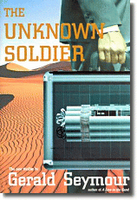
Read the complete Q & A.

See Gerald Seymour's list of five riveting novels about terrorism.

--Marshal Zeringue

Friday, July 30, 2010

Jane Brox

Jane Brox is the author of Brilliant: The Evolution of Artificial Light.

From her interview with Salon.com:

So many of us work under fluorescent lights on a daily basis and hate it; I'm currently sitting under fluorescent lamps that I despise. Why are we so bothered by fluorescent light?

It flickers; it buzzes; it's not constant. Some people have medical problems attached to fluorescent light. I don't think it's ever going to be accepted in the way incandescent light has been accepted. But a lot of our resistance to compact fluorescents comes from the history of light itself. Incandescent light is the light of the 20th century. It's the light that brought us into the modern world and is inextricably linked to all of our modern appliances and the modern home. It's also the light of the cities, in America especially. In 1920, when incandescent lights began spreading, for the first time the number of people in America living on farms was less than the number of people living in cities and suburbs. Incandescent light is the warm light of life, and fluorescent light is entirely something else. Fluorescent light was developed first in 1939, and I think General Electric imagined it would be the light of factories and working places and public spaces, and it continues to be that way until now.

And yet in 2012, when we'll start phasing out incandescent bulbs, we'll pretty much be stuck with compact fluorescents.

We're at a moment when it's hard to know where the predominant light of the future is going to be. I think compact fluorescents are an interim solution because of the problem of disposal -- every compact fluorescent light has mercury in it and it's not a great idea to be throwing them in the trash. There is all kinds of research and development going on around halogen lights and LEDs, but those aren't going to be in place in time for 2012 or 2014.

All of these lights have a much colder tinge to them than incandescent lights. Are we just going to have to get used to living under less warm-looking light?
I...[read on]
--Marshal Zeringue

Thursday, July 29, 2010

Stefanie Pintoff

Stefanie Pintoff is the author of a historical mystery series where early criminal science meets the dark side of old New York. Her debut novel, In the Shadow of Gotham, won the Edgar® Award for Best First Novel and the St. Martin’s Press / Mystery Writers of America Best First Crime Novel Award, while also earning nominations for the Agatha and RT Reviewer’s Choice Awards. Her second in the series, A Curtain Falls, released in May 2010.

From her Q & A with J. Sydney Jones:

What things about New York make it unique and a good physical setting in your books?

Like many of Europe’s great cities, it’s impossible to walk through New York’s many neighborhoods without being aware of its unique architecture. From brownstones to cobblestone streets to the grand theaters of Broadway – not to mention the occasional colonial house tucked between modern apartment buildings – physical relics of early New York remain. They gesture toward a history and time period that’s no longer readily accessible.

Did you consciously set out to use your New York at the turn of the twentieth century as a “character” in your books, or did this grow naturally out of the initial story or stories?

There was never a question but that New York City would be a central character in my books. I’m one of those people who became a New Yorker the moment I set foot here – and I find the city and its history endlessly fascinating.

How do you incorporate location in your fiction? Do you pay overt attention to it in certain scenes, or is it a background inspiration for you?

Because I’m writing about early 1900s New York, I’m always conscious that my setting is both like – and unlike – present-day NYC. I try to incorporate scenes that capture that sensation for readers. For example, in...[read on]
The Page 69 Test: In the Shadow of Gotham.

The Page 69 Test: A Curtain Falls.

Read--Coffee with a Canine: Stefanie Pintoff & Ginger.

--Marshal Zeringue

Wednesday, July 28, 2010

Carl Hiaasen

Carl Hiaasen's novels include the best-selling Skinny Dip, Sick Puppy, Lucky You, and the newly released Star Island.

From his Q & A with Alexandra Alter for the Wall Street Journal:

A couple of iconic characters from your previous novels show up in "Star Island" —Skink, the former governor of Florida who went nuts and lives naked in the mangroves, and Chemo, a former hit man who is hired as Cherry Pye's bodyguard and has a weed cutter as an artificial hand. Why did you revive these characters?

I hadn't used Chemo for, god, I don't know how many years. He went to prison at the end of the [1989] novel "Skin Tight."…I had gotten a note from [novelist] Elmore Leonard that said, "I'm so glad you didn't kill Chemo off. I really liked him." I sort of had that in the back of my head, and I did the math and I thought, "He ought to be out by now. Even in Florida, he's probably out of the slammer by now, and he probably would be selling mortgages." I was fond of him, as depraved as he was. And Skink is just this old familiar deranged crusader that I keep bringing back because I like him and I get more mail about that character than any other I've created.

A lot of the villains in your novels get punished in creative ways—a sea urchin to the groin for a developer who is destroying mangrove forests, for example. Is writing such scenes cathartic for you?

Very cathartic. When I was in college and I was young, you read these great novels that have these ambiguous, artsy endings—what happened to who, where did the bad guy end up, is the couple staying together? And I think if you have invested a lot in a really rotten character like...[read on]
--Marshal Zeringue

Tuesday, July 27, 2010

David Levien

David Levien is the author of City of the Sun. He also cowrote the screenplays for Ocean’s Thirteen, Runaway Jury, Rounders, and several other films.

From his interview with Ali Karim at The Rap Sheet:

AK: One of the pivotal scenes in City of the Sun involves a personal tragedy that defines Frank Behr. But you wait to introduce that scene and talk of the tragedy until halfway through the book. I’m talking here about the scene in which Frank loses control, and it is cathartic for the reader to see him trash a street sign in a rage. How difficult was it for you to keep Frank’s tragedy out of view for so long?

DL: Well, I wanted Frank to be marked by that tragedy [as a way] to give him darkness and depth of character. Like in life, most people don’t introduce themselves with the worst tragedy that happened to them. Nor did I want to save it for a key moment, but rather keep the pressure on in the current case he’s working on in concert with all the things in his past that it was evoking. That scene you’re talking about is when he goes to the street where he used to live, before the “thing” happened, and he flashes back to that night.

AK: I found it remarkable, in City of the Sun, that you managed to not go overboard with the pathos and tragedy that was unfolding, especially as the opening details a child’s abduction, told from the parents’ point of view. Had you read much crime fiction before working on City of the Sun? “The missing child” is, after all, a rather well-worn convention of private-eye novels, yet you reworked it completely by having the parents active in the investigation.

DL: I...[read on]
--Marshal Zeringue

Monday, July 26, 2010

Jeffery Deaver

Jeffery Deaver's latest novel is The Burning Wire.

From his Q & A with the Independent:

Choose a favourite author and say why you like him/her

Thomas Harris: one of the great stylists in the crime/thriller genre... He also concocts among the most compelling characters of anyone.

* * *
Which fictional character most resembles you?

[Augie] from Saul Bellow's novel, 'The Adventures of Augie March'. A Chicagoan like me, Augie forged ahead in life, sometimes making mistakes... sometimes succeeding, but always following his own path.

* * *
Who is you hero/heroine from outside literature?

My grandfather. He was a flyer in World War One, and an attorney in Chicago... He was always calm, thoughtful... and a vocal, uncompromising opponent of bigotry in all its forms.
Read the complete Q & A.

--Marshal Zeringue

Saturday, July 24, 2010

Jennie Rooney

Jennie Rooney is the author of Inside the Whale and The Opposite of Falling.

From her Q & A with Boyd Tonkin for The Independent:

Choose a favourite author and say why you like her/him

I would probably say Julian Barnes or Muriel Spark. I read both authors' works when I was younger and I've never got over that affection you have for the first books you read that really blow you away.

* * *
Which fictional character most resembles you?

My brother and I have a joke about me being Miss Jean Brodie. I work as a teacher part-time, which inspired the comparison, I think.

* * *
Who is your hero/heroine from outside literature?

Mary Kingsley. She was a Victorian lady adventurer who looked after her elderly parents, then her brother, and when they died, she went off to West Africa – an ordinary Victorian women with her umbrella.
Read the complete Q & A.

--Marshal Zeringue

Friday, July 23, 2010

Pauline Melville

Author and actress Pauline Melville was born in Guyana in 1948 to an English mother and a Guyanese father. She began acting in the 1960s, starring in Far From the Madding Crowd (1967), and TV shows The Young Ones and Blackadder. Melville won the Commonwealth Writers Prize with her first book, Shape-shifter (1990), a collection of short stories exploring post-colonial existence in the Caribbean. Her first novel, The Ventriloquist’s Tale (1997), won the Whitbread First Novel Award and was shortlisted for the Orange Prize for Fiction. More short stories followed with The Migration of Ghosts (1998), and another novel, Eating Air, in 2009. From her Q &A with Anna Metcalfe for the Financial Times:

What book do you wish you’d written?

Difficult one that. Probably The Possessed by Dostoyevsky.

* * *
Who are your literary influences?

Gabriel García Márquez, Flannery O’Connor, Dostoyevsky, Tolstoy, Graham Greene, Samuel Beckett, Shakespeare. I fear that the influence doesn’t always show.

* * *
Who would you choose to play you in a film about your life?

Anna Karina – in her youth when she was in the Godard movies.
Read the complete Q & A.

--Marshal Zeringue

Thursday, July 22, 2010

Dave Eggers

Dave Eggers’ books include, A Heartbreaking Work of Staggering Genius (2000), You Shall Know Our Velocity (2002), and Zeitoun (2009).

From his Q & A with Anna Metcalfe for the Financial Times:

What books are currently on your bedside table?

I don’t have a bedside table. The book I’m dropping on the floor at night is The Razor’s Edge by W Somerset Maugham.

* * *
What is the strangest thing you’ve done when researching a book?

For Zeitoun, I needed to see the inside of the prison where Abdulrahman Zeitoun was held, so I posed as a prison educator to get a tour. I felt bad about fibbing, but it was the only way to get in.

* * *
What book do you wish you’d written?

Herzog by Saul Bellow.
Read the complete interview.

--Marshal Zeringue

Wednesday, July 21, 2010

Inger Ash Wolfe

From Julia Buckley's interview with Inger Ash Wolfe, author of The Calling and The Taken:

[Buckley]: I’m curious about the name Hazel Micallef; even in the book people mispronounce it, and Hazel corrects them (and, in the process, the reader who might have gotten it wrong). How did you choose this distinctive name?

Names are hard! I chose Hazel’s first name easily—she just struck me as a Hazel from the get-go. The name suggests hardness and intelligence to me (a hard-won kind of wisdom, too), but there’s also something lonesome and soft about the name too. The last name was more calculated: it’s originally a Maltese name that spread across the globe and is found especially in British Isles. You find it in Wales and Scotland now, tough places to prosper. So the last name also suggests a hardness I like. I like, also, that it means “judge” in Maltese.

Hazel pleases me because she’s a female cop who possesses qualities that mystery fiction usually only bestows on male cops: she’s older, divorced, lonely, battling a physical ailment, tied to her job despite its miseries. This seems realistic, yet few of mystery’s female heroes are allowed to be old. Were you consciously trying to address this double standard when you created Hazel?

Well, there is Miss Marple, and Jane Tennison is in her forties, but yes, there are few female detectives in their sixties in continuing series like this one. I wasn’t trying to right a wrong when I created Hazel, but I did hope she would feel new to readers. Also, breaking away from the template of who detectives tend to be in modern crime fiction, I thought I’d feel more freedom to...[read on]
--Marshal Zeringue