Friday, January 31, 2014

Paul Collins

Paul Collins is the author of Duel with the Devil: The True Story of How Alexander Hamilton and Aaron Burr Teamed Up to Take on America's First Sensational Murder Mystery.

From his Q & A with Randy Dotinga for the Christian Science Monitor:

Q: What drew you to this case?

The sheer unlikelihood of it. I came across this case in a collection of celebrated criminal trials that came out in 1900. I had never heard of the case and when they talked about Hamilton and Burr being the defense team, it sounded like a buddy movie. I couldn't believe it.

It was such an unlikely combination that I had to look it up.

Q: Tell us about the political world that Alexander Hamilton and Aaron Burr inhabited, not too long after the Revolutionary War. What sides existed, and which were they on?

A: They came from opposing political parties.

Hamilton was very much part of the Federalist Party, a political movement aligned with merchant class and bankers and pushing toward working more closely with Great Britain. That's where they saw the country's prosperity coming from.

Burr, who wound up being Jefferson's vice president, was more closely aligned with the rural, farming, agrarian economy, had more of a progressive view on things like women's rights and slavery, even though he...[read on]
Visit Paul Collins's website.

--Marshal Zeringue

Thursday, January 30, 2014

Karen Brown

Karen Brown is the author of Little Sinners and Other Stories, which was named a Best Book of 2012 by Publishers Weekly, and Pins and Needles: Stories, which was the recipient of AWP’s Grace Paley Prize for Short Fiction. Her latest novel is The Longings of Wayward Girls.

From Brown's 2013 Q & A at The Kenyon Review:

Which non-writing-related aspect of your life most influences your writing?

I suspect that most writers would agree that there isn’t a part of their life that is non-writing-related. Everyone we meet, everywhere we go, and everything we participate in become part of the material we draw on for stories. For me setting plays such an important role, so visiting a new place—an old house, a neighborhood, an island in the Caribbean, or even hearing about a place from someone—seems to influence my writing the most. As I was writing “The Authoress” I was reading about the old resorts in Moodus, Connecticut. These lodges and camps were great country getaways during the early part of the twentieth century—some are still in operation today. Like the Catskill resorts they offered private cottages, swimming, activities, and colorful staff members in charge of entertainment. I read about one that was recently abandoned, and the images of the swimming pool grown through with weeds, the still furnished cottages succumbing to moisture and the encroaching woods, were haunting. I never did work the abandoned resort into the story—but I liked the idea of it lurking in the background, and I imagine if I decide to expand the story into something more it will play a much bigger part.

Of all the things you could be doing, why do you write?

Writing was an extension of...[read on]
Learn more about the book and author at Karen Brown's website, Facebook page, and Twitter perch.

Writers Read: Karen Brown.

The Page 69 Test: The Longings of Wayward Girls.

--Marshal Zeringue

Wednesday, January 29, 2014

Daphne Kalotay

Daphne Kalotay's fiction collection, Calamity and Other Stories (Doubleday), was short listed for the 2005 Story Prize, and her debut novel, Russian Winter (HarperCollins), won the 2011 Writers’ League of Texas Fiction Prize, made the long list for the IMPAC Dublin Literary Award, and has been published in 21 foreign editions.

Her latest novel is Sight Reading.

From the author's 2013 Q & A with Marc Foster at Dead Darlings:

Dead Darlings: Both of your novels, “Sight Reading” and “Russian Winter,” are rooted in performing arts – music and ballet, respectively. Can you tell me what drives your fascination with the subject area, and what you think are special opportunities and challenges in working with this material?

Daphne Kalotay: I never consciously decided to write about this as a topic, but I’ve long been drawn to stories about artists. Mainly I think I’m curious about the combination of intense dedication and relaxed creativity necessary to create great art–but in the performing arts there is that added element of a viewing/listening public, and the action of performing lends itself more generously to drama on the page than a solitary vocation such as being a writer.

On the other hand, it’s a definite challenge to recreate movement (in the case of dance) and sound (in the case of music) through language alone. In writing about ballet, the challenge was to find a happy medium between the correct technical terms, which a ballerina would know but a layperson would not, and simply describing the choreography; I tried to explain what it would feel like for the dancers while also painting a visual picture for the reader. Similarly, in Sight Reading I wanted the reader to be able to...[read on]
Visit Daphne Kalotay's website.

The Page 69 Test: Sight Reading.

Writers Read: Daphne Kalotay.

--Marshal Zeringue

Tuesday, January 28, 2014

Dennis Tafoya

Dennis Tafoya's newest novel, The Poor Boys Game, will be released in April 2014.

From his Q & A with Jim Knipp:

How often does “real life” influence your work?

Always, I spend a lot of time in the writing process researching. I spend a lot of time online. I read what I can. I’m trying to write something right now about North Dakota, so I’m both reading a novel set in North Dakota, and spending a lot of time looking at videos, trying to get a sense of the way people talk, local landmarks, a little history. That’s the stuff that I spend a lot of time on, especially when you look at something like “Wolves” and “Poor Boy’s Game.”

Poor Boy’s Game has some boxing in it, so I’ve spent a lot of time researching boxing, especially women boxers. Folks like Christine Martin, Laila Ali. There’s that, there’s the geography. As much as I love Philly – I spend a lot of time in Philly – I still need to read a lot, to get all the little bits and pieces that make things seem real. That’s the stuff that I love when I read, and I think it’s what people respond to. I don’t think anybody has ever taken the time to reach out to me to say something nice about my fiction without mentioning the places that I write about.

You have a new novel coming out soon. Can you tell us a little about it?

Poor Boy’s Game is the story of a woman who is an ex-Federal Marshall and an Ex-Fighter, and she ends up having to protect somebody against her own father, who is a union thug...[read on]
Learn more about the author and his work at Dennis Tafoya's website.

The Page 69 Test: Dope Thief.

Writers Read: Dennis Tafoya (June 2010).

--Marshal Zeringue

Monday, January 27, 2014

Maureen Ogle

Maureen Ogle is a historian and the author of several books, including Ambitious Brew: The Story of American Beer.

Her new book is In Meat We Trust: An Unexpected History of Carnivore America.

From Ogle's Salon.com Q & A with Lindsay Abrams:

So, you call the book “In Meat We Trust” –

That wasn’t my idea [laughs]. This was a title by a committee.

It resonates, but you do show how scandals and health scares tied to meat and the meat industry go pretty far back in history, too.

Right, but again, I think the fact that there have been complaints about the shortage of meat or the high price of meat, to me indicates just how strongly Americans believed that they were entitled to have it. I mention a number of incidents where people stage meat boycotts because they’re furious that the price of meat, that they believe should be within their reach, is not – and they’re more than happy to let people know. They’ve always used governments — local, state and federal — to protect meat supplies, along with all food supplies. But meat, yes indeed — there’s an expectation there.

Could you talk about what you write are unfair representations of meat, going back to “The Jungle” up to Michael Pollan today. What do they get wrong about the meat industry, or seem to be missing from the historical context?

I think what the food reformers...[read on]
Visit Maureen Ogle's website, Facebook page, and Twitter perch.

The Page 69 Test: Ambitious Brew.

The Page 99 Test: In Meat We Trust.

Writers Read: Maureen Ogle.

--Marshal Zeringue

Sunday, January 26, 2014

Stephen Roach

Stephen Roach, senior fellow at Yale’s Jackson Institute for Global Affairs and School of Management and former Chairman of Morgan Stanley Asia and Chief Economist of Morgan Stanley, is the author of Unbalanced: The Codependency of America and China.

From his Q & A at the Yale University Press blog:

Yale University Press: Who has the upper hand in the codependency of America and China?

Stephen Roach: As is the case in human relationships, codependency for economies is not sustainable. It can lead to imbalances, a loss of identity, and a broad array of tensions and frictions. As I argue in Unbalanced, there are visible manifestations of all of these characteristics now at work in both America and China. It’s hard to say who has the upper hand in this relationship. The United States, with its dominant military power and the world’s largest economy, certainly has a commanding position today. But a rising China, with a huge reservoir of domestic saving – some 51 percent of its GDP in 2013, or fully three times the 17 percent national saving rate in the U.S. – certainly has the wherewithal to go its own way in the years ahead and break the shackles of its dependence on the United States if it choses to do so. Saving-short America, still heavily dependent on surplus saving from abroad, has far less latitude in that key regard.

YUP: How has the U.S. and China’s unbalanced relationship created a false sense of prosperity?

SR: Beginning in the late 1990s, the income-strained U.S. economy drew increasing support from the so-called wealth effects of surging asset markets – first from equities, then from residential property and finally from cheap credit. The problem was that each of these asset-dependent underpinnings ended in bubbles – bubbles that ultimately drew support from Chinese purchases of dollar-denominated assets. Washington, Wall Street, and Main Street collectively deluded themselves into thinking ...[read on]
--Marshal Zeringue
Saturday, January 25, 2014

Michael Nethercott

Michael Nethercott's work has appeared in numerous magazines and anthologies including Alfred Hitchcock Mystery Magazine, Best Crime and Mystery Stories of the Year, Gods and Monsters, and Crimestalkers Casebook. He is a past winner of The Black Orchid Novella Award, The Vermont Playwrights Award, and The Nor’easter Play Writing Contest. He lives with his wife in Guilford, Vermont.

Nethercott's latest traditional mystery novel is The Séance Society. From the author's Q & A at Mysteristas:

Tell us about your main characters’ psyche or personality. What led them to be the persons they are today?

In The Séance Society, set in the mid-1950’s, I have two protagonists—a pair of detectives who work together as team. Mr. O’Nelligan is an Irish-born widower in his early sixties living in the small town of Thetford, Connecticut. His past professions including train conductor, schoolteacher, bricklayer, door-to-door salesman and actor. Also, in his youth, he fought in his homeland as a rebel, though he prefers not to dwell on that period. He is a devotee of classic literature and quotes Shakespeare and William Butler Yeats freely. Mr. O’Nelligan could be described as witty, analytical, pragmatic, warm, compassionate and scholarly. He’s very high-minded and sees each case he embarks upon as a knightly quest. He fits the “amateur sleuth” designation, although he is, in fact, assisting an actual private eye, Lee Plunkett, a young man who has reluctantly inherited his father’s agency. Though Lee is the one with the official investigator’s license, he is, in a sense, actually...[read on]
Visit Michael Nethercott's website and Facebook page.

The Page 69 Test: The Séance Society.

--Marshal Zeringue

Friday, January 24, 2014

Jared Diamond

Jared Diamond's latest book is The World Until Yesterday: What Can We Learn from Traditional Societies?.

From his Q & A with Noah Charney for The Daily Beast:

Could you tell us about your research approach? What does a research day look like for you?

My research consists of… As background, my books typically consist of a dozen to two dozen chapters on related subjects. For instance, my latest book, The World Until Yesterday, has 11 chapters on traditional societies. One is on bringing up children, another on old age, another on health … I do the chapters one at a time. Lots of reading, talking to people who are experts on the subject, because these are generally not my specialty. So the first step is reading and interviewing, then dictating my notes. Then, at a later stage, once I’ve done all the reading, I take my notes. I figure out the approximate outline, the sequence of subject matter for the chapter, numbering the material. Then I photocopy all my notes, and go through the photocopies and add numbers to the notes so I know where each note fits into the outline material, where that particular topic in the outline is covered. I then cut them out and assemble them into a couple of pages, so I then have, bunched together, the material for that particular topic. For example, in the chapter on bringing up children, there’s a section on children’s approach to danger. Another section on weaning of babies. So I’ll...[read on]
--Marshal Zeringue

Thursday, January 23, 2014

Ali Smith

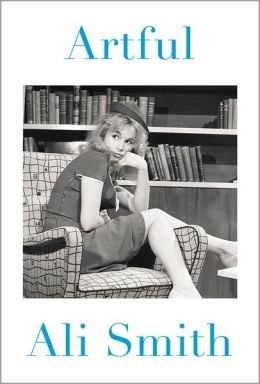
Ali Smith's latest book is Artful.

From her 2013 Q & A with Michelle Kung for the Wall Street Journal's Speakeasy blog:

When and why did you decide to use “Oliver Twist” and the Artful Dodger as a narrative thread through your essays? Was the Dickens the inspiration for the texts, or did it come more into place as you started writing?

It’s the word artful; it’s such a great word, with its dark and its light side, its art and its cunning, the craft and the crafty of it – I’ve been preoccupied with the word artful and the twin notions of cornucopia and pickpocket it suggests for quite some time. When the offer to give the lectures came, I remembered that Dickens had been writing and publishing “Oliver Twist” (one of his earliest works) literally as he went along, on the hoof, so I thought I’d read it concurrently with the writing of the lectures and see if anything artful would happen.

Your writing is full of allusions to both classical and pop culture texts. What books/novels/poetry do you consider essential reading for the average literate adult nowadays?

Oh dear god what a question, my mind just turned into a Noah’s Ark of baying and screeching and singing and mooing and roaring and squeaking creatures, all roaring and squeaking me! me! no, me! And is that Noah, at the helm? No, it’s Shakespeare, or Chaucer, or Cervantes, or that great (probably a woman) writer Anon, and all round them, as if simply to make the ark rock so joyfully in the water, is coming the great flood everything ever written. And you know, I don’t think there’s such a thing as average literate adult. Every single person who...[read on]
Learn about a place that inspires Smith, and about the "deceased author [Smith would] most like to watch crossing a room, just to see how she moves."

--Marshal Zeringue

Wednesday, January 22, 2014

Anuradha Roy

Anuradha Roy is the author of An Atlas of Impossible Longing and The Folded Earth.

From her 2012 Q & A with Visi Tilak:

Why do you write fiction?

I’m not sure I know why, but I know that I need to. If I’m not writing, I snap, glower, feel irritable and restless. It is only when I’m writing that everything else in my life sort of makes sense.

How did you get started?

I’ve been writing stories since I was a child. As soon as I could put alphabets together, I wrote atrociously spelt little stories of the “Once there was a bear, it sat on a chair” kind. By the time I was in my teens, a newspaper was publishing my short stories. After that I had a long detour into publishing and journalism, both of which I am still involved in, but about eight years ago I went back to fiction.

What do you like most about writing novels?

I’m not sure I like writing novels. I wish I could do something less draining, emotionally and intellectually. But maybe it’s...[read on]
--Marshal Zeringue