Wednesday, September 30, 2015

Leslie Pietrzyk

Leslie Pietrzyk is the author of the story collection This Angel on My Chest.

From her Q & A with Caroline Leavitt:
I always ask writers on my blog what sparked them writing a particular book. I know the answer to this, but it’s so moving, I’d love for you to talk about it.

Yes, my first husband died of a heart attack when he was 37 and I was 35, and many of the experiences and the emotional turmoil in THIS ANGEL ON MY CHEST are based on my own life. That said, the book is fiction, and plenty of elements are made up or fictionalized. The opening story, “Ten Things,” was actually written in the throes of grieving, the first thing I wrote after Robb died. I started the rest of the book years later, sparked by a random breakfast conversation at an artists’ colony. Someone mentioned she was teaching a class on the literature of subcultures, and I decided to spend the day writing about a subculture, since the novel I brought to work on wasn’t going anywhere. This ended up being the story “The Circle,” about a young widow’s support group similar to the one I attended for several months. Once in that world, I couldn’t leave, and I scribbled out dozens of ideas for stories exploring that part of my life. I’m so grateful that I was up early enough for breakfast that day.

How difficult was it, after such a loss, to write this book? Did anything surprise you while you were writing?

Almost fifteen years had passed since Robb’s death, so I had a lot of time to grieve and gain perspective. Even so, yes, some of these stories were...[read on]
--Marshal Zeringue

Tuesday, September 29, 2015

Chris Holm

Chris Holm is an award-winning short-story writer whose work has appeared in a number of magazines and anthologies, including Ellery Queen’s Mystery Magazine, Needle: A Magazine of Noir, and The Best American Mystery Stories 2011. His Collector trilogy, which blends fantasy with old-fashioned crime pulp, wound up on over forty Year’s Best lists. David Baldacci called Holm's latest, the hitman thriller The Killing Kind, "a story of rare, compelling brilliance." He lives in Portland, Maine.

From Holm's interview with Angel Luis Colón for the Los Angeles Review of Books:

In The Killing Kind, we’re introduced to Michael Hendricks — simply put: a hit man who kills other hit men. Now, there’s a rhyme and reason to it, and like most protagonists we’ve met in noir or suspense novels, it’s redemption. But to that point, do you believe that Hendricks is truly redeemable? His actions are still, in essence, selfish.

That question is the central tension of Hendricks’s story, and doubtless why I couldn’t leave the short well enough alone. While I’m proud of what “The Hitter” accomplished, both critically and from a narrative perspective, it didn’t answer the question to my satisfaction.

For a long time, the question that drove my writing was, “What makes an ostensibly good person do bad things?” But lately, I think that’s been supplanted by, “What’s the worst a person can be and still come back?” I’m also fascinated by an individual’s ability, or lack thereof, to achieve sufficient velocity to escape his or her own past. Hendricks — who went straight from the foster system to the military, where he discovered he had a knack for killing but not necessarily the stomach — affords me space to explore all three.

Is Hendricks redeemable? I’m not sure yet. But it seems to me that, either way, a life of violence is unlikely to be redeemed by more violence. Unfortunately for Hendricks...[read on]
The Page 69 Test: The Killing Kind.

Writers Read: Chris Holm.

--Marshal Zeringue

Monday, September 28, 2015

Claire Messud

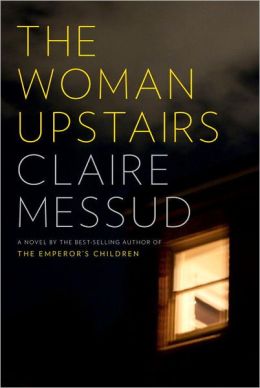
Claire Messud's latest novel is The Woman Upstairs.

From the author's Q & A with Bovey Rao for The Harvard Crimson:

FM: Your most recent novel, The Woman Upstairs, draws on allusions to Henrik Ibsen’s, A Doll’s House. Which other works have influenced your writing?

CM: I think lots of different things. I always think that when you are writing fiction, it’s like being a magpie. You pick up little pieces from one place and fly off and pick up pieces from another place. There’s certainly references to Ibsen, but I didn’t reread Ibsen. I wasn’t trying to write some riff on Ibsen. […] Dostoyevky’s Notes from the Underground was on my mind. There were a lot of other things that I’m not thinking of right now, but it is always a funny combination. I think a lot of it is unconscious. A lot of it we are not aware of, until afterwards, and then you make up a story about what you were doing.

FM: Does The Woman Upstairs have a central message?

CM: I don’t know that I was trying to get a message across particularly... There were different things I was trying to explore, and one of them was...[read on]
--Marshal Zeringue

Sunday, September 27, 2015

Arthur Benjamin

Arthur Benjamin is the Smallwood Family Professor of Mathematics at Harvey Mudd College, and is also a magician. His new book is The Magic of Math: Solving for x and Figuring Out Why.

From his Q & A with Deborah Kalb:

Q: What do you think are some of the most interesting connections between math and magic?

A: Mathematicians and magicians both want their audience to wonder: How did you do that? The magician keeps the method secret, but the mathematician wants you to understand. Math is not just solving for X. It's also figuring out why.

Q: You write that 9 is the most magical number. Why is that?

A: As a kid, I loved the fact that the multiples of 9: 9, 18, 27, 36, and so on, had the magic property that their digits would always add to a multiple of 9.

Here's a magic trick based on this fact. Think of any two digit number. Add their digits together. (So if you were thinking of 42, the digit sum is 6.) Now subtract that sum from the original number. (Example: 42 – 6 = 36.) Now add your digits together. (Example: 3 + 6 = 9.) You should now be thinking of the number 9.

Q: What are some of your favorite strategies to encourage people who are scared of math or don’t like it?

A: I like to motivate math with...[read on]
--Marshal Zeringue

Saturday, September 26, 2015

Negar Mottahedeh

Negar Mottahedeh is the author of #iranelection: Hashtag Solidarity and the Transformation of Online Life.

From her Q & A with Jadaliyya:

Jadaliyya (J): What made you write this book?

Negar Mottahedeh (NM): Writing ‪#‎iranelection was for me about the witnessing of a sea-change brought about in our life as global citizens by an epic solidarity around the first long trending global hashtag in 2009. No social media platform had seen masses of people from all over the world engage one another about something that happened in a country that was largely foreign to many of them. What I saw was people from the remotest corners of the world, like Alaska, to the most populated cities in China and the United States, participate in a people’s uprising by collaborating around the hashtag #iranelection and transmitting time sensitive information about what was happening in Iran using this hashtag.

J: What particular topics, issues, and literatures does the book address?

NM: In the aftermath of the 2009 Iranian Presidential election, there was a global uprising online and on the ground in Iran in response to the demand by the Iranian people to have a recount of the vote. Millions believed that their vote was never counted. The state denied the free expression of this movement in Iran, dictated an end to the protests, and actively engaged in a violent suppression of the voices of the people. Hundreds died and thousands were imprisoned.

Hundreds of thousands of subscribers on Twitter engaged the hashtag #iranelection for over a year to reclaim the vote of the Iranian people and to protest and record the violence of the state against its own. Flickr, Yfrog, Twitpic, and YouTube became the extensions of this act of witnessing. In the book I show how...[read on]
The Page 99 Test: #iranelection.

--Marshal Zeringue

Friday, September 25, 2015

Erica Jong

Erica Jong's new novel is Fear of Dying.

From her Q & A with Jeff Baker for The Oregonian:

Do you do poetry readings?

I had won all the poetry prizes when I was a young poet. I won the Bess Hokin Prize, which W.S. Merwin and Sylvia Plath won, and then I wrote "Fear of Flying" and I was the Happy Hooker of literature. Poets disowned me. I didn't disown them. I would have happily stayed reading and teaching, and I have done a lot of teaching and writing seminars, but I was shunned because I had a bestseller.

You became too popular.

I became too famous. They were jealous. It's nothing but that. You can understand that in a world where writers are treated like (bad word). Can we say that in a family newspaper?

No.

They're treated like poo-poo or whatever. I think that in a country where writers are treated very poorly and then someone becomes famous the hostility is extreme. Women are not allowed in the door. It's envy.

You were showing me that button you're wearing and saying you thought everyone is a feminist, but everyone doesn't identify that way.

All I can tell you is I think Donald Trump is a godsend for Hillary because he's...[read on]
See: Erica Jong's six top books that deal with death.

--Marshal Zeringue

Thursday, September 24, 2015

Anne Perry

Anne Perry is the international bestselling author of over fifty novels. The most recent (21st in the series) of her novels featuring the private detective William Monk and volatile nurse Hester Latterly is Corridors of the Night.

From Perry's Q & A with Caroline Leavitt:

What sparked the whole Monk series?

Monk's appearance and my feelings about him came from a dream. He was a man I was always quarrelling with, and yet I trusted him absolutely to do what he believed was right, and knew he would never hurt me. That started me thinking. His predicament of having no memory came from wondering how much any of us are the sum of all that we have been, remembered or not, I was held by the thought of being a stranger to yourself. How much are we answerable for what we cannot recall? Different people see any of us in widely different ways. Many of us at some time ask........who am I? And who is my enemy, who is my friend?

Did you ever imagine you were going to be this famous?

No, I certainly did not imagine I would be famous. I don't understand it, but I am grateful, not for the fame, but that so many people apparently like what I write. Yes, I worry about every book. I go through stages of thinking it's good, then complete rubbish, then middling, then...[read on]
--Marshal Zeringue

Wednesday, September 23, 2015

Gillian Tett

Gillian Tett's latest book is The Silo Effect: The Peril of Expertise and the Promise of Breaking Down Barriers.

From the transcript of her interview with Fareed Zakaria:
ZAKARIA: You take on these central ideas that we all think of as very good, which is efficiency, specialization, doing what you do to the nth degree. Why is that a problem?

TETT: Here is the issue. We think we live in a hyper connected world. We have our cell phones, our airplanes, our supply chains, our markets. They link us all together. But the reality is, when you look at how we live and think, we are actually as fragmented, if not more fragmented, than ever before. And sometimes that specialization is good. You need to have experts. You need to have departments that do things. You need to have professions. The problem is though that when you have hyper specialization and when you have those different professions and departments that don't talk to each other and connect, then you start to get big problems. You get people who can't see opportunities and they can't see risks either.

ZAKARIA: Sony. One of your great examples of Sony, which was so dominant in the world of consumer electronics, and kind of went by the wayside, what happened?

TETT: My book tells the stories of companies who were filled with bright individuals who do some really dumb things, and tragically Sony is one example of that. If you think back to what happened at the turn of the century, you had a generation of music listeners who were obsessed with the Walkman, and by all logical reasoning Sony should have dominated the era of digital Walkman. Because it had not just computing, it had electronics, it had a great brand, and it had its music label inside Sony. You want to know why it did not happen?

It's because around the turn of the century, Sony tried to get into the whole idea of a digital Walkman, a portable electronic Walkman, an Internet Walkman, and it launched not one but two competing products because it had different departments that could not talk to each other or collaborate, and that created a situation where they cannibalized each other, and essentially Steve Jobs jumped in with the Apple and the iPod, and these days we're all carrying...[read on]
--Marshal Zeringue

Tuesday, September 22, 2015

Wendy Lee

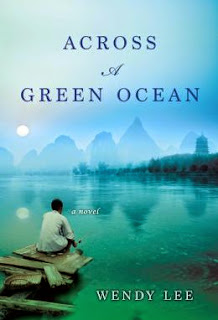
Wendy Lee's latest novel is Across a Green Ocean.

From her Q & A with Amy Sue Nathan:

Amy: Where did the title of the novel originate? Was it something you knew right away on your own? A collaborative effort? Did it pop into your head one day or was it the result of endless brainstorming sessions? Can you share with us if there were any other titles?

Wendy: The title comes from a line in the book and refers to a couple of things: a place in China called Qinghai Province, which literally means “green sea”; and the Pacific Ocean that separates China and America, which I think remains forever in the minds of some immigrants. It pretty much was the only title that came to mind and the only one I considered. Fortunately, no one asked me to change it.

Amy: How did you come up with the idea for the novel? Was it a spark? A character? Something personal?

Wendy: I had spent a few years working on a different novel, about a Chinese-American family with three daughters where the father has passed away, and something about it just wasn’t clicking. The daughters come back home, they grieve, and that was it. I wondered what it would be like if one of the characters wasn’t so much like me–which turned out to be Michael, the gay son in ACROSS A GREEN OCEAN–and what if that character found out something about his father that prompted him to go to China. That led me to set part of the book in Qinghai Province, which is located in the northwestern part of China and a place that I don’t think has been written about a lot. It’s very special to me, as I spent my first year out of college teaching English there. I also wove into that storyline a little of my family history, as I have a great-uncle who was...[read on]
Visit Wendy Lee's website, Facebook page, and Twitter perch.

My Book, The Movie: Across a Green Ocean.

The Page 69 Test: Across a Green Ocean.

--Marshal Zeringue

Monday, September 21, 2015

Jonathan Weisman

Jonathan Weisman, a reporter for the New York Times, is the author of the new novel No. 4 Imperial Lane.

From his Q & A with Deborah Kalb:

Q: Why did you decide to set your novel in the late 1980s, with flashbacks to 15-20 years earlier?

A: This goes to what is true and what is fiction. I really did study abroad my junior year and really did take a year off, ending up caring for a fallen-aristocrat-turned quadriplegic. His sister, Joanna, had indeed eloped with a Portuguese doctor and somehow ended up in Angola, where the revolution swept her off to South Africa.

That was the framework for the fictional backstory. But it worked for what I wanted to do. Thatcher's Britain was an exhausted former empire trying to remake itself, to get off of its knees. Portugal's collapse in the early ‘70s was the end of the old-style colonial empire. They were perfect bookends for the story I was trying to tell.

Q: How did you choose the book’s title, and what role do you see imperialism playing in the novel?

A: The working title of the novel was actually "Empires End," no punctuation, just a statement. Imperialism and its inevitable demise is...[read on]
--Marshal Zeringue