Sunday, May 30, 2021

Sally Cabot Gunning

A lifelong resident of New England, Sally Cabot Gunning has immersed herself in its history from a young age. She is the author of six critically acclaimed historically themed novels: The Widow’s War, Bound, The Rebellion of Jane Clarke, Benjamin Franklin’s Bastard, Monticello: A Daughter and Her Father, and her latest novel, Painting the Light. Elected fellow of the Massachusetts Historical Society and president of The Brewster Historical Society, she has created numerous historical tours of her village.

Gunning's work has appeared in The Washington Post, The Daily Beast, and an assortment of short story anthologies.

She lives with her husband in Brewster Massachusetts.

My Q&A with the author:
How much work does your title do to take readers into the story?

An art teacher once told me my job was to the paint the light, but before I could paint the light, I needed some dark to put it on. In Painting the Light, artist Ida Pease is struggling to regain her career after an impulsive marriage goes wrong; she lands on a sheep farm on Martha’s Vineyard where she works to push back the dark and learn how to paint that incandescent Vineyard light, both inside and out. Hence the title.

What's in a name?

Painting the Light is set on Martha’s Vineyard in 1898. In order to capture the sense of the time and the place, I visited old Vital Records and mixed and matched first and last names that had a good ring to them. Why the mix and match? I don’t want to use a name that’s actually a real person. Ida Pease needs to make her own mistakes and experience her own successes without someone else getting blamed or credited.

How surprised would your teenage reader self be by your novel?

My teenage self would be unsurprised. I started writing one rainy day when I was six and my mother didn’t get us to the library fast enough. I kept writing through high school, strictly for my own enjoyment, not showing anyone anything, but my teenage self saw it all. She knew.

Do you find it harder to write beginnings or endings? Which do you change more?

It’s the middle that kills me. I go along fine for about 100-200 pages and then I want to cut to the chase. It takes a real act of will to back up, slow down, let the characters breathe, live, learn, grow. Each time I sit down to write I review the work of the day before, so that means that the beginning gets changed more often than the end. I would like to think its to its benefit, but I never do know until it’s all of a piece.

Do you see much of yourself in your characters? Do they have any connection to your personality, or are they a world apart?

There’s a little bit of me in every character I create. How could there not be? In Painting the Light in particular, there’s a lot more of me because while I was writing a book about an artist in 1898 I was taking art classes in 2018. So much of what I learned my protagonist Ida Pease learned. So much of her struggle was my struggle. I had previously written a well-received book about a widow, and in the interim I lost a relative who was not a pleasant person. I wanted to explore how you grieve for someone you didn’t always like, and so as Ida Pease tries to grieve for a husband she didn’t like, I tried to grieve for a relative I didn’t always like. But you’ll note one difference between us already – I have to qualify my experience with the words “didn’t always.” Ida is braver than that.

What non-literary inspirations have influenced your writing?

Reviewers often compliment me on my sense of place. When a book feels like it’s growing up out of the ground at my feet I know I’ve got it right. No matter where the book is located, I go there and live it and feel it, in all four seasons, but because I’m a New England girl born and bred, I particularly loved writing Painting the Light because it brought me back home.
Learn more about the author and her work at Sally Cabot Gunning's website.

The Page 69 Test: Bound.

The Page 69 Test: The Rebellion of Jane Clarke.

--Marshal Zeringue

Friday, May 28, 2021

Mariah Fredericks

Mariah Fredericks was born and raised in New York City, where she still lives today with her family. She is a graduate of Vassar College with a BA in history.

Fredericks's new novel, Death of a Showman, is her third Jane Prescott mystery.

My Q&A with the author:
How much work does your title do to take readers into the story?

The titles for the Jane Prescott series usually come pretty easily. Death of a Showman was always Death of a Showman, except for a brief time when it was Death of an American Showman. First, there’s the helpful echo of The Greatest Showman, and who doesn’t love Hugh Jackman. It immediately suggests a time of American ebullience and bravado, with a slight whiff of chicanery. Even fraud. The title tells us the showman is killed. Why? Was the entertainment not good enough? What was all the razzle dazzle hiding? You think of the Wizard of Oz: Pay no attention to that man behind the curtain! The little con artist pretending to be a great and powerful being.

Or it can also make you think of the desperation of performing. People who wear themselves out to keep the feet moving and the big smile on their face.

There are several characters you might call showmen in the book, but only two impresarios in the mold of a Barnum or Ziegfeld. Readers familiar with the series will know one of them is possibly Leo Hirschfeld, Jane’s old boyfriend, who’s determined to take over Broadway. So the final thing the title does for series readers is give a frisson of Ooh, is she going to kill off the old flame? And about that, I will say nothing.

What's in a name?

I’m a little limited in my name choice because I’m working in a specific time and place: 1910s New York. I can’t remember now how I came to choose Jane Prescott, except there’s a romantic intelligence about the name Jane and something sharp and forthright about Prescott. I made the mistake of thinking “Behan” was pronounced BeHAN, rather than Be-un, so reporter Michael Behan’s name is a little less cheerful and adventurous than I hoped. Leo is Leo Hirschfeld because I have a huge Hirschfeld portrait of Balanchine on my wall and I combed the original names of the Marx Brothers for ideas.

How surprised would your teenage reader self be by your new novel?

Very. She would not be surprised by the focus on theater. I was a theater geek, so if anything, she would be shocked that I was writing novels and not plays. But I was a very sarcastic, misanthrophic kid. Highly averse to emotional risk. People, including Jane, our intrepid heroine, make mistakes throughout this book. But there’s a scene where an actress sings the show’s big torch song. Jane describes it
Just as she had in her comedy, she made a mockery of our pretense to chilly virtue, even dignity, and yet, made us feel better for wanting, loving—even hopelessly. The song made…one…feel proud of every time you had let your heart rule your head and if you had never done so, well, the more fool you, you weren’t fully alive.
My teenage reader self would have no patience with that!

Do you find it harder to write beginnings or endings? Which do you change more?

Beginnings are infinitely easier. With a series, they’re like homecoming weekend. What’s everyone been up to? Are there new faces? What’s happening in New York in that year? Later on, you have to tinker to set up the clues leading up to the body landing on the ground so that you’re playing fair with the reader.

There are two scenes in the endings that are often challenging. One is the reveal/confession scene. It’s the “who and why” of the murder, so it has to resonate and feel real. Not only do you have to make it believable that a murderer would confess to a lady’s maid, you have to make it believable that a murderer would even admit to themselves that they’ve killed someone. That scene gets a lot of “rinses” which is how I think of rewrites.

I somehow got into the habit of ending the books with a big public event. The Triangle Fire or the 1912 suffragette march. Crowd scenes, spectacle, lots of people united in a single moment—I find those events hard to describe. How would an individual who doesn’t fully process this as a moment in history experience it? I like placing Jane in a moment of history with each book, so I keep doing it.

Do you see much of yourself in your characters? Do they have any connection to your personality, or are they a world apart?

Both my family and my therapist have noted that Jane and I have some things in common. But I feel a sympathy with most of the main characters of the series. I can feel into both Louise Tyler’s apprehension of social demands and Leo Hirschfeld’s ebullient, creative drive that borders on selfishness. I share reporter Michael Behan’s dislike of ideological pedantry—give me severed heads in barrels any day. But I hope I also have his ability to admit when he’s wrong. I think in all the books, there’s been only one character for whom I have absolutely no liking and it was a strain to create their mindset.

What non-literary inspirations have influenced your writing?

Theater, obviously. Not just for the subject of this book, but for the way a playwright creates tension and drama simply from what one person says to another. The thrill when a character like Richard III takes the audience into his confidence, making them co-conspirators. I think that’s partly why I’ve always written first person. There are songs and music I associate with characters and scenes in the books; some of them are too embarrassing to say what they are. But Thomas Newman’s score for Little Women puts me firmly in Jane’s world. And the city of New York itself.
Visit Mariah Fredericks's website.

My Book, The Movie: The Girl in the Park.

The Page 69 Test: A Death of No Importance.

My Book, The Movie: Death of an American Beauty.

The Page 69 Test: Death of an American Beauty.

--Marshal Zeringue

Wednesday, May 26, 2021

David Gordon

David Gordon was born in New York City. His first novel, The Serialist, won the VCU/Cabell First Novel Award and was a finalist for an Edgar Award. It was also made into a major motion picture in Japan. His work has also appeared in The Paris Review, The New York Times, Purple, and Fence, among other publications.

Gordon's new novel, Against the Law, is his third installment in the Joe the Bouncer series.

My Q&A with the author:
How much work does your title do to take readers into the story?

Ideally, I like titles that add something to the book. This novel, Against the Law, is the third in a series that began with The Bouncer. I was hoping that first title was both simple and intriguing, since the main character, Joe, is a mysterious figure, a strip-club bouncer who is recruited by New York’s underworld bosses when they fear a terrorist in their midst. In Against the Law, Joe is tracking a heroin smuggler who is funding terrorism, so the title, on the surface, refers simply to the criminal capers unfolding in the book. However, “the law,” is also slang for police, and here the title refers to a general sense many of the books’ characters have that they live outside mainstream society and expect little or nothing from its institutions. To them the entire social system is antagonistic, and they are “against” it. In Joe’s world, people don’t call the cops, they call Joe.

What's in a name?

A lot! Choosing character names is harder than it seems, because ideally you want to start thinking of a character as a real person and the name has to fit the way your old friend’s does.

As I said above, I wanted The Bouncer to be about a character who is an unknown quantity, a seemingly simple guy who gets more complex as we follow him. So I picked a short, common name: Joe. His last name is Brody and that I can’t explain; it just popped into my head and felt right.

How surprised would your teenage reader self be by your new novel?

I think he would be impressed. This is exactly the kind of story I loved when I was young. Though I took a surprisingly roundabout path to doing it, and certainly never imagined a series.

Do you find it harder to write beginnings or endings? Which do you change more?

Both are hard but I actually tend not to change them that much. I need a strong opening to get me started, and usually, weird as it sounds, I know what the ending will be, even if I have no idea how the characters will get there. So it is everything in between that changes, constantly. The middle is the hardest part.

Do you see much of yourself in your characters? Do they have any connection to your personality, or are they a world apart?

Since Against the Law is about expert criminals fighting terrorists, spies, heroin smugglers and mercenaries, my instinctive answer is ‘of course not.’ I sit in a quiet room writing all day. But, surprisingly, friends and loved ones tell me that they see a lot of me in Joe. So who knows? I suppose in some way every character you write is partly you.

What non-literary inspirations have influenced your writing?

More than I can really list here. Movies of course are a huge influence, but so is music and visual art, though it might be harder to pin down. Often music provides me with the tone or feeling I am trying to convey. I read more books about painters than I do writers, and I think it helps me learn about the creative process. But I learn a lot from friends who are chefs, too. And then there is all the inspiration that comes just taking a walk, riding the train, reading the paper or talking to my neighbors. In some ways, it is New York City, my hometown, that is the true inspiration for Against the Law.
Visit David Gordon's blog.

The Page 69 Test: The Hard Stuff.

--Marshal Zeringue

Tuesday, May 25, 2021

Dahlia Adler

Dahlia Adler is an editor of mathematics by day, the overlord of LGBTQReads by night, and a Young Adult author at every spare moment in between. She is the editor of several anthologies and the author of seven novels, including Cool for the Summer. Adler lives in New York with her family and an obscene number of books.

My Q&A with the author:
How much work does your title do to take readers into the story?

This book was always called Cool for the Summer and I honestly would not have let it go to publication with any other title. If you're a queer teen reader, you're almost definitely aware of the Demi Lovato song it takes its name from, and not only was that song an inspiration for the book, but it's also at the center of major plot points. The book itself is meant to echo the song, almost as if they're in conversation, so if you know the song, you know what you're getting into: sexual identity exploration, secrecy, the emotions (including shame) that can come along with that... If you don't know the song, I bet you'll check it out first thing when you finish the book, or even a certain scene.

What's in a name?

I don't put enormous amounts of stock in name choices as far as things like meaning go; the most important things to me are A) reflecting the character's background and B) what other people call those characters. Larissa, who goes by Lara, is of Russian descent, so what was primary with her name was it being a reflection of Russian culture and using that to show her personality. She's a casual, friendly girl who's inclined to get close to other people, so having her go by the diminutive of her name was a conscious choice, as is her rejection of other nicknames (that are not further diminutives). Generally my names come from people I've known in life, or celebrities who remind me of them. Larissa was probably the most inspired by Larisa Oleynik, and also by a former coworker of mine from a million years ago whose name I happened to like.

How surprised would your teenage reader self be by your new novel?

Very. I didn't read a YA novel with LGBT main characters until I was in my twenties, so the idea I would've written one and gotten it published would be completely unfathomable to me. I wrote a lesbian side character when I was around twenty-six and it felt so daring somehow. And now I'm releasing a novel that's entirely about bisexual-questioning journey.

Do you find it harder to write beginnings or endings? Which do you change more?

I find beginnings easier to write for sure, but I also change them more often because I don't always start in the right place. I don't write a book without knowing the beginning, even if I turn out to be wrong. But I've absolutely written books without knowing the exact ending.

Do you see much of yourself in your characters? Do they have any connection to your personality, or are they a world apart?

My characters usually have something of me, but my debut had far too much of me in the main character and I learned from that to pull back. Personality-wise, I have almost nothing in common with Lara from Cool for the Summer, who's much more of an extrovert, but I did make her an aspiring romance author.

What non-literary inspirations have influenced your writing?

Music, definitely, as anyone can see from the title of this book, which was pulled from the Demi Lovato song. I'd say watching a lot of teen TV shows has influenced me as well, because I didn't grow up with a football team and cheerleading squad etc. etc. so everything I know about what normal suburban public school is like comes from TV and other books. And research! Can't forget research...
Visit Dahlia Adler's website.

The Page 69 Test: Cool for the Summer.

--Marshal Zeringue

Sunday, May 23, 2021

Jessica Anya Blau

Jessica Anya Blau was born in Boston and raised in Southern California. Her novels have been featured on The Today Show, CNN and NPR, and in Cosmo, Vanity Fair, Bust, Time Out, Parade, Oprah Summer Reads and other national publications. Blau's short stories and essays have been published in numerous magazines, journals and anthologies. She co-wrote the script for Love on the Run starring Frances Fisher and Steve Howey. She has taught writing at Johns Hopkins University and The Fashion Institute of Technology. Currently, She lives in New York.

Blau's new novel is Mary Jane.

My Q&A with the author:
How much work does your title do to take readers into the story?

Mary Jane is the name of my new book and the name of the title character. I came up with the name immediately. The book takes place in 1975 and Mary Jane’s family is conservative and sort of emotionally locked down. The double name, and the Mary in there imply both those things to me. I should point out that I love the name Mary Jane and almost want to have another baby just so I can name it that!

In the book, Mary Jane gets a job as a summer nanny for a doctor and his wife who live down the street. Her mother approves of this job, as working for a doctor, in her mind, means it’s a respectable house. It turns out the doctor is a psychiatrist and he has cancelled all his patients for the summer save one: a world-famous rockstar who moves into his house with his movie star wife so the rockstar can get sober. Once she’s embedded in this house, Mary Jane learns about sex, rock and roll, love, marriage, parenting ... she even goes to group therapy. And she learns about Mary Jane, AKA marijuana. So the name has a double meaning in the title.

What's in a name?

Oh, everything! Mary Jane, as explained above really has to be a Mary Jane. Right? The movie star in the house is named Sheba. I wanted her to be a star who was so huge she only went by one name. There’s immense power in being a one-named star. Few people can rise to that. The one-named stars usually have a somewhat unusual name: Cher, Madonna, Liberace, Kanye, Beyonce, J.Lo., etc. I made up the name Sheba. It sounds feminine and powerful. To me, at least! The rockstar is from the South and so I gave him a good-guy Southern name: Jimmy. The shrink is always called Dr. Cone in the book, because the story told from Mary Jane’s point of view. But the fact that she can’t not call him Dr. Cone, even when he tells her to call him by his first name, is telling. It shows how Mary Jane is following the rules, and would be hesitant to go against the wishes of her parents. The same is true for Mrs. Cone. Their daughter is named Izzy. I wanted give her a fun, playful name. And I love the sound of Z names. They’re fizzy.

How surprised would your teenage reader self be by your new novel?

My teenager self wouldn’t be surprised by the content, though surely interested (sex, drugs and rock and roll!). When I was a kid, we had a living room with wall to wall bookshelves. My father used to walk up the bookshelf, pluck out a book, hand it to me, and tell me to read it. I read whatever I was given. I think he rarely thought about my age and only took into account that I loved to read. So I read many books at an age when most other kids’ didn’t: Portnoy’s Complaint before I knew anything about boys or their ways. The Painted Bird at an age where I really wasn’t prepared to think though The Holocaust, etc.

Do you find it harder to write beginnings or endings? Which do you change more?

Definitely endings! I have an editor who is a genius, Katherine Nintzel, and she has redirected me with all my endings. None of my books have the ending I originally wrote. And most of them have an ending that doesn’t even resemble what I originally wrote. Kate and I will have discussions where she’ll bring up feelings, or where you want to end up emotionally. I’ll send her something and then she’ll send it back and the conversation will continue until I’ve nailed it. The ending of Mary Jane is maybe the fifth one I tried?

Do you see much of yourself in your characters? Do they have any connection to your personality, or are they a world apart?

All my characters are a version of me. Mary Jane doesn’t do things as I did when I was her age. She’s in Baltimore in 1975. I was in Southern California hanging out at the beach and spending the summer barefoot. But internally she is a lot like me. It’s me if I were in a different place/time/family!

What non-literary inspirations have influenced your writing?

When I was growing up, on the coffee table in the living room, was a Diane Arbus photo book. The one with the twins on the cover. I looked at the book so much I had the titles memorized. Also, we were taken to museums often. I think paintings, museum shows, art had a lot of influence on me. As a young girl, framed prints of Calder’s circus people hung along the walls of my pink, flowery, wallpapered room. It’s a strange thing to put on a little girl’s wall: line drawings of naked circus performers. But I didn’t think of it as strange and just stared at them and looked at the lines and thought about things. So I suppose the answer is art. And great TV. In this book, I’d have to say that my love for Soul Train had an influence.
Learn more about the book and author at Jessica Anya Blau's website, Facebook page, and Twitter perch.

Coffee with a Canine: Jessica Anya Blau and Pippa.

The Page 69 Test: The Wonder Bread Summer.

My Book, The Movie: The Wonder Bread Summer.

The Page 69 Test: The Trouble with Lexie.

My Book, The Movie: The Trouble with Lexie.

The Page 69 Test: Mary Jane.

--Marshal Zeringue

Friday, May 21, 2021

Wallace Stroby

Wallace Stroby is an award-winning journalist and crime novelist.

His new novel is Heaven's a Lie.

My Q&A with the author:

How much work does your title do to take readers into the story?

I look at it as an invitation. It sets tone and mood, if nothing else. I always have a lot of titles on hand, but it’s never easy to find the right one for a particular project. Usually the best titles come to you immediately, as opposed to the ones you have to think over. As far as how much the title relates to the book, I don’t think that’s important. Readers will always make a connection on their own as to what it means, maybe not one you ever even imagined. They always bring something to it themselves.

Heaven’s A Lie was a title I borrowed from a song called “The World Ender,” by the band Lord Huron. There was some resistance to that title at first from the publisher, and they dummied up a cover with an alternate title, but I kept coming back to Heaven’s A Lie because I thought it was unique and had some energy to it. Whether or not the title ultimately has anything to do with the book is up to the reader to decide.

How surprised would your teenage reader self be by your new novel?

He would be disappointed that I haven’t written more frequently. I’ve only published nine novels in 18 years.

Do you find it harder to write beginnings or endings? Which do you change more?

Neither of them are especially hard. What’s hard is the halfway/three-quarter mark. I don’t start a book until I know what the first scene is, so that generally never changes. As the writing goes on, I usually have an idea for the ending. The details may change, but there are certain things that need to happen for dramatic purposes. For example, when the three guys in Jaws go hunting for the shark, they have to find it, or the story doesn’t work. How they do it and who survives are almost secondary. You have to get from Point A to Point B, but there are different ways of doing that. I always like to quote director Sam Peckinpah on the three basics of storytelling – Introduce, develop, resolve.

What non-literary inspirations have influenced your writing?

Movies, of course. For me growing up, movies were like church. I saw a lot of classic 1970s films on first-run. That period also focused on character-driven crime films, as opposed to the action and special effects showcases prevalent today. That probably helped shape my own sensibility when I started to write novels myself decades later. In 1974 alone, Chinatown, The Conversation, Godfather II, Death Wish, The Taking of Pelham One Two Three, Bring Me The Head of Alfredo Garcia, The Gambler, Sugarland Express and a dozen other notable crime dramas all came out within weeks of each other. It really was a golden age for crime films.
Learn more about the author and his novels at the official Wallace Stroby website and The Heartbreak Blog.

The Page 69 Test: Gone 'til November.

The Page 69 Test: Cold Shot to the Heart.

The Page 69 Test: Kings of Midnight.

The Page 69 Test: The Devil's Share.

The Page 69 Test: Heaven's a Lie.

--Marshal Zeringue

Wednesday, May 19, 2021

Gian Sardar

Gian Sardar studied creative writing at Loyola Marymount University and is the author of the novel You Were Here, as well as the coauthor of the memoir Psychic Junkie. She lives in Los Angeles with her husband, son, and insane dog.

Sardar's new novel is Take What You Can Carry.

My Q&A with the author:
How much work does your title do to take readers into the story?

Take What You Can Carry is a title I lifted from the pages of my book, in a scene where one of my Kurdish characters talks about being forced to flee to the mountains during the government attacks. The book takes place in 1979, mostly in Kurdistan of Iraq, and was originally called No Friends But The Mountains, which is a Kurdish proverb. However, right as I finished the book, another work came out with that same title. Perhaps it was fortuitous, because while hunting for a title I saw the words on the page and knew right away that I’d found my title - and it’s a title I love. Not only does it capture the actual physical goal of running with whatever you can grab, but it plays upon a thematic element of the book as well.

What's in a name?

Picking a name can make or break a character for me. In the past, I’ve felt almost blocked when writing a character until I realized that the problem was that their name was wrong. With my current novel I knew I had to get it right from the start. Olivia, my protagonist, is a young adult in the late 1970s, so clearly the name had to exist then. I also wanted a name that wasn’t overly feminine, but was beautiful and strong. To me, Olivia was someone almost unaware of her charm and looks, someone who might drive an orange Rabbit while barefoot, and who is strong but a bit of a dreamer.

How surprised would your teenage reader self be by your new novel?

I actually don’t think my teenage self would be that surprised. Excited, yes, but not surprised. I always wanted to write, and my new novel is inspired by my father’s stories. I think I always knew at some point I’d weave them into fiction.

Do you find it harder to write beginnings or endings? Which do you change more?

Beginnings are much, much harder for me, only because when you first sit down to write a book you don’t know that book yet. Of course you can rewrite the opening later, but there’s still an enormous amount of pressure on a beginning, and that right there can be intimidating. Endings, however, tend to reach out and grab me. I know generally where the book is going the whole time, but I feel it when I get there. In fact, with my latest book, I was writing something I’d not planned on being the last scene when it hit me that what I was writing was, in fact, the end. I had to move some parts around, but the second the words appeared on the page I knew they were the ending. The fact that I was crying when I wrote them was also probably a good indication.

Do you see much of yourself in your characters? Do they have any connection to your personality, or are they a world apart?

There’s a part of me in all my characters, but in this book I felt a particularly strong connection to my main character, Olivia. She’s an American who goes with her Kurdish boyfriend to the Kurdish region in Northern Iraq, and has an eye opening, life changing experience. Though I’m Kurdish American, it was easy to explore the part of me that would still feel like a bit of an outsider in a land I’d not grown up in. Also, while visiting family and researching on a trip there a couple years ago, I stood out just like an American, just like Olivia did, so I certainly related to that! As well, Olivia’s always wanted to make a difference in the world, as have I. Her hope is to affect people through her photography, and mine is through my writing.
Visit Gian Sardar's website.

--Marshal Zeringue

Tuesday, May 18, 2021

Linda L. Richards

Linda L. Richards is a journalist, photographer and the author of numerous books, including three series of novels featuring strong female protagonists. She is the former publisher of Self-Counsel Press and the founder and publisher of January Magazine.

Richards's new novel is Endings.

My Q&A with the author:
How much work does your title do to take readers into the story?

This book is all about Endings. Well, and beginnings as well, I guess, but that doesn’t make as good a title! But as we join the book, a lot of things have ended and as we move forward with the narrating character we are with her for still more ends. Do wonderful new things almost always come out of endings? Well, yes. Of course. But she doesn’t see it that way.

What's in a name?

My agent sold this book to Oceanview as A Possibility of Endings, which is actually part of a line in the book. “Too many words,” they said, and fair enough. They weren’t wrong. Endings is a much better title. It’s more about promise as well as foreshadowing. I like the title a lot.

How surprised would your teenage reader self be by your new novel?

Ohmigosh, but that’s a fun and silly question! I love it. And I think she would be mucho surprised, considering the main character kills people for money and I don’t think my teenaged self would have considered that a proper career option. (Thank goodness! This whole story has a different ending if she did.)

Do you find it harder to write beginnings or endings? Which do you change more?

Oh that’s easy! I never write beginnings: they simply are. Like words will dance into my head and that’s it. I often don’t even have a story. Or characters. And certainly no ending is in sight at that point. Ever.

Endings are different. I’m so about “what if?” in my life, all ways. What if I take that road instead of this one? What if I add beer to a recipe instead of wine? Or gin? What if I don’t take that job, but spend a year writing a book, instead?

Personally, I think that is a fun way to live, but it does mean that when it comes to writing endings, the infinite possibilities of the thing dance into my mind and tease me. What if what if what if. I often write several different endings, then evaluate and create some amalgamation of what I think are the best of the ideas.

Okay: I’ll be honest. That is not the most expeditious way to get to “The End,” but it seems to be the way my mind works. I’m a bit of a perfectionist (some would say “control freak”) and all those “what if”s help me to get to what I hope is the best answer to all of the questions.

Do you see much of yourself in your characters? Do they have any connection to your personality, or are they a world apart?

All of my characters are of me and so parts of me but I think I also do a good job of writing characters who are distinct from each other and therefor from me, if that makes sense. It seems like a lot of words.

To put it another way: all of those characters I guess are of me, since they are conceived of and executed by me. But also, I think they have their own place in (at least their imaginary) world. I hope when you read, you experience characters who are distinct and have their own voices and thoughts about how they fit into their world.

What non-literary inspirations have influenced your writing?

“Influence” is an interesting word, I think. at least, in this context. We are influenced by everything we see and experience and breathe. Looked at that way, there is nothing that has not had influence. For the narrating character in Endings, I was influenced by a desire to see what might happen if extreme pressure were applied to someone of a “normal” background and life. At least, that’s how it began. After a while, the narrating character had her own life and those earlier influences because less important. Maybe that’s just always how it goes.
Visit Linda L. Richards's website.

My Book, The Movie: Endings.

The Page 69 Test: Endings.

--Marshal Zeringue

Sunday, May 16, 2021

Gin Phillips

Gin Phillips is the author of six novels, ranging from historical fiction to literary thriller to middle grade. Her work has been sold in 29 countries.

Phillips’s debut novel, The Well and the Mine, won the 2009 Barnes & Noble Discover Award. Her recent novel, Fierce Kingdom, was named one of the best books of 2017 by Publishers Weekly, NPR, Amazon, and Kirkus Reviews. Her novels have been named as selections for Indie Next, Book of the Month, and the Junior Library Guild.

Born in Montgomery, Al., Phillips graduated from Birmingham-Southern College with a degree in political journalism. She lives with her family in Birmingham, Al.

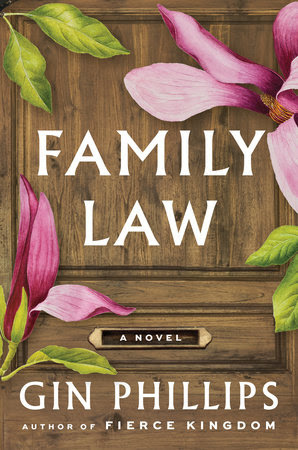
Phillips's new novel is Family Law.

My Q&A with the author:
How much work does your title do to take readers into the story?

This is my sixth novel, and it’s the first one where my original title has stuck. Normally one of the first things that happens in the publishing process is for my editors to tell me—in detail—why my title doesn’t work at all. Maybe I’m getting better at this. At any rate, Family Law has both an obvious connection to the story and a more layered one. The book follows the friendship between Rachel, a teenager struggling with the expectations of her very traditional family, and Lucia, a young lawyer who specializes in family law. So that’s a pretty obvious reference. But the book also looks at the reach and limitations of family: it’s a story about the mothers we’re born to and the mothers we choose for ourselves. So “family law” also works as a nod to our ability to expand the very definition of family.

That said, the title might lead readers to believe it’s more of a courtroom drama than it is. It’s a very straightforward sort of title, and it doesn’t necessarily convey lyricism and warmth and humor, all of which I hope are significant parts of the book.

How surprised would your teenage reader self be by your new novel?

Of all my novels, this is easily the one that lands closest to my teenage self. It’s set in the world of my childhood—1980s Alabama. It’s a landscape that my old self would find very familiar, and my own teenage questions and struggles are at the core of the book. That said, the teenage me fully expected to grow up and write fantasy or sci-fi. She’d be very disappointed that I don’t have a single dragon or gateway to another dimension in here.

Do you find it harder to write beginnings or endings? Which do you change more?

Endings are much harder. I love the blank page—everything in play, anything possible. I loved the feeling of writing these first few pages—Lucia in the courtroom, comfortable and in command. Her joy in her work is crucial to her character, and I found it immensely fun to try to capture the kind of particular satisfaction that comes from loving your job. I felt it, actually, as I was writing it.

In those first few pages, you haven’t screwed anything up yet. But the ending—that’s where you have to take all those threads you’ve been spinning and make them come together in a way that’s true and right …but not too tidy. Not too neat. As you close in on the ending, you can see whether or not you’ve taken a wrong path, because—when you’ve done it right—the ending is right there in front of you. You’ve been heading there the whole time, even if you didn’t know it. Sometimes I have that feeling, and it’s glorious. Other times, I have a feeling like, oh, hell, and I know I have to go back and tear out some of the stiches to figure out where I went wrong. I change the ending more often than the beginning, but I change the middle even more.

Do you see much of yourself in your characters? Do they have any connection to your personality, or are they a world apart?

I don’t think I’ve ever written a character that has absolutely none of me. I’m not sure how that would work. It might be that I’m writing a middle-aged coal miner in the 1930s, but he has my love of poetry. Or a woman who lived a thousand years ago who looks down at her child and feels the same pulse of connection that I do. There has to be some thread between us. It might be one percent of a character, and then the other 99 percent spirals into a completely foreign direction, but some part of me connects to some part of them. In Family Law, Rachel asks the same questions about herself and the world around her that I did at that age. Lucia has plenty of me as well, although her love of conflict is not like me at all. Both women have a similar worldview to mine, which does make it easier to get in their heads.
Visit Gin Phillips's website.

The Page 69 Test: Family Law.

--Marshal Zeringue

Saturday, May 15, 2021

Lynn Painter

Lynn Painter lives in Omaha, Nebraska, with her husband and pack of wild children. She’s a biweekly contributor to the Omaha World-Herald’s parenting section, even though she is the polar-opposite of a Pinterest mom. When she isn’t chasing kids, she can be found reading, writing, and shot-gunning Red Bulls.

Painter's new novel is Better Than the Movies.

My Q&A with the author:
How much work does your title do to take readers into the story?

The title of my book – Better Than The Movies – is, in a sense, the final answer to the main character’s misguided quest. Liz Buxbaum is obsessed with rom-com movies and is convinced that her life should follow the plot of a romantic film. She is a lady-in-waiting for big Hollywood love, the kind of running-through-the-train-station drama she has always adored. But life isn’t a movie, and nothing goes as she’d have planned. But sometimes real life and its messiness ends up being – wait for it – better than the movies.

The book’s working title was All Is Fair In Love And Parking, and I’m very grateful for agents and editors with better ideas than mine.

What's in a name?

In this instance, with this book, I was a lazy name selector. As I started drafting, I randomly selected two names out of thin air – Liz and Wes. For last names, I glanced over at my bookshelves and let my eyes peruse the spines. Buxbaum and Bennett are both last names of authors I enjoy, so why not?

It seems fated, however, because I later realized that if Liz and Wes were ever to marry, she would become Elizabeth Bennett. And what better name could there possibly be for a hopeless romantic?

How surprised would your teenage reader self be by your novel?

Not at all. I write contemporary YA, and my teenage reader self was a contemporary young adult. Many of Liz’s experiences were colored by my own high school experiences, so my teenage reader self would probably be bored with my book.

Do you find it harder to write beginnings or endings? Which do you change more?

I find it much harder to write endings than beginnings. When I start a novel, I know who the characters are; the beginnings are all about showing them to the reader. But more often than not, the characters take on a life of their own during the book. The ending I might have outlined at one time rarely works by the time I get there.

For example, I knew when I started writing Better Than The Movies that Liz would realize she was wrong about Wes all along. When drafting the story, I thought their happy ending would be together at the prom in a dramatic Hollywood rom-com type of moment.

But by the time I neared the finish, the story had changed. Wes and Liz’s dynamic was looped together with their childhood memories of her late mother and her inability to move on with her life. So instead of them kissing at the prom at the end of the book, they ended up visiting her mother at the cemetery.

Do you see much of yourself in your characters? Do they have any connection to your personality, or are they a world apart?

I don’t know if I see myself in my characters as much as I see traits and experiences. For example, Liz is romantic and hyper-organized. I am definitely not those things. But when she flashes back to ridiculous things she did as a silly child, more often than not they’re things I did – or my sister did – as a silly child.

What non-literary inspirations have influenced your writing?

Movies and music had a huge influence on this book. Better Than The Movies is kind of an homage to the classic Hollywood rom-coms that I grew up watching. And with any movie, there needs to be a soundtrack, right? Liz, the main character, curates the soundtrack throughout the course of the book.
Visit Lynn Painter's website.

--Marshal Zeringue