Saturday, November 30, 2019

Emma Sloley

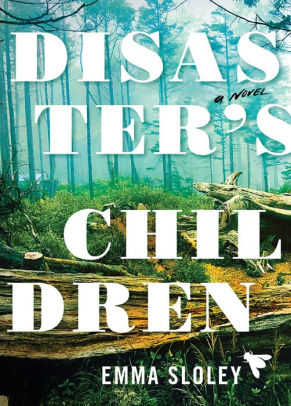
Emma Sloley's new novel is Disaster's Children.

From the author's Q&A with Leslie Lindsay:

Leslie Lindsay: Despite the apocalyptic themes, there’s a sense of optimism to DISASTER’S CHILDREN. Is the book intended to function a bit as a call to action? And what about hope?

Emma Sloley: It was hugely important to me to allow for hope in this story, just as I feel that hope is an essential component of the real-life fight against impending environmental and humanitarian disasters. The forces arrayed against those of us concerned about climate change and degradation of our natural world rely on apathy as a tool to keep people unengaged. If the end of human civilization seems inevitable, what’s the point of even trying anything? May as well keep burning those fossil fuels and partying like the world’s about the end, right? And I’m sympathetic to that stance. Apathy is very alluring! Action is difficult. It was also important to me to that the setting be one of immense natural beauty – fiction often presents us with bleak post-apocalyptic landscapes (and some of my favorite stories are set in those worlds), but instead I wanted to explore the possibilities that...[read on]
Visit Emma Sloley's website.

--Marshal Zeringue

Friday, November 29, 2019

Jennifer Cody Epstein

Jennifer Cody Epstein's latest book is Wunderland: A Novel.

From her Q&A with Deborah Kalb:

Q: You write that Wunderland was inspired in part by a piece in The New Yorker. What was the article about, and how did it lead to this book?

A: It was a 2013 article that my husband happened upon in The New Yorker, about a new U.S. translation of a somewhat obscure German book.

The article--by a U.S. writer who was also the publisher/editor of that translation (Helen Epstein, of Plunkett Lake Press) --recounted how Melita Maschmann, a former Hitler Youth enthusiast, had in her 1963 memoir Account Rendered written an intimate account of her rise and fall as a national socialist.

It's a confessionary account that takes the shape of a long letter to Maschmann’s childhood best friend, a girl who found herself classified as a Mischling--"mixed-race"--under Hitler’s race laws at roughly the same time Maschmann joined the girl’s branch of the Hitler Youth.

That story sparked both my interest and my imagination.

I’d known for years that I wanted to write about the Holocaust—not about the monstrous mechanics of the Final Solution (so many other authors have already done that, some far better than I could hope to), but something that would...[read on]
Visit Jennifer Cody Epstein's website.

The Page 69 Test: The Painter from Shanghai.

The Page 69 Test: The Gods of Heavenly Punishment.

Writers Read: Jennifer Cody Epstein.

The Page 69 Test: Wunderland.

--Marshal Zeringue

Thursday, November 28, 2019

Caroline Moorehead

Caroline Moorehead is the New York Times bestselling author of Village of Secrets: Defying the Nazis in Vichy France; A Train in Winter: An Extraordinary Story of Women, Friendship, and Resistance in Occupied France; and Human Cargo: A Journey Among Refugees, which was a finalist for the National Book Critics Circle Award. An acclaimed biographer, Moorehead has also written for the New York Review of Books, the Guardian, the Times, and the Independent. She lives in London and Italy.

Moorehead's new book is A House in the Mountains: The Women Who Liberated Italy from Fascism.

From her interview with Anita Sethi for the Guardian:

You have written three other books about the resistance. Where did your interest come from?

It stems from my interest in human rights. I’ve always been fascinated by courage and how people survive seemingly unsurvivable situations. What I found were these extraordinary people – who were actually ordinary people – who got up in the morning and thought: “No, I’m not going to put up with this any more.”

Tell me about the women in the book.

I discovered, to my surprise, that everyone thinks the Italians had no resistance. There were actually 600,000 who joined the resistance; of those, 70,000 were women. Under Mussolini, they were third-class citizens, had no rights, no voice, no equality. It was the women who were the first to...[read on]
--Marshal Zeringue

Wednesday, November 27, 2019

Marina Budhos

Marina Budhos's latest novel is The Long Ride.

From her Q&A with Deborah Kalb:

Q: You note that The Long Ride is based on the busing plan implemented in your Queens neighborhood in the late '60s and early '70s. Why did you choose that as a topic, and how did you come up with your character Jamila?

A: I had been working on some memoir material around my growing up in an unusual international and interracial community. The surrounding neighborhoods, however, in Queens, were very segregated and polarized around race, particularly when school integration plans began coming into place.

And while I did not personally go through the integration plan that this novel is based on, it was something that roiled the community and our schools. Thus, I was interested in capturing that story, that moment.

As well, I am mixed (half Guyanese-Indian and half Jewish-American), with a father who taught in a largely African-American high school, in a neighborhood many of my own friends would never go to. Many of my other friends were mixed and so we had...[read on]
Visit Marina Budhos's website.

My Book, The Movie: Watched.

The Page 69 Test: Watched.

Writers Read: Marina Budhos.

My Book, The Movie: The Long Ride.

The Page 69 Test: The Long Ride.

--Marshal Zeringue

Tuesday, November 26, 2019

Richard Stengel

Richard Stengel's new book is Information Wars: How We Lost the Global Battle Against Disinformation and What We Can Do About It.

From the transcript of his interview with Fareed Zakaria:
ZAKARIA: Let me ask you about something Fiona Hill said during her testimony. She talked about how the idea that Ukraine was actually the country that had hacked the 2016 election was part of a kind of Russian disinformation campaign. It was fiction. And yet it has taken hold in a large part of the American public that, you know, a lot of people in -- on the Hill, the Republicans believe it. A lot of people who watch Fox News believe it. What does one do about that kind of disinformation?

STENGEL: By the way, there are decades of Russian disinformation. The CIA caused AIDS. The CIA shot John F. Kennedy. All of these things get embedded in our psyches. That's why disinformation is so dangerous. It's hard to rebut it. It gets stuck in our brains. And the Russians are very good at it.

I think the other reason that disinformation works is people want to believe it, right? And it's confirmation bias. If the Republicans are looking for a conspiracy theory to help Donald Trump, of course, they're going to be more receptive to it. That's why disinformation works. It's not just a supply problem. It's a demand problem.

ZAKARIA: Right. And it seems to me the demand problem is almost at the heart of it. Because, as you said, there were conspiracy theories in the past, but you didn't have a third of sometimes half, sometimes more of Republicans believing it. I mean, if you have a desire to want to believe this, it becomes--

STENGEL: Yes. I mean, we may have something in our DNA to believe conspiracy theories. Maybe it's evolutionary, effective behavior. But, I mean, a third of voters during the last campaign believed that Hillary Clinton was running a child sex trafficking ring out of a pizza parlor in Washington D.C. I mean, that's part of the problem. And you can't...[read on]
--Marshal Zeringue

Monday, November 25, 2019

Pete Townshend

Pete Townshend, The Who’s guitarist and principal songwriter, is the author of a debut novel, The Age of Anxiety.

From his interview with NPR's Raina Douris:

Raina Douris: How much of The Age of Anxiety is about you?

Pete Townshend: I really wanted to write a proper fiction novel, at last. I was warned by my editor that if I went too far into general fiction, people would lose "me." I am a celebrity; I am known for what I do in a rock band, so with this book, I tried to stay in familiar territory. I'm not taunting people to try and find me in this. If they try and find me in this — they might, they might not, but I don't think I'm really there.

There are moments in it that get a little salacious. Was there anything in there that, knowing that people know who you are, you were uncomfortable writing? Was there anything you had reservations about putting in the book?


No. The "salacious" bits, if you like, are there to propel the narrative. The narrator is the godfather of a young musician. I wanted him to be an isolated, lonely voice, somebody who had married, lost his wife and was often in the company of younger people.

Why would I do that? Well, it's where I am. I'm in the music business, coming up to 75 years old, and I'm surrounded by young people. So I'm familiar with that world; I'm familiar with the machinery of it. I'm a man in my 70s who occasionally gets asked on a date by a younger woman.

The narrator is accused by somebody that's close to him of the possibility that he has...[read on]
--Marshal Zeringue

Sunday, November 24, 2019

Nicholas Buccola

Nicholas Buccola's latest book is The Fire Is Upon Us: James Baldwin, William F. Buckley Jr., and the Debate over Race in America. He is the Elizabeth and Morris Glicksman Chair in Political Science at Linfield College, and he lives in Portland, Oregon.

From Buccola's Q&A with Deborah Kalb:

Q: You write of the 1965 debate between James Baldwin and William F. Buckley, "At Cambridge [University], the powder keg of their intellectual struggle blows up, for all the world to see." What were some of the reasons you focused on these two figures?

A: My way into the book was through Baldwin. I was invited to write an essay about Baldwin for a book, and I came across the debate with Buckley. I became mesmerized by the debate—here were two individuals with radically different backgrounds and views on stage. I began to think about a smaller book, and then it grew into a larger book.

The idea was to treat the debate as a way in, but the longer story would tell about Baldwin and Buckley, weaving intellectual history, political history, and a little personal biography into the story of the civil rights and conservative movements.

I’ve gotten questions about the pairing—it’s an odd couple to be sure, how they conceived of their roles, and the kind of thinkers they were. But there’s a way in which putting them together makes sense. Baldwin provides a lens to understand someone like Buckley. Buckley was a very important popularizer of the conservative movement, the kind of person we need to...[read on]
--Marshal Zeringue

Saturday, November 23, 2019

Amber Cowie

Amber Cowie's latest novel is Raven Lane.

From her interview at Fuse Literary:

Robyn Harding calls Raven Lane “a sexy, provocative thriller about devastating secrets and shocking behavior in one bohemian, suburban enclave.” How will you explain this book to your neighbors?

Oh boy. I moved to a cute little cul-de-sac weeks after I finished Raven Lane, which is also set on a dead-end street with close-knit neighbors. The problem? On the fictional Raven Lane, there is sex, intrigue and betrayal. I was absolutely not inspired by my real-life neighbors while I wrote, but I get flustered when I talk about it, and I think it might make me look a bit guilty. The more I write, the more conscious I am of how much reality I’m bringing into my fiction, but there are always pieces of real life that my subconscious twists around to the point where they seem completely new while I’m writing. I can only see what they are based on after I emerge from the fog of the story. Also—Raven Lane is chock full of sex scenes, so the real question is how do I explain the book to...[read on]
Visit Amber Cowie's website.

The Page 69 Test: Rapid Falls.

Writers Read: Amber Cowie (February 2019).

--Marshal Zeringue

Friday, November 22, 2019

Howard Andrew Jones

Howard Jones’s debut historical fantasy novel, The Desert of Souls (2011), was widely acclaimed by influential publications like Library Journal, Kirkus, and Publishers Weekly, made Kirkus’ New and Notable list for 2011, and was on both Locus’s Recommended Reading List and the Barnes and Noble Best Fantasy Releases list of 2011. Its sequel, The Bones of the Old Ones, made the Barnes and Noble Best Fantasy Release of 2013 and received a starred review from Publishers Weekly. He is the author of four Pathfinder novels, an e-collection of short stories featuring the heroes from his historical fantasy novels, The Waters of Eternity, and the new novel from St. Martin’s, the second in a new fantasy series, Upon the Flight of the Queen, the followup to For the Killing of Kings, which received a starred review from Publishers Weekly.

From Jones's Q&A with Elise Dumpleton at The Nerd Daily:

Upon the Flight of the Queen, the sequel to For the Killing of Kings, publishes on November 19th. If you could only describe your book in five words, what would they be?

Five words, eh? Stand and make a difference. I don’t think that would work as an elevator pitch, but it certainly sums up the feelings of the protagonists.

Upon the flight of the Queen and its predecessor, For the Killing of Kings, take the perspective of a woman soldier and a veteran officer as they stumble into a conspiracy that leads all the way to the throne. Truths have been twisted, facts invented, and the less powerful silenced and ignored. When Elenai and Kyrkenall ask the wrong questions, they’re framed for murder, declared traitors, and are forced to flee for their lives, their own friends in deadly pursuit. In both this book and the last, they have to stand up and make a difference.

By the start of book two the characters know their queen is corrupt, and they’re having to struggle to overturn her machinations while dealing with an invasion by their old enemies with almost no support. They have to go begging to their former allies, the winged lizards known as the ko’aye, because the invading Naor have control of immense dragons. Only the ko’aye can help them fight the beasts in the air.

Unfortunately, rather than helping the ko’aye defend their own lands as promised, the queen...[read on]
Visit Howard Andrew Jones's website.

View the animated book trailer for Upon the Flight of the Queen.

The Page 69 Test: The Bones of the Old Ones.

My Book, The Movie: The Bones of the Old Ones.

Writers Read: Howard Andrew Jones.

The Page 69 Test: Upon the Flight of the Queen.

--Marshal Zeringue
Thursday, November 21, 2019

Declan Burke

Declan Burke's new novel is The Lammisters.

From his interview with Dominique Jeannerod for The International Crime Fiction Research Group:

What was your original idea?

I usually start with a setting, and then begin to people it with characters, and then give them a story to work with. I’d always wanted to set a book in Glenveagh Castle, in Donegal – it’s a beautiful setting, and I was fascinated by the idea that, in the 1930s, artists of all kinds would come from all over the world to stay at Glenveagh (Greta Garbo was probably the most famous). And I’d recently fallen head-over-heels for the work of PG Wodehouse, who I’d only very belatedly discovered. So the original and very vague idea was for a Jeeves and Wooster-style story set in Glenveagh; but when I sent my Bertie Wooster, aka Sir Archibald l’Estrange-B’stard, to Hollywood to bring a few movie stars back to Donegal, Archie refused to come back. And so The Lammisters is set in Hollywood, in 1923, amid the bootleggers, film stars and movie moguls of the Prohibition Era..[read on]
Learn more about the book and author at Burke's Crime Always Pays blog.

The Page 69 Test: Absolute Zero Cool.

My Book, The Movie: Absolute Zero Cool.

The Page 99 Test:: The Big O (Irish edition).

The Page 99 Test: The Big O.

Writers Read: Declan Burke (April 2015).

--Marshal Zeringue